





1932 was a year of absurdity for the continent of Australia, when the government engaged in an uneven brawl with the emu. A declaration of war against flightless birds quickly plummeted as the plan to control a natural occurrence with arms and ammunition failed, exposing the risk of countering the ecosystem like human enemies. The ‘Emu War’ of Australia highlights the hubris with which mankind deals with intricate phenomena of life, the importance of warfare strategies alternative to regular violence, and a better understanding of the foundation of modern conservation laws of ecology.
Australia’s geographical isolation nurtures wild and unique species, as it allows them to evolve without competition. It is home to the highest percentage of endemic species that are found nowhere else. These creatures have become the pride of the nation over time and are protected by the people with a respectful coexistence. However, their reputation for being deadly and dangerous instigates caution in their management. From the venomous platypus to the Tasmanian devil known for its powerful bite, Australia is home to some remarkable wildlife.
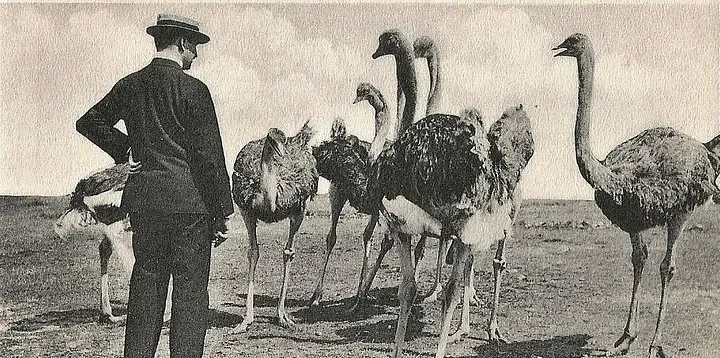
Amongst them is also the ‘Emu Bird’. This second-tallest bird in the entire world is native to Australia. Their migration patterns are linked to the search for food and water, and their flightless lineage often categorises them as living dinosaurs.
In the late 1920s, they destroyed valuable crops in the country by breaking through the fences created by farmers and left giant holes for other damaging organisms to find their way to the crops while trampling any plants in their pathway. Due to this, the Australian government removed the protected status of these birds and changed their classification to vermin. This behaviour took an extreme turn in 1932 when an enormous migration of emus caused massive ruination of crops and created a drought in the Campion district of Australia, requiring immediate response from the authorities. Two contextual fiascoes were this ‘organised plague’ taking place during the Great Depression — an era of global economic turndown — and the inexperience of the victim farmers who were WW1 veterans settled here through a government programme. These factors and the unprecedented migration of emus, a staggering 20,000, became the final straw.
When the farmers called for help, the defence minister dispatched 3 soldiers with Lewis machine guns and 10,000 rounds of ammunition to address the farmers’ pleas. And as amusing as it may be to hear, a war was declared by the government of Australia against the native birds.
The dispatched professionals were led by Major Meredith of the Seventh Heavy Battery of the Royal Australian Artillery. On November 2nd, the soldiers opened fire on a mob of Emus, but they sprinted and scattered in all directions, making them unable to shoot. Later, they set a trap for a thousand emus near a water source, but the tactic also ended in a bleak failure after one of the guns jammed, and the emus scattered again. Herding the birds with trucks and shooting at them through there proved futile as the thick-skinned emus outran the trucks on rough ground. After 2500 rounds of firing, only about 200 were confirmed killed. 1% of the entire target. Weak, unarmed, and untrained creatures won a battle against advanced weaponry and showed the conceit of humans, who attempted to use force on nature and contain birds, a symbol of freedom, and the devised strategy represented the inhumane nature of the response.
Modern conservation law of ecology states that all species have the right to exist and play a role in ecological health, regardless of their practicality. It also explains the connectivity of nature: that by intervening in one part of it, cascading consequences will be produced elsewhere. Although these laws were formulated decades after the ‘emu war’, they laid the foundation of these principles. By firing at the birds’ population and seeking to eliminate it, the government of Australia confiscated the right to life of the emu bird and destroyed more crops than the birds originally would have, yielding unintended consequences.
Contrary to the soldiers’ manoeuvres, the emus fought back by moving in unpredictable patterns and following their instinctive herd behaviour by diverging into groups with appointed leaders. The leaders were responsible for watching over their group and warning them of danger, while the main body of emus wrecked more crops. This intelligible clarity gave emus the upper hand, and the government openly accepted their defeat.
Exhausted by the initial loss, the Australian government later put bounties on the birds; funded the construction of farmland’s fences; and gave farmers ammunition to engage in direct retaliation against the harm to their crops. These final policies finally proved effective, teaching them and the world a lesson in the importance and superiority of non-violent conflict resolution. It also improved the nation’s long-term agricultural practices, teaching them about wildlife management. In the end, nature won inevitably. Reminding human vanity that the ecosystem has a balance no military can override.