





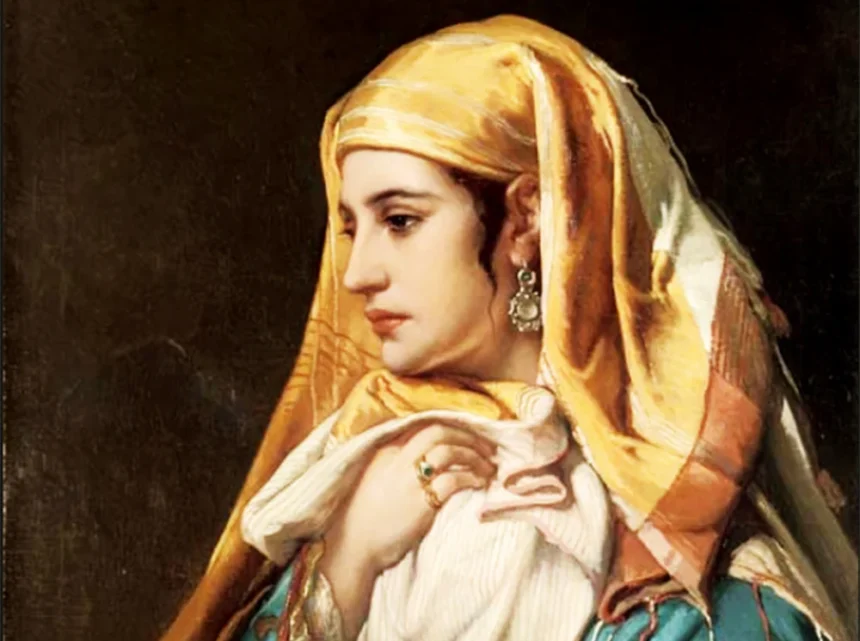
“The privilege of a university education is a great one; the more widely it is extended, the better for any country.” – Winston Churchill
Universities stand as the hallmark of academic excellence. They are where students discover their latent potential and cultivate skills like critical thinking, interactive communication, active class engagement and rigorous independent research. In the process, they hone their skills from a basic level to an advanced level and gain an abundance of confidence. At its heart, university education is an act of transformation: it moulds raw intellect into refined professionalism, leaving students more capable than the day they entered. Once they meet every academic requirement, the university confers degrees upon them, marking the completion of that journey. In schools, teachers often emphasise grades, with little room for the cultivation of soft skills. Universities, by contrast, nurture both scholarly excellence and personal growth in equal measure.
A university environment serves as a melting pot where life feels free, cultures merge, interfaith harmony flourishes, learning multiplies, and friendships blossom, leaving marks that time cannot erase. Professors serve as the linchpins who share their profound knowledge, experience, and pearls of wisdom with their students, enlightening their minds and imparting skills that equip them for a bright future and help them turn their dreams into a tangible reality. Students juggle so many tasks at university that they rarely pause to think and ask, ‘Where did the idea of university education begin?’ When was it introduced, and by whom? The answer will startle most readers: the world’s first university was born of the vision and wealth of a pioneering Muslim woman. She was Fatima al-Fihri.
Fatima al-Fihri was a Muslim Arab woman born into a well-heeled family around 800 AD in Kairouan, Carthage (present-day Tunisia), and her father was a successful merchant. When she was a child, she migrated with her father and sister, Maryam al-Fihri, from Tunisia to Fez, Morocco, because it was a major city. Her father gave girls’ education great importance and went to great lengths to have his daughters educated at a time when girls’ education was not common. Her father did not live long enough to witness the unprecedented initiative Fatima took to set up a university, but left behind enough of a fortune to turn her dream into reality.
Initially, she laid the foundation of a mosque and madrassa, which consisted of a prayer hall, courtyard, library, and classrooms for religious teachings only. Later, in 859 AD, the madrassa developed into a university and became known as the University of al-Qarawiyyin. Over time, the university introduced other fields of study and began teaching arithmetic, astronomy, Quranic sciences, law, medicine, theology, and geography, bringing a wealth of knowledge to edify people.
This university was the first of its kind in the world and drew people from across the regions of North Africa, Europe, and the Middle East, influencing fields mainly in mathematics, Islamic jurisprudence, astronomy, and medicine. Notable alumni and scholars this institution produced include Muhammad al-Idrisi (cartographer and geographer), Ibn Khaldun (renowned historian and sociologist), Ibn Rushd (Andalusian polymath, doctor, and philosopher), Ibn Arabi (Sufi mystic and poet), Maimonides (Jewish philosopher and theologian), and Pope Sylvester II, to name a few. Pope Sylvester was so impressed by the way the university taught and inspired people that he adopted this form of teaching and introduced it to Europe.
Fatima al-Fihri is credited with founding a university at a time when girls’ education was not considered important, and she set a remarkable precedent for others to follow. She was well-versed in Islamic jurisprudence, fiqh, and hadith. She always considered herself a lifelong student, and once the university’s doors opened, she never left: she supervised it, guided its course, and sat among its learners for the rest of her days. Some accounts say she observed continuous fasting until the university’s construction was complete – a testament to her steadfast faith, resolve, and courage. With deep self-belief and trust in Allah Almighty, she was confident that her efforts would one day bear fruit.
A woman of vision, piety, and learning, Fatima al-Fihri carried philanthropy in her veins. She gave her life to serving others, dedicating herself to education and community – a devotion that earned her the title “Umm al-Banin” (Mother of the Children). UNESCO and Guinness World Records also recognise her university as the world’s first and oldest degree-awarding institution still operating today. Little detail of her personal life survives, for al-Qarawiyyin’s (university) archives were lost to fire in 1323.
Her life reminds us that the seeds of a meaningful life and an imaginative mind are planted by parents during a child’s formative years. In an era when society frowned upon educating girls, her father went against the convention – he treasured his daughters and educated them, believing them to be invaluable assets.
Fatima al-Fihri’s legacy affirms that enduring wealth lies not in material assets but in ideas and vision – conceived, fostered, and disseminated. Without seeking renown, she made an unparalleled contribution to global education, for which millions remain indebted. She died in 880 CE in Fez, Morocco.
“Look to the past to help create the future. Look to science and to poetry. Combine innovation and interpretation. We need the best of both. And it is universities that best provide them.” – Drew Gilpin Faust (Former First Female President, Harvard University)
Excellent piece of knowledge!
I studied about Fatima al-Fihri in Islamic History. Sir, you have described her contributions with devotion and scholarship. I just got more information about her. Keep writing such topics!