





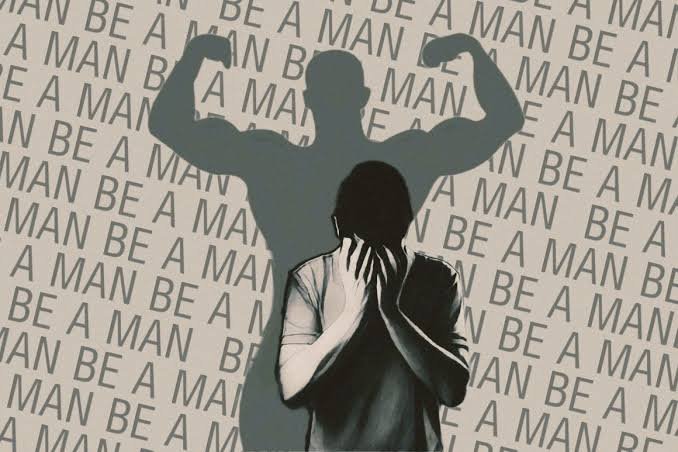
Somewhere around age five, most South Asian boys receive their first lesson in manhood, and it is always the same: stop crying. It often gets passed down through a father, an uncle, or, often, a caring grandmother who genuinely thinks she is helping. Out comes the lineal adage: Mard bano. Be a man. As they say, boys don’t cry. And just like that, a five-year-old learns that half of his feelings are substandard and must be sent back to their original maker.
Bollywood, tinsel-town glamour-laced, patriarchally driven, and often a stage for masculinity to show off, has always been eager to help by spending decades reinforcing the intangible curriculum. Mard ko dard nahi hota (a man feels no pain), or so we were told. It made for a creative ad punchline, but it is an abysmal life philosophy, because men, as it turns out, feel pain in a multitude of ways. They have simply been programmed to process it in only two viable forms: silence and anger. Just watch any group of men long enough, and you will notice the entire displayed emotional arc, i.e., fine, furious, and profoundly devastated about unending cricket losses. Of course, the last one is, interestingly, the only publicly allowed grief for all the obvious reasons.
Now take that five-year-old and fast-forward twenty years. Now, he is expected to support his parents, bankroll a wedding that would cost more than his dream salary, help with his sister’s expenses, and, if anything is left in the potluck, secure a plot of land, all under a silent but visibly expressible guise of confidence, as if gravity doesn’t apply to him. And let’s not forget that he is expected to do all these tasks in an economy where inflation eats his paycheck before it clears, where a degree is resorted to as wall decor, and where the job market treats an entire generation of qualified young men as an unforced error. The math simply doesn’t work. Well, it just hasn’t worked for years. But nobody has slashed the expectations, which have never been devalued.
So then what happens to a man who is handed an impossible assignment and barred from saying it is impossible? He doesn’t stop feeling anything. He simply goes radio silent. He stops picking up calls. He spends more time on his phone at the wee hours, scrolling through other people’s highlight reels while appraising his inadequacies. He develops headaches, back pain, and a sudden flare-up. In most cases, depression in men often does not look like despondency at all; instead, it would look like tangible demonstrations of hair-trigger temper, overexertion, reckless driving, or the unavoidable fourth cup of chai and the medicinal fifth cigarette. We usually call it stress or moodiness. We call it anything except what it is.
And when does it get truly unbearable? Here’s where the culture rubs salt in the wound: there is no sanctioned outlet. Therapy, as it were, in much of South Asia, still languishes somewhere between luxury and scandal. A man who visits a shrink is at risk of being labelled “pagal,” meaning both unstable and unmarriage-friendly. So what does he do? He weighs his options by recognising that the cost of speaking is immediate and public, and the cost of silence is delayed and hidden. Unfortunately, he chooses silence. Now, multiply that choice across millions of men across the region, and you have in your hand a colossal and well-documented yet almost completely unspoken mental health crisis.
Here is what makes the whole thing a bit outlandish, i.e., emotional silence is not authentically part of our DNA. On the contrary, our traditions are steeped in primordial male sentiment. Let’s take the example of Urdu and Persian poetry, which is, if you think about it, a repository of public displays of men weeping for centuries. Ghalib made heartbreak into a literary career, and Rumi spun a civilisation’s worth of wisdom on mere longing for the beloved. Our grandfathers could recite verses about tears and separation entirely from memory, with feeling, in front of guests. We found that somewhere between the mushaira and the modern drawing room, we decided that a man showing grief is culture, but a man expressing it is weakness.
I reckon the poets would have been confused in the process. Then they would probably write something devastating about us, which would be fair to them and unfair to us.
Let’s ask a few uncomfortable questions. What if your father had been allowed to cry, just once? Who might he have become? And who might you have become, growing up under his roof? What if someone in the boys’ WhatsApp group actually answered, ‘How are you?’ ‘Honestly? Would the group fall apart, or would it finally earn its keep? And what about the friend who’s always the life of the party but is really struggling?
None of this requires abandoning manhood. The critical part is to redefine strength as honesty. To say “I am not okay” isn’t easy. It’s hard work, and I know that’s true for anybody who’s ever tried. A man who hugs his son and tells him it is fine to be afraid is not softening the boy. He is giving him skills that the previous generation was never afforded.
Emotional literacy, one must understand, is a vocabulary that needs to be learned and explored, not a personality makeover. It is knowing the difference between angry and hurt, tired and defeated, and needing space and needing someone to sit with you. Most men were never taught these words in any language or culture, certainly not in ours, and it isn’t fair to ask for help in a language you don’t speak.
Here is some honest advice. Try reaching out to that quiet friend again, because an “I’m fine” response is one of the most common lies people tell, even when they are fighting an internal battle we are unaware of. If you are the quiet friend, share your feelings more often than not. Dormancy will not serve the purpose of letting go of barriers that are holding you within. Just like any strength training, start slow and steady, not fast and furious. If you are raising a boy, consider rethinking your approach. Allow him the autonomy to recognise his pains and say where and when it hurts. Let him cry at five so he doesn’t break down at thirty-five, only for you to suffer at sixty-five.