





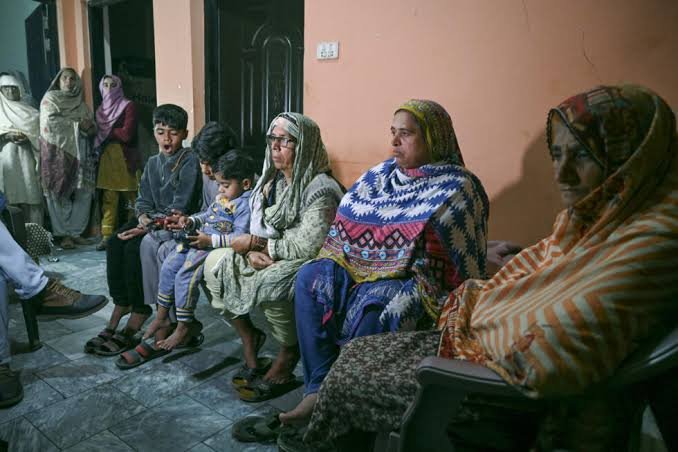
“The Ministry of Overseas Pakistanis and Human Resource Development sent around 172,144 workers abroad in the first three months of 2025.” “Saudi Arabia, UAE, and other Gulf countries have always remained key destinations for Pakistan’s skilled and unskilled workers.” — Arab News
Why Migrate?
During just the first three months of 2025, Pakistan sent a total of 151,120 skilled labourers to Gulf countries — with Saudi Arabia topping the charts. These migrants leave for a number of reasons, the foremost being the macroeconomic challenges faced by Pakistan. Severe job deficits persist across the country, while many of those who are employed face dissatisfactory wages and salaries.
While these economic struggles remain apparent, government officials maintain that sending Pakistani workers abroad helps bridge the skill gap and advances the global competitiveness of Pakistani labour, predominantly in the Middle Eastern job market. The country further benefits from a boost in foreign exchange reserves through remittances; Pakistan received $4.1 billion in remittances in March 2025. Nevertheless, sending as many as 172,144 labourers abroad means thousands of women are left behind by partners who either chose to or were forced by circumstances to migrate.
Is Migration an Act of Heroism and a Wife’s Loneliness Her Crime?
A married woman, left behind by her partner to wait for an indefinite period, is often made to wait under the promise of being brought abroad eventually — and other times is not even given a false hope to live by. While it is true that these migrant men leave the country to win their families bread and a better life, little to no consideration is given to the emotional reality of the woman left behind.
This woman is often a mother left to look after children all by herself, surrounded by her spouse’s family and expected to care for them as though paid to work — and, in many cases, tasked with doing both. Her loneliness is neglected because what is viewed as meaningful is the supposedly heroic action of her husband sacrificing the “comfort of his house” to earn for her. The people surrounding this woman gladly dismiss her isolation with arguments like: “But he sends you money, do not be ungrateful,” or “Your child’s expenses are being covered, what else do you ask for?” — or even statements as grave as: “Is your father taking care of your expenditures if not him?”
When we witness this spitefulness spiralling around us, it becomes vital to challenge the unjust habit of labelling a woman ungrateful simply because she seeks the companionship and presence of her partner.
The Cost of Remittances
While a migrant is physically unavailable for his wife, time zone and routine differences make it harder for the couple to connect through texts and phone calls. Even when convenient, a screen is rarely enough. The weight of absence remains colossal when a tired mother looks for someone to share the burden of raising her children. Some of these mothers spend their days ensuring their spouse’s family is looked after, then stay awake through the night to the cries of their babies. For a woman without children, isolation only deepens as she finds herself marooned in a house governed by marital duty rather than genuine companionship.
In many rural and semi-urban areas of Pakistan, a lonely wife is stripped of her right to complain when she is told to silently accept life as a “good and modest” wife — a life chosen for her by others. “Others” in this context often refers to her spouse’s immediate and extended family members, who begin to dominate decisions she should herself control. What she wears, where she goes, who she travels with, and what time she returns are all regulated by controlling in-laws. All of a sudden, this woman becomes answerable to neighbours and distant relatives who should be nothing more than supporting characters in her story.
Her freedom to visit her parents’ house becomes a myth — what if it overlaps with her father-in-law’s evening tea time? Amidst the toll this inflicts upon her, any expression of resentment becomes the origin of judgement and emotional backlash from a society that glorifies a forever-waiting wife. Her sacrifices are neglected because they are treated as mere obligations. Yet, compelling a wife to find complete satisfaction in monthly remittances, an hour-long video call once a week, and an occasional visit every few years does not belong on the list of any married woman’s responsibilities.
Parasocial Marriages and Silent Separations
Where distance leaves a woman lonely, it can also appallingly damage the connection between husband and wife, transitioning the relationship into a parasocial arrangement. While some couples manage to sustain their bond, for others, the string holding them together weakens as everyday conversations shrink to routine check-ins and logistical updates. Both parties often hesitate to share the problems burdening their minds to avoid distressing the other. With little to no physical intimacy left to hold them close, misunderstandings and detachment inevitably follow.
The balance of mutual participation in the marriage fluctuates when the only contribution arriving from abroad is financial support. Consequently, silent separations are born, begging the question: is a checked box next to one’s marital status the sole purpose of marriage?
To highlight the prevalence of this reality in our society, we spoke with a housewife from Gujrat City who has lived through this ordeal herself. She is the mother of a two-year-old daughter; her husband is a migrant worker.
When asked what she finds most challenging about living as a long-distance wife with a toddler while residing with her in-laws, she responded:
“The inconsistency of everything. My husband lives so far away. I understand he undergoes a thousand problems every day which he, of course, does not communicate with me — and so he doesn’t speak at all for days. I’m also afraid I’m not able to attend to my daughter as much as she requires because of my duties in the house.”
When asked to elaborate on those duties, she explained:
“Cooking for my in-laws, from breakfast to dinner and everything in between. I have a mentally disabled sister-in-law, and she can be hard to coexist with sometimes. At times she can go as far as hurling abuses, and I am expected to bear with it. I’d like to label that as one of my duties as well.”
When asked whether her husband supports her in these situations, she shared:
“Sometimes yes, sometimes no… I live in a large joint family. Tensions often occur due to misunderstandings between individuals, and it gets very frustrating. At times my husband does understand and allows me to respond the way I wish to, but other times he can be as unpredictable as wanting to divorce me for complaining about having to serve his family.”