





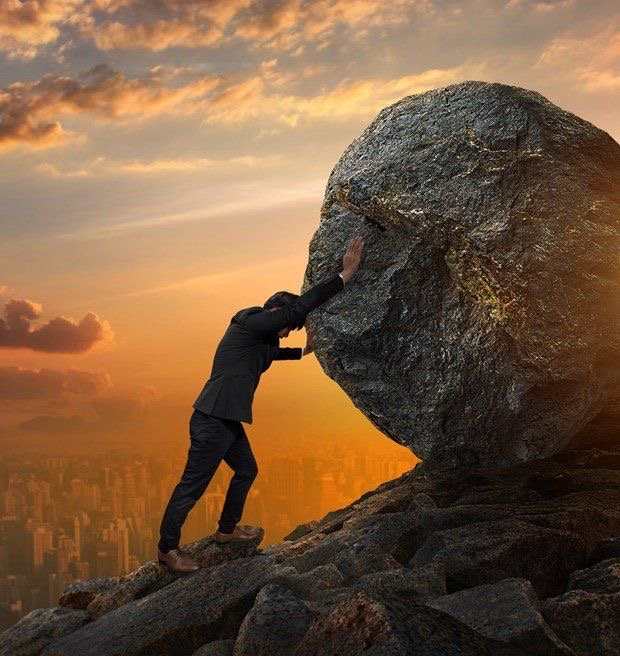
A young man borrows money to pay for his wedding. He does so out of fear that a modest ceremony would invite public scrutiny regarding his ability to provide for a family. He refrains from discussing the debt with his fiancée, and he keeps it from his father — who never faced such a loan two decades ago and never spoke of financial strain.
This is a familiar South Asian story, following a well-worn template. From an early age, men are taught to prioritise economic productivity, endure hardship without complaint, and suppress vulnerability. What they are actually doing, however, is quietly breaking down.
The societal expectation of a man in a South Asian family rests upon three core pillars: emotional toughness, economic provision, and physical strength. A young boy learns early that tears are reserved for girls, fear must be concealed, and anger is the only acceptable emotion to express because it conveys control rather than weakness. He internalises the idea that his worth as an adult will be evaluated almost exclusively by his income, assets, and ability to support a household independently.
His physical presence is taught to function as an authority rather than a space for softness.
These values are rarely taught as formal doctrine. Instead, they are absorbed through offhand remarks, quiet approvals from older male relatives, and the casual ridicule directed at any man who strays from the script.
The Economic Mismatch
The traditional economic model of masculinity is no longer functional, yet the underlying emotional burden remains unchanged. This disconnect is particularly stark within Pakistan’s economic landscape.
High youth unemployment combined with persistent inflation has steadily eroded the purchasing power of average incomes. A young man today enters a job market fundamentally different from the one his father navigated, yet he is expected to achieve the same financial stability.
Because the modern economy frequently fails to provide these guarantees, many men in their twenties and thirties face prolonged financial dependence — forced to delay marriage, remain in the family home, or accept underpaid, precarious employment.
When the economy fails to fulfil its side of the social contract, a man unable to provide is still perceived as a personal failure rather than someone struggling against systemic constraints. Lacking alternative frameworks to interpret his situation, he internalises the blame.
This structural mismatch severely impacts mental health, though its full extent remains under-documented. Comprehensive data on male depression and anxiety across South Asia is sparse — partly due to underreporting by men and partly owing to limited mental health infrastructure.
Existing evidence indicates rising rates of untreated depression, substance abuse, and suicidal ideation among young men. Isolation further exacerbates the crisis.
Society rarely encourages men to build the emotionally supportive friendships that women often cultivate, leaving marriage as the primary accepted outlet for emotional intimacy. If a man is unmarried, unemployed, or struggling, he often has no safe outlet to express his distress without violating the stoic ideal of manhood.
Broadening the Definition of Strength
Addressing this issue does not require discarding traditional male responsibilities or adopting entirely opposing values. Qualities such as financial reliability, courage, and accountability remain valuable. Men do not need to abandon these traits to achieve a healthier version of masculinity.
The issue lies in treating these traits as the sole measures of a man’s worth — creating an environment where experiencing financial strain, anxiety, or emotional exhaustion immediately calls his identity into question.
A healthier model of masculinity should expand these definitions rather than invert them. Vulnerability is not the opposite of strength; it is a necessary component of it.
Emotional literacy must serve as the foundation, beginning in childhood. When a young boy is permitted to identify and express fear, sadness, or confusion, he grows into an adult capable of processing those emotions constructively — rather than repressing them until they manifest as anger or withdrawal.
In South Asia, families and educational institutions rarely prioritise emotional development, often viewing it as feminine or weak.
While systemic change is slow, progress is emerging. A growing number of urban men are seeking therapy compared to a decade ago, while discussions surrounding burnout, mental health, and anxiety are increasingly taking place in public and online spaces.
A Shared Responsibility
The psychological dimensions of this crisis cannot be separated from economic realities. Any meaningful evolution of South Asian masculinity requires re-evaluating the role of the sole provider.
In households where financial responsibility is shared — whether through a working partner or supportive extended family — the psychological strain on men is markedly reduced compared to homes where a single income remains the absolute standard of male dignity.
This shift is already occurring across many urban families out of economic necessity, yet it is rarely framed as progress. Too often, it is viewed as a man’s failure to provide, rather than a family’s pragmatic adaptation to modern economic realities.
A man taking on an unsustainable loan to maintain appearances is the predictable outcome of a society that enforces a rigid template for manhood and labels any deviation a failure.
Transitioning from emotional suppression to emotional literacy, and from isolated strain to shared responsibility, does not represent a softening of male identity. It is a necessary correction to a standard that was never sustainable to begin with.