





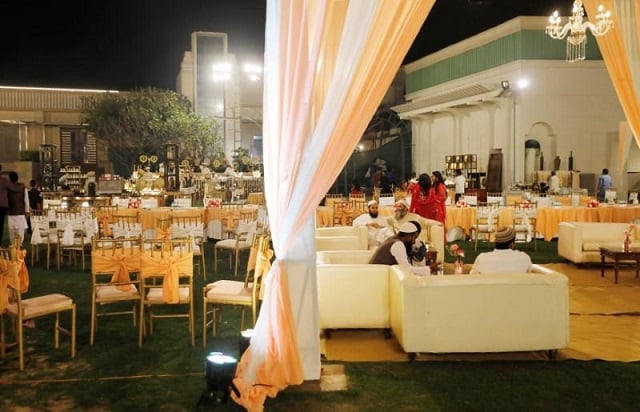
In Pakistan, weddings are more than one-day events; they last three to five days and average hundreds of guests over multiple functions with expenses that many families have spent years saving for. Weddings in Pakistan are part of the culture and contribute greatly to the economy, serving as a primary source of income for many people. Therefore, when the government imposes limits on wedding hours, available menu items, or bans late-night weddings to save electricity and reduce unnecessary expenditures, the effect extends beyond the physical wedding halls.
Are these restrictions helping the economy, or do they negatively affect the income of regular people?
Pakistan’s Unofficial Wedding Industry
The wedding industry in Pakistan is huge. It consists of formal businesses and informal workers. One wedding creates work for dozens of people, from photographers and drivers to florists, decorators, planners, waiters, henna artists, DJs, and security personnel. In addition, several small retail shops sell bangles, footwear, imitation jewelry, and gift-wrapping supplies.
The wedding season is when many families struggle to survive.
A tailor in Lahore would earn enough income during three months of busy weddings for the entire upcoming year. The flower seller in Rawalpindi relies heavily on the wedding business. A small beauty shop in Karachi may receive most of its annual income from providing bridal services.
Thus, when wedding-related activities are restricted, all income generated for those activities is also reduced.
The Government’s Argument
According to Pakistan’s government, wedding restrictions are vital for saving electricity and fuel, and for curbing lavish spending. Typically, restrictions on marriages were imposed to save electricity, curb power usage, and reduce traffic congestion by shortening the time for marriages. The one-dish policy was created to reduce food waste and minimize pressure on middle-class families.
At face value, these are valid arguments. Pakistan is going through an economic crisis. Pakistan is struggling with energy shortages, high inflation, and an increase in import bills, pushing lawmakers to seek ways to reduce national spending. However, the situation in practice is much more complex than these statements indicate.
The People Who Pay the Price
In terms of how they will be able to manage with the restrictions, wedding venues that have large halls may be able to withstand restrictions. Well-known businesses may have been able to adjust their methods of doing business. Unfortunately, the little guys will struggle. For instance, a decorator loses one job, which means that they will lose one week of income. A waiter on a paycheck understanding only works when events take place. A tailor operating a home business by sewing bridal gowns cannot recover the income from the canceled order. Workers in the informal sector receive the least support because they lack protective coverage.
There are many wedding industry workers who do not get salaries, do not have savings, and do not have insurance. Their income is based on seasonal bookings. Even if there is a small reduction in wedding function activity, it can financially stress an entire family; if a waiter only works three wedding activities in an entire year (as opposed to at least 10), they will not be able to provide for their family, as an example of how the wedding ban would impact lower-income earners in the community.
More Thought Required In Our Approach
The answer to this crisis is not either/or. The cost of weddings has become an enormous social issue, creating a burden on families who borrow to meet unattainable expectations for weddings. We should encourage more affordable weddings.
However, if policymakers suddenly place restrictions on wedding expenses without providing alternative economic methods for families to pay for their weddings, a portion of the workforce will be hurt by those decisions.
Rather than just issuing wide-ranging limitations on wedding expenses, for example, policymakers can provide incentives for the use of energy-efficient wedding facilities/halls; digital wedding invitations/use of e-invitations; and responsible, sustainable waste disposal. Policymakers may find it is easier to encourage more economical weddings than to impose strict limitations on wedding costs. The government needs to acknowledge that marriage in the Pakistani economy is about much more than just opulence; marriage provides food and security for thousands of people who create the products and services for weddings.
Weddings Are More Than Just An Occasion
In Pakistan, weddings are more than just emotional occasions; they also create economic activity. Each decorated wedding venue, each dress made for the wedding, and each meal served to the wedding guests represent the means of livelihood for many people. When policymakers reduce or eliminate the available means to pay for a wedding, the effects are widespread across the economy and among entire groups of people who have been largely absent from discussions of government policy. While it is important to use fewer resources, we must also create policies that protect the livelihoods of those people whose lives depend on celebrating an event.