





Patriarchy runs deeper than the crimson-stained blood in our veins. For God created men and women as two equal halves that make a 100, but society rather sprinted towards the patriarchal vision where men are the harbourers of misogyny and women are left screaming in streets for their rights as feminists; it has always been the gender war that is now about gender superiority rather than gender equality and passive coexisting and cohering.
Throughout centuries, it was believed that the men are the heads of the family — the providers, the protectors, and the supporters — while women are the bearers of a new life, meant to birth and shape children; to love and take care; to cook and clean; to snip their tongues and stitch their mouths; and to live and die for the men of their families. For the outer world was meant for men and the inner core for the women, but we envisioned the prototypical societal norms shattering and clattering as more women stepped out to serve as the economic providers for their households.
The 19th-century patriarchal simps flexed a bit, and we witnessed the 21st-century gender revolution, an erudite reconfiguration of global social structure, where women act as the foundational anchors of the household, bearing for their kids a better future, for their household’s vitality, or for their dependent husbands. We saw women leaving an abiding impact across a multifaceted working landscape, as entrepreneurs in corporate and private sectors, driving labour shifts in the media and fashion industries, plus notably entering and fostering tech and digital careers more than ever, just to ensure the alimentary support for their families and to stabilise the domestic economy. This led us to break the anachronistic framework that has suffocated society for centuries in this inequitable, atrocious world.
In the 21st century, we perceived three types of working dialects among couples:
Firstly, there is the typical breadwinner-homemaker model, where the tasks are split based on genders, as in the men in families provide resources, and women cater to care and stability; this one, as per the societal norms, is the most celebrated one.
Then come the dual-income households, where both the partners act as the two-worker model, balancing income and life along.
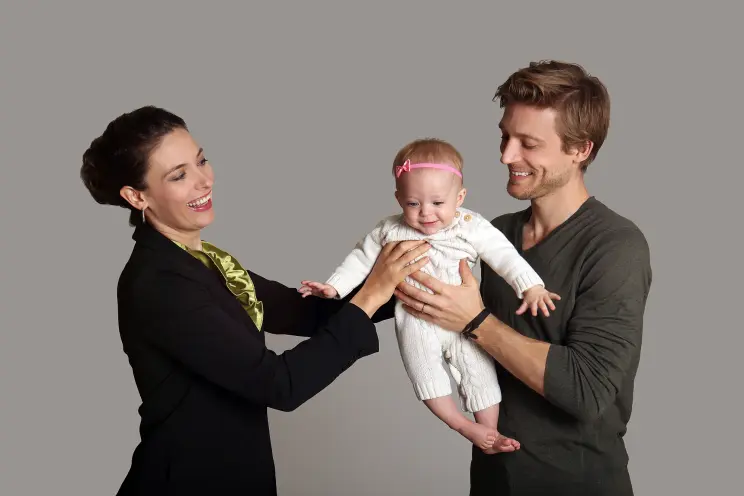
The third bracket is the rarity envisioned in this century, and the upshot is pretty crazy; it is the female breadwinner and stay-at-home dad (SAHD) household, a settlement where the obverse of roles happens and the women become the men of the house while the fathers put up with managing the children’s needs — from their nutrition to education — putting a pillar in the stability of the household.
Now the crux of the matter here is that if men can earn, as society has made it a gender game, giving the specific gender their specific roles, why do the moms of the house have to step out or show themselves? Or to undertake the basic task of providing, protecting, and supporting? And then even if there’s a need for it, why are the men stuck to the basic house errands that are considered a woman’s duty to deliver?
The answer to this fundamental query is not as simple as it seems, but there are some factors that contribute to and lead to such exigency that gender-neutral parenting has to dig into.
The indispensable element here is the opportunity of employment; if the man doesn’t get it due to any foreseen circumstances and a woman holds the ability to, then for the bread and butter, one has to switch the remit.
The second major element is the convenience module; if the men of the house have a working setup that doesn’t offer much and is creating a volatile environment, for instance, if it’s a media settlement, men usually are still lacking for using it as the earning source, while the women accelerate faster through cooking, makeup, or fashion blogs, so they might have to plunge out to help and equilibrate. The other supporting factors might include any disability that holds up the man at the house; the economic and professional flexibility; the relationship and emotional capacity; the understanding and sacrificial power in the household; the educational hypergamy (when one partner has higher educational attainment than the other); and the logistical and functional matters. All in all, one has to get into the ocean to catch some fish.
According to the International Labour Organization (ILO) and Gallup research, it has been affirmed that 70% of women prefer to work in paid jobs, while 29% actually do make a living through digital and tech means. On the other hand, 66% of men prefer women to work, and 27% of women concur with staying home.
These numbers redefine the working participation task force led by women who are the sole breadwinners and men who lend a hand to their working partners by taking up the childcare mandate.
But in all this, the societal assortment stays the same; the society still considers men to be the heads of the family, irrespective of who earns or who maintains.
For no matter how much forward we move, the ethos of our society that the work has to be distributed according to the gender one holds rather than individual aptitude pulls us back and still is the termite infestation in the basic structure that remains intractable!
The concept that the head of the family has to be someone who does the manly duties remains incongruous. For according to it, if the label adheres to the person who is the pivot determinant in the household’s fiscal sustenance, then the woman is to be enthroned, but the fact that it is against the societal norms shadows the appreciative capability of our people to succour working mums! While the dads who stay at home to help their partners are often admonished as the weak men or Mr Moms out there, the problem is not with the fact of who is or who’s not the head of the family; the basic peril lies in the cognitive framework displayed — the prevailing sentiment associated with gender discrimination that has its roots deep in our environment, deep enough to hold and control the ideology of our nations!
Whatever the social fabrication is, the paradigm of traditional households has been and is being changed for the good and better of the future, for in this way we empower more women through work setups and make men understand the emotional and functional capabilities of their soulmates.
This is a stitch in society’s crumbling beliefs; it acts as the adhesive in parental bonding and child development, and above all, it is the collapse of the gender orthodoxy we face every day in every street, in every house!
As the traditional requirement for a stamped designation of the head of family for any of the parents diminishes and shifts to an atmosphere of neutral bonding capacity, joint stewardship, egalitarian governance, and pluralistic leadership rather than singular crowned authority.
This new househusband concept is an aptitude shift in power dynamics that introduces role symmetry in our society, as it is the need of the time and the emerging concern. So we should end the war and support any such thing that brings an inspirational change in our culture and society.
You’re the best writer this website has got. Keep shining champion, lots of Love! ♥️