





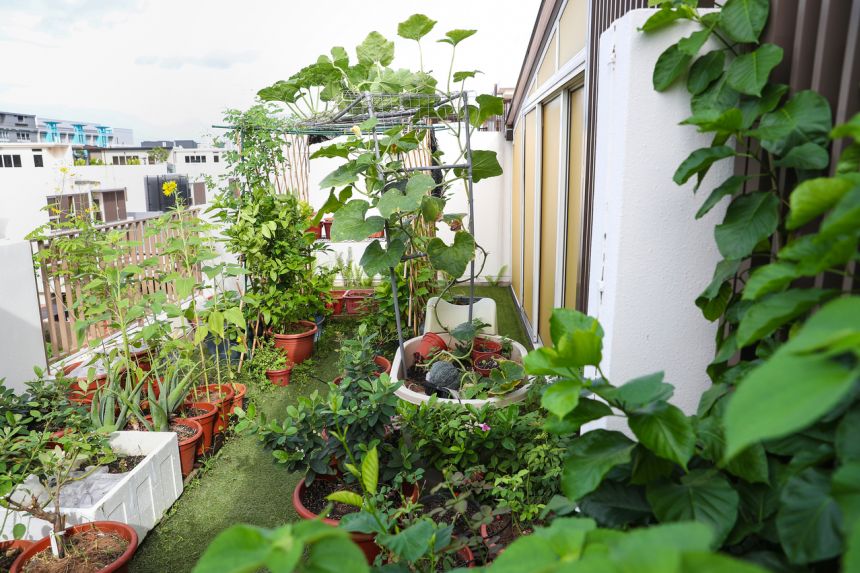
Cities are changing. Not merely in their hills or in their streets, but on roofs, balconies, and window sills. People are planting food where it was not thought to grow. Silently, this alters our perspective of cities, sustainability, and ourselves.
Urban farming has not been a new phenomenon, but it is gaining momentum. Since it began with the small herb pots on a fifth-floor balcony to fully-operated rooftop gardens that produce their own year-round vegetables, the residents of the city are finding their way into food, one seed at a time.
It begins with a handful of tomato plants, perhaps some basil, outside the window, and a pot of mint on the fire escape, too many. But it rarely stays that way. As you cultivate and consume something, you have a different view of it; you see that food is produced by soil and sun and forbearance, not a plastic packet on a shelf in a supermarket.
This emotion has never been more significant. A lot of urban residents have never seen the growth of vegetables or the process of fruits ripening, as fast food and delivery are the main aspects of modernity. Urban agriculture is a way to restore that experience, to take people to the most primal human activity: feeding themselves.
It has environmental advantages, as well. Rooftop gardens lower the amount of heat that the building absorbs and reduce the energy expenses, control the rainwater runoff, and sustain bees and other pollinators, which the city is extremely lacking in.
There are challenges. There is a lack of space, the soil is lofty, access to water may be complex, and high-rise buildings prevent sunlight. Urban agriculture requires innovation and effort. People, however, are solving problems. Now it is easy with vertical growing systems, lightweight containers, and drip-irrigation kits. One balcony garden can improve the local ecosystem, and when thousands of balconies are involved, the effect will be evident.
Community gardens are growing in urban areas. And neighbours, who were speaking to each other rarely, now share tools, harvests, and seeds. A green patch in the city is not only vegetables but also relationships.
Cities were perceived as something that does not unite with nature: cold, hard, and dead. The story is being rewritten. There is a different story on the rooftop, with its green rows of lettuce and kale. It demonstrates that despite the most humane surroundings, life has its way, and people are opting to give it the boost.
This does not require that the concrete be empty or the rooftop be wasted. All the balconies are possibilities, all the windowsills opportunities. Urban farming is not a trend; it is a silent revolution, sprouting gradually at the ground level, though that ground may be twelve storeys above the earth.