





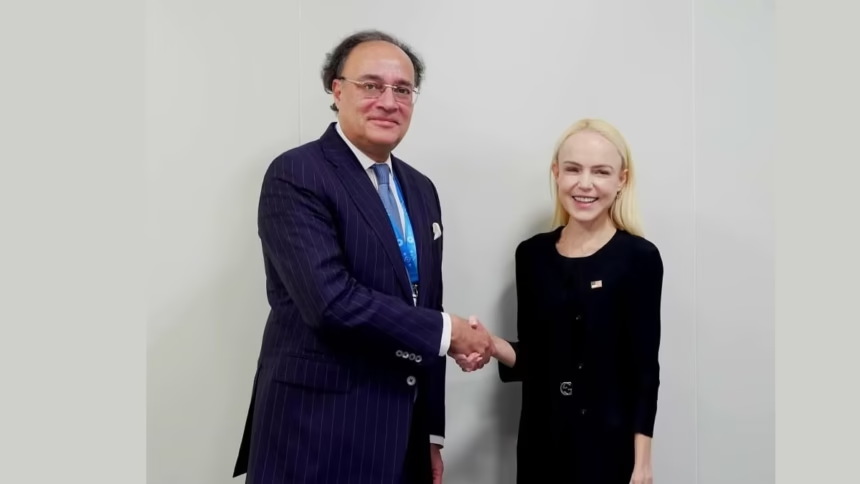
Federal Minister for Finance and Revenue Muhammad Aurangzeb has outlined Pakistan’s economic reform agenda, financing plans and investment priorities during separate meetings with senior US Treasury officials and international investors on the sidelines of the 2026 World Bank–IMF Annual Meetings in Bangkok, Thailand.
Accompanied by the Governor of the State Bank of Pakistan (SBP), Aurangzeb met Erin Browne, US Under Secretary of the Treasury for International Affairs, to discuss Pakistan’s economic outlook, external financing requirements and progress on structural reforms.
The finance minister highlighted Pakistan’s $3 billion Eurobond issuance in September and said the government intended to broaden its borrowing options through Sukuk, Panda bonds and other financial instruments.
He also briefed the US official on developments under Pakistan’s IMF-supported programme, ongoing taxation reforms and the achievement of primary fiscal surpluses for three consecutive years.
According to the minister, the country’s foreign exchange reserves stood at approximately $21.6 billion.
The meeting also examined the economic consequences of the regional conflict, particularly its effects on energy supplies, inflation and food security.
Aurangzeb discussed government measures to maintain essential supplies and prepare for increased energy demand during winter.
Emphasising longer-term economic stability, he identified export-led growth, expansion of IT exports, improved competitiveness of Pakistani goods and sustainable debt management as priorities.
He said these measures were intended to support Pakistan’s progress towards a BB sovereign credit rating.
The discussions additionally covered the government’s privatisation programme, airport outsourcing, engagement with American aircraft manufacturer Boeing and potential financing through the US Export-Import Bank (EXIM Bank).
Aurangzeb expressed appreciation for Washington’s continued support.
Finance Minister Briefs International Investors on Growth and Debt Strategy
In a separate engagement, the finance minister and SBP governor participated in an investor meeting organised by Mitsubishi UFJ Financial Group (MUFG).
Aurangzeb presented Pakistan’s fiscal and economic outlook, highlighting progress in fiscal consolidation, declining inflation and continued implementation of IMF-backed reforms.
He shared a projected economic growth range of 3.5% to 4.5%, alongside improvements in foreign exchange reserves, remittance inflows and information technology exports.
The minister also discussed Pakistan’s external debt obligations, including scheduled repayments, bilateral debt rollovers and efforts to reduce dependence on costly short-term borrowing.
During the question-and-answer session, investors sought clarification on foreign exchange liberalisation, agricultural income taxation, fiscal devolution and the potential introduction of rupee-denominated, dollar-settled bonds.
Aurangzeb explained that decisions regarding future bond issuances would depend on prevailing market conditions and the government’s broader debt management strategy.
The meetings formed part of Pakistan’s engagement with international financial institutions, US officials and investors as Islamabad seeks to strengthen external financing, maintain economic stability and attract longer-term investment.