





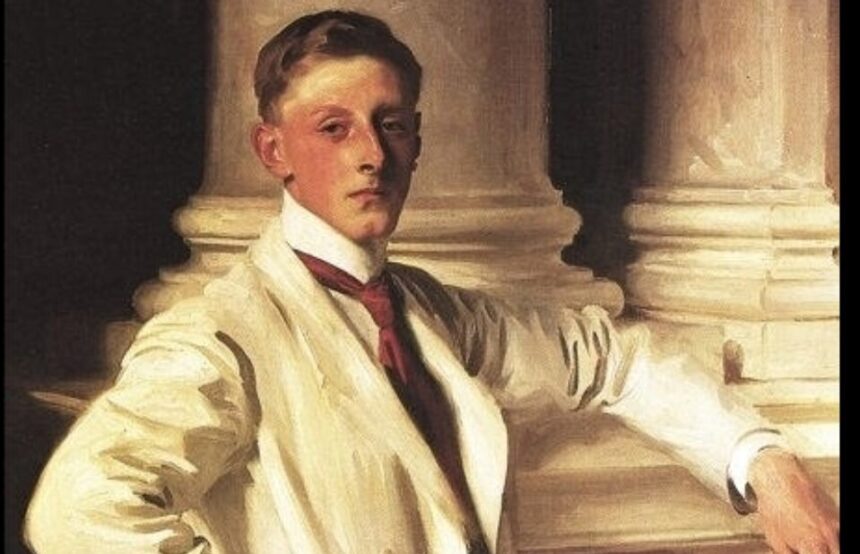
More than a century after its publication, Oscar Wilde’s The Picture of Dorian Gray is more relevant than ever.
A mirror reflects faces. It reveals only what lies on the surface. How do we perceive the grotesque flaws that lurk beneath curated identities and hidden appearances? How could you see and know about them? However, there is no mirror that exposes the truth of the soul. What if I told you Oscar Wilde crafted a portrait that reflected the soul? The portrait, showcasing the soul, bore the burdens of all sins committed by a youthful body.
In the novella The Picture of Dorian Gray, the protagonist, Dorian, wished to preserve his youth at the expense of morality and integrity. To one’s wonder, his wish came true. Consequently, the once aesthetically flawless portrait painted by his friend Basil Hallward turned into a horrible creature, leaving behind a trail of moral corruption, compromised integrity, and a depraved soul. However, he remained outwardly flawless and young.
More than a century after its publication, Oscar Wilde’s portrait has become an apt metaphor for a world obsessed with appearances while detaching itself from authenticity. The book is not just a fictional philosophical tale; it brings harsh truths to the surface that humans refuse to acknowledge or hide under the curated lies for society’s approval.
At the heart of the story’s relevancy lies the conflict between reality and appearance. This tension holds even in today’s digital world. Dorian’s unchanging beauty and youthfulness convinced society of his innocence and strong character, while the portrait documented every malicious intention and cruel act. The digital world operates similarly. On social media, people hide their true selves and reveal what has been curated, edited and glorified in live streaming. People talk about success, happiness and filtered perfectionism while revealing little about struggles, failures, and contradictions. As a result, uncomfortable truths take a back seat, and visibility rather than authenticity builds reputation.
The novel also emphasises the immortality of beauty, aestheticism, and worship of youth. The protagonist wanted to be young for ages to come, and for this, he was ready to sacrifice his conscience and moral values. Unfortunately, people in today’s world are following these footsteps. Amid cultural anxiety, the pro-youth industry is booming, offering a variety of cosmetic products and anti-ageing procedures to maintain one’s beauty. The cost is invisible yet a massive one. Undoubtedly, outward appearances improve with reduced wrinkles and unblemished skin, but your soul suffers. What follows in the long run is an inferiority complex, body dysmorphism, and constant dissatisfaction.
Additionally, aestheticism is not just confined to physical elegance. The moral reality has also fallen victim to an aesthetic mindset. The protagonist treated his life as a work of art, preferring beauty, pleasure and sensation over morality. Like in the novel, people now glorify suffering and trauma to grab audience attention and expand their visibility. People start bearing and romanticising toxic relationships so they can not be left alone in the world. It is not wrong to say that people dread embracing solitude. Driven by the fear, they settle for less at the expense of their self-esteem. Today, Gen Z’s growing emotional desensitisation to disturbing content, war-related posts and violence speaks volumes about this ongoing trend.
The novel also explores hedonism and its growing dangers. A hedonistic mindset always seeks pleasure and lives for the pleasure while paying no heed to its dreadful consequences. Today’s digital world also caters to hedonism, but in a different way. Physical gratification is replaced by cognitive gratification through doomscrolling, algorithm takeover and digital validation. This philosophy also resonates in contemporary consumer culture where boredom is unbearable and instant gratification is irresistible.
Wilde’s most profound insight is that no matter how much we hide our true nature from the world, reality always comes out of darkness, and your impression, built on imported identities, falls apart. Dorian tried hard to hide his vile portrait from the world, but he could neither escape from his truth nor silence his conscience. Eventually, his scornful truth led him to death.
Similarly, when people evade their own truth, they think they have dodged a bullet. But some consequences are not visible. They remain dormant. They simmer unnoticed. They accumulate internally — in conscience, relationships and identities. Then a moment of truth comes with a drastic explosion, taking away all pretentions and perfectionism. The novel leaves questions as food for thought: Does a character stand against truth when its foundation is built on images rather than actions? Are we conscientious enough to reveal such a portrait to the world if it is tainted with past mistakes?