





“Life holds a potential meaning under any conditions, even the most miserable ones.”
–Viktor E. Frankl
What’s worse than a human being suffering in the notorious Nazi camps during the Second World War? Where the best thing one could wish for himself is death.
Viktor E. Frankl, a Jewish psychiatrist, was also one of the veterans of these concentration camps. He served as a physician and labourer in the concentration camps and endured the worst time of his life, along with others. However, he believes that a man is not supposed to surrender to such aversive circumstances but should transcend his sufferings, viewing them not as obstacles but as opportunities to grow beyond one’s limits.
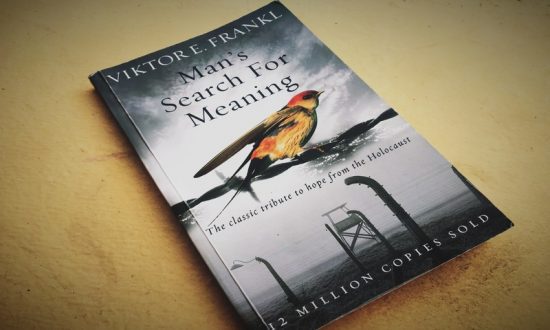
In his classic Man’s Search for Meaning, he sought to explain the experiences and hardships people endured in the concentration camps, their miserable lives, and his own reflections on what he observed from a psychological point of view. Then he gave the crux of his logotherapy, which is focused on finding meaning in life for well-being and overcoming life obstacles.
From being abducted from their homes to be taken to the concentration camps, where humans had no names but numbers. And to be taken to a place (concentration camps) you don’t know. Whether to be gassed in the gas chambers or to work in the -50 temperature with no shoes and severe frostbite. Where the food was a thin soup and one loaf of bread for a whole day of hard work. And you are not allowed to ask for more food. Your body was frail and fragile, but you had to march to faraway worksites in the snow for an hour-long shift. And when, after such a tiring day, you return to camp to enjoy the one and only blessing one can have, sleep, there is a single bed and two blankets for nine men to share, and they have to lie on their sides the whole night. Watching fellow prisoners die of disease (besides being gassed or any other death penalty) was a normal thing, and there was no one to mourn for the deceased; rather, when someone died, prisoners used to approach their dead bodies and snatch the things they found in good condition and useful for themselves. Emotions have been blunted; empathy has been lost. These and many more were the conditions in concentration camps, where the only thing one could do to avoid death was to look fit or work.
Frankl has discussed that among such circumstances, prisoners’ faith in God increases. Besides all these aversive circumstances, some prisoners tend to choose optimism, to look forward to that time of life when the war will end and they will meet their loved ones again. In light of his logotherapy, he concludes that when someone has some meaning or purpose in their life, then they bear the hardships in the pursuit of that meaning. They tend to surpass all the obstacles that come their way. For Frankl, such optimism and a positive outlook were the result of an inner decision that a person made for himself, rather than being influenced solely by the camp.
His logotherapy has laid stress on the fact that a man’s despair over the worthwhileness of his life is an existential distress, not a mental disorder. For him, a man doesn’t actually need a tensionless state but rather struggles for a worthwhile goal. He has drawn a clear line between logotherapy and psychotherapy, where the latter is likely to persuade the customer to buy something, while the former offers him various things from which he may pick what he finds valuable.
In Man’s Search for Meaning, he has not only drawn a picture of life at concentration camps but also discussed what one can do to bear that suffering and how one strives to find the meaning in those sufferings. To conclude, I would like to quote some lines from Frankl’s book.
“But let me make it perfectly clear that in no way is suffering necessary to find meaning. I only insist that meaning is possible even in spite of suffering — provided, certainly, that suffering is unavoidable.”