





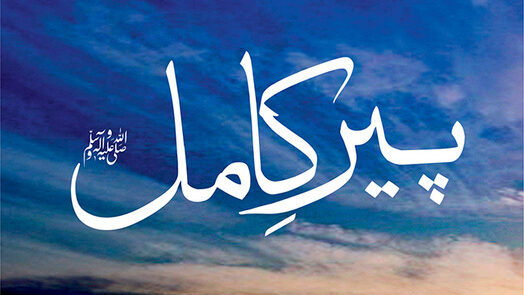
Peer-e-Kamil is a horrible romance novel. Allow me to elaborate. While we get to witness the depth of Salar’s admiration and love for Imama, there are no reciprocated emotions explored or observed in Imama. At least, not explicitly. She saw Salar not as a lover but, first, as a means to an end and then perhaps as her liberator from the shrouded life she was living. The ending of the book showed how the two had reunited, married and (apparently) fallen in love, but their reunion felt somehow incomplete. As if there were something missing. The book reviews promised us a loving couple, but upon cracking open the pages, you realise that the romance is put on the back burner throughout the length of the story. Their life together could’ve been elaborated on to show the romance blossoming in their itty bitty young hearts. Two struggling, broken kids who had – in tandem with one another – prevailed with grit and determination. However, we weren’t even given an affirmation of Imama’s feelings and had to survive over crumbs of their affectionate moments. Thus, I’d like to argue that Peer-e-Kamil was a lousy love story.
But that would be assuming that it is a romance novel to begin with. Which it is not, at least in my humble opinion. Peer-e-Kamil is one of the most astounding character studies I have read. It depicted the complexity of human emotion and the implications they have on, otherwise simple, actions. I was in awe of how the book explored the relationship between man and religion. The way it translates into one’s daily life, affecting one’s bonds with family and the modern world. Peer-e-Kamil may be an underwhelming love story, but it’s a staggering contemporary literary novel that breaches taboo subjects and doesn’t shy away from its characters’ flaws.
Young girls all across Pakistan hail it as the most romantic book that could’ve ever been penned and Salar Sikandar as the ideal man with his wit and charm, his intelligence and eventual devotion to religion, and his unwavering loyalty to Imama and the yearning – oh! The yearning! The pinnacle of a book-boyfriend. Thousands, if not millions, of girls clutch their copies of the book to their chests and go to sleep, starry-eyed and blushing-cheeked, dreaming of their own knight in shining armour that would love them as Salar loves Imama. And they aren’t wrong. Salar’s affection is definitely admirable and his tenderness swoon-worthy. But the book goes beyond love; in fact, romance is only a subplot, a driving force to aid the main story and message of the book. Which is the characters’, especially Salar’s, journey and personal transformation. The trajectory of their lives as they turn towards religion, scared and faced with uncertainty, but resolute in their decisions. The romance was just a convenient catalyst for both of their evolutions.
Imama is one of our main characters who belongs to an influential Ahmadiyya family. She had her curiosity piqued through her friends regarding the validity of her beliefs. Consequently, she began to investigate Islam through books and lectures, albeit secretly, leading to her converting to Islam. However, the looming threat of her family forced her to run away from home, aided by a reluctant Salar, so she could find sanctuary somewhere where she wouldn’t be prosecuted for her beliefs. She opens the book with her story of determination and is not seen again until the end of it. In the meantime, the contemplation and musings of Salar are laid bare for us to witness. He, the boy who used to indulge in smoking, drinking and other forbidden acts, is touched by Imama’s sacrifice that she gave for her religion and is plagued by reflections of his own. Just when he was struggling to conform to the rules of religion, he found himself tied to a tree…at gunpoint. Cue the panic. His life flashed before his eyes only for him to realise that he had, in fact, led a pretty shitty life. There were no dreamy flashbacks of his happy memories. What moments are there for him to think back on and smile upon? He didn’t want to die, not yet. He hadn’t experienced ecstasy and didn’t know what came after it.
He didn’t die, of course, but finding himself in a pickle revolutionised him as a man. He became a devout Muslim, relinquishing all his unlawful habits and taking one step at a time towards Allah. He had a successful career and met several lovely personalities. Unfortunately, though, I’m still plagued by thoughts of Imama, unable to move on. Suffering from insomnia and melancholy, he yearned, and he wished for her to return. That is when fate plays its trick, and, through what can only be called a miracle, they are united as husband and wife. We finally learn how Imama had been living in secrecy and had got a degree and a job. She had never given up and had bulldozed her way through life, regardless of what obstacles it hurled at her. And now they were finally together, through patience and resilience and a sprinkle of adventure that fate always likes to throw in.
Their journeys were so spellbinding, making one question their own love for their religion and their own loyalty towards their beliefs. It made us re-evaluate our own priorities and signified what it is to be human. Salar was a devout Muslim, but he was still afflicted with loneliness and isolation. Imama fought for her beliefs and the life that she wanted for herself but was still unable to achieve her dream of becoming a doctor. It showed how life tends to throw curveballs at us out of the blue; how there is no absolute happiness; how you can’t really have everything all the time, but also, how sometimes fate has a magical way of working in our favour.
I, personally, consider Salar to have a more prominent role than Imama. We were told of Imama’s journey at the end of the book, but we lived through Salar’s adventure alongside him. We had a window through which we could peek at his debilitations and his desires, his sufferings and his contemplations. He was the character that we saw transform almost entirely in front of our eyes. His character depth and intensity felt perhaps a little too real. His emotions were so raw and his insecurities so human.
Imama, while having her own adventures, served as the perfect catalyst for Salar’s evolution. The one who showed him what’s on the other side of the wall and what courage really looks like. She, who was only looking at the path ahead of her with her metaphorical candle, had unknowingly lit up the way for Salar as well. They have both helped each other escape the shackles of their past and to move towards a future that, though uncertain, is shaped by their own selves.
The crumbs of romance added a nice touch to the already amazing book, but they were insufficient for it to be called a romance novel. There was little romance, really. No cute dates or cheesy conversations. No fights or third-act breakups (Thank God), and little communication between the characters. Imama never even expressed any romantic love for Salar; admiration and respect, yes, perhaps, but not love. The ending was also abrupt; after they got married, we barely ever saw them as a couple. But one thing was for certain: they had both changed since they last met, and they were happy (and proud) to see the other doing well. And, maybe, that was enough. They didn’t need kisses and hugs. Just compassionate smiles and softly held hands to signify how far they had come and how strong they had been. That was their own beautiful happily ever after.