





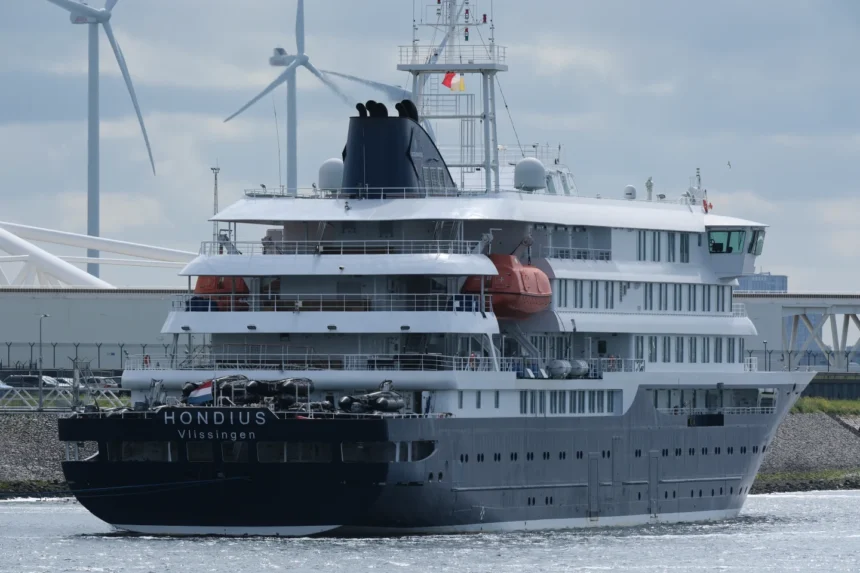
An outbreak of a disease on a stranded ship infected passengers, three of whom died of complications, and there was no way home because the country they were headed to refused to let them dock — it sounds like the plot of Contagion 2. Except this is not a movie sequel, but the real incident of the outbreak aboard the MV Hondius, which has rapidly become a health sensation online and is being constantly compared to the COVID-19 pandemic.
The hantavirus, a group of viruses carried by rodents, isn’t a novel modern sensation virus; it was first identified in the US in 1993, and since then it has had irregular outbreaks, with the most recent one in May aboard the MV Hondius. During the MV Hondius voyage from Argentina to Cape Verde, medical staff diagnosed 7 individuals as infected and reported 3 casualties. Since then, 2 more cases have been reported by the WHO.
The hantavirus is usually transmitted via exposure to infected rodents, their saliva, urine, or droppings. However, the Andes strain of hantavirus, which is the one in question in the outbreak, has potential for human-to-human transmission, which explains its transmission on board.
The virus can cause two main types of disorders: respiratory illness or kidney issues — with a fatality rate of 50% for severe respiratory issues. The symptoms of Hantavirus also overlap with influenza and COVID-19, including fever, headache, muscle aches, and GI symptoms.
What exacerbates the concerns further is that there are no vaccines or treatment methods for this virus except disease management, and the only WHO-standardized prevention measures include:
- Maintaining a clean environment and avoiding rodents inhabiting enclosed areas.
- Avoiding contact with an infected person.
- Sealing openings that allow rodents’ passage.
- Avoiding dry sweeping or vacuuming rodent droppings.
- Strengthening hand hygiene practices.
The casualties on Hondius sparked panic online and in the public, leading to Cape Verde refusing to dock the ship. The outbreak serves as a reminder and reflection of human behaviour based on past experiences. With the horrors of COVID-19 still fresh in memory, it’s reasonable to draw parallels with it, but it also highlights how online exaggeration, intense public fear, and rumours can magnify public panic and complicate outbreak response — similar to what happened with COVID-19. In this regard, the role of Spain has been exemplary, as it collaborated with the WHO and let Hondius dock on the Canary Islands to allow passengers to be evacuated and isolated for monitoring of disease progression. At the same time, they reassured locals of the protection of their safety and attempted to resolve their concerns.
Coming to the bigger question: Is hantavirus dangerous? Does it have the potential to be the next COVID-19 pandemic?
Yes and no.
Hantavirus has a fatality rate of 20-40% for its different variants, but its transmission across humans is not efficient enough to evolve into a pandemic unless a mutation occurs, according to healthcare experts. However, be that as it may, it’s important to stay alert to updates on its precautions and transmission routes.
In an age where fear spreads faster than infection, the real challenge is not only controlling the disease but also controlling misinformation, hysteria, and collective panic before they spiral into a crisis of their own.