





Has authority been reduced to a pass to exercise power as a performance?
Or is it the systemic negligence that overlooks responsibility, abusing it without consequence in power structures?
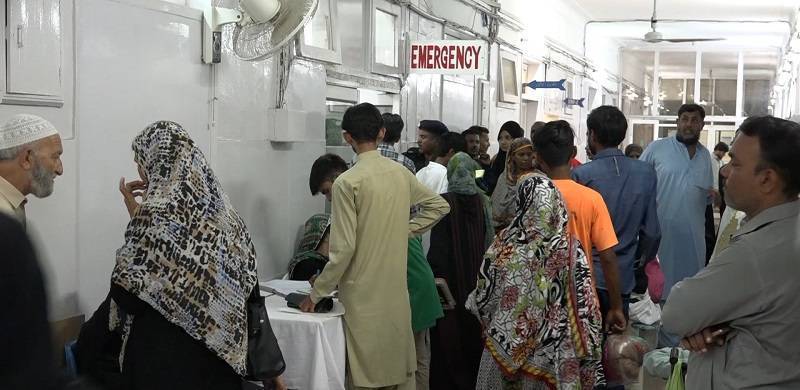
On 13 May 2026, Assistant Commissioner Burewala, Jawad Hussain Malik, unaware of medical SOPs and clinical protocols, walked into a hospital with a camera and a microphone, publicly humiliated a BPS-19 grade female doctor who was efficiently doing her job, shouted at her, filmed her without her consent and left without anyone even attempting to call him out for his behaviour.
Where does the problem arise from?
When power is handed over without keeping check and when labels are considered passes to exploit without question, it leads to such happenings. Such misconducts are not accidental but rather a result of the structural perception of power and the unchecked power that ultimately corrupts. His administrative title and the authority associated with it made him confident that he would not be held accountable for his behaviour. As said by George Orwell in 1984:
“Power corrupts, but absolute power corrupts absolutely.”
It is not about one official exploiting and misusing his power, asserting it for views, but about the system that enables it. We as a society often neglect the bigger picture, not viewing such issues as structural ones.
The problem arises when we end up focusing on the happenings of the event as an isolated issue entirely, overlooking the structure that enables it and power distribution that needs to be reformed. As the Latin phrase by Juvenal reads,
Quis custodiet ipsos custodies?
(Who watches the watchers?)
Was he really at a position to question, or was he ill-suited to be positioned there?
He lacked medical expertise and didn’t even have much knowledge about the clinical SOPs and protocols, yet he was put in a place where he had the authority to question something he, himself, didn’t understand.
It’s not even the hierarchal distribution of power that was being exercised properly. The assistant commissioner, a BPS-17 grade officer, was humiliating and forcing his authority over a BPS-19 grade doctor who is technically a senior.
This encapsulates how certain labels make officials believe they have gained a status where no one can hold them accountable for their actions. He audaciously filmed it as if shouting and humiliating those who are doing their best is all his job requires.
He came with an intention to put on a scene, fully prepared with a camera and a microphone by him. Him filming it as if shouting and humiliating those who are doing their job is all his administrative title requires him to do. His confidence in the law that he knew would not hold him accountable speaks for itself.
It was purely to demonstrate his power, publicly humiliating her by referring to the doctor as ‘bibi,’ which in this context is clearly used in a derogatory manner, as if her being a female makes her any less competent.
With whom does accountability lie when a hospital fails a patient?
Such division of hierarchy and power, which is leading to conflicts among them, makes administrative authority and medical authority constantly collide; hence, instead of facilitating, they serve to be a source of chaos, and neither side has a clear mandate. This in turn makes accountability fragmented, lying in the hands of no one when the hospital fails in providing a patient with the required treatment due to misconduct.
In order for a reform to take place, what should be the focus?
Our focus needs to be shifted from what happened to the cause that made it possible, who could have prevented it and the areas that require reform in order to prevent such a thing from happening again. Such cases have been revolving in the media for a while until they finally fade into being irrelevant or considered resolved. One trending hashtag to disappear in a few days does no good to anyone.
In the case of administrative involvement in public health affairs, the clashing presence of medical and administrative authorities and the conflicts it is resulting in are leading to fragmentation of accountability in cases of mishaps and failure in efficient treatment of patients. When a patient suffers because of shortages, delays, or mismanagement, responsibility becomes dispersed. When authority remains to be exercised without consequence, systems collapse, and efficiency inevitably becomes a far-fetched notion. Hence, a structural reform is needed in order to establish an efficient division of power and place officials where they really need to be placed.