





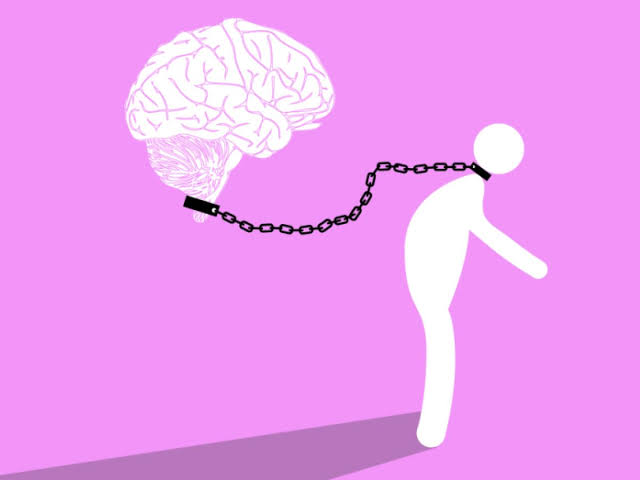
Your free will is a social construct, a concept that does not exist in nature. Modern neuroscience has produced experimental evidence that appears to challenge the decades-long debate of whether free will exists or not. Proving that the decisions we make every second and for every action are nothing but predetermined results, formed by systematic analysis of our genes and past experiences. It essentially states that we as humans have no real control or autonomy over our decisions, but rather they are predicted destinies we can’t escape from.
The free will we believe in is the “control over one’s choices.” This free will is said to reside in the conscious mind that constitutes 5-10% of the brain, while the remaining 90–95% is often associated with unconscious processes that regulate functions such as breathing, heartbeat, and other involuntary activities.
In 1965, Hans Helmut Kornhuber and Lüder Deecke observed neural activity associated with voluntary movement. The participants were asked to twist their wrists by their own will and report the exact time they made the conscious decision to do the action. Meanwhile, their brain activity was also being observed using an electroencephalogram (EEG). The results showed that the brain started preparing for the movement around 350 milliseconds before the conscious mind became aware of the action.
The conclusion that is derived from this experiment is that our conscious mind doesn’t actually control our decisions and reactions; rather, it is informed about them by the unconscious (involuntary) mind. These findings challenged traditional notions of free will and agency. Reducing the human mind to a robotic series of unconscious actions that we have no autonomy over.
It raises the question of what control we have over our thoughts and decisions. It challenges the existing principles and laws of life. Because if every action we have ever taken has already been decided, if our existence and eventual end are already predetermined and if we can’t dictate our own lives, then are we even free to begin with? Are we no different from the animals that have no conscience of their own existence?
There are many arguments discussing the moral responsibility of a person — if free will does not exist.
The evidence of neuroscience clearly supports hard determinism, which states that every event is an inevitable result of preceding causes and laws of physics. It implies that a person cannot, in any way, control how their choices unfold and that it is all predetermined by past experiences. Therefore, we cannot blame said person for their actions because they have no agency over those decisions. This idea suggests that a criminal can’t be blamed for their crimes and a judge can’t be trusted with their judgements. It blurs the line of moral structures we as a society have built.
I believe that’s where religions come to the rescue, providing humans with a guidebook that defines their ethical boundaries and frees them from the grave responsibility of deciding right and wrong.
Another philosophy is compatibilism, which defines free will and determinism as compatible with each other. This theory views free will as “the ability to choose what you desire the most”, but it also accepts determinism. English philosopher and theorist Hobbes offers an explanation of classical compatibilism when he claims that a person’s freedom consists in his finding “no stop in doing what he has the will, desire, or inclination to do” (Leviathan, p. 108). According to this, a person has two choices: either to do what they desire the most or to stop and go against that desire.
In regard to the Hans and Lüder experiment discussed earlier, the participant twisting their wrist could decide against carrying out the action before it occurs, but still, the decision would be made in the unconscious brain. So the results remain the same, where the conscious mind becomes aware of the choice after it’s already made. So is compatibilism just a fabrication? Is the idea of free will and determinism coexisting not possible?
I believe the problem isn’t that the unconscious mind controls our actions but rather the alienation of the unconscious mind as a separate entity.
We know that the unconscious mind makes decisions based on observations, genes and past experiences. Even if “free will” doesn’t really exist in nature, the concept of “free will” exists in our society. The belief that we make conscious choices is very important for us to keep living.
We as a society have constructed a moral boundary, defining right and wrong. Our brain learns these acceptable “moral laws” and operates accordingly. Whether the decision is made by the conscious or unconscious brain, it is still us who are deciding.
The experimental results only show minute differences in the neural correlates; they are not strong enough to warrant an existential crisis, but it sure does make us wonder how the brain actually works. Because there is still so much we haven’t yet discovered about the human brain.