





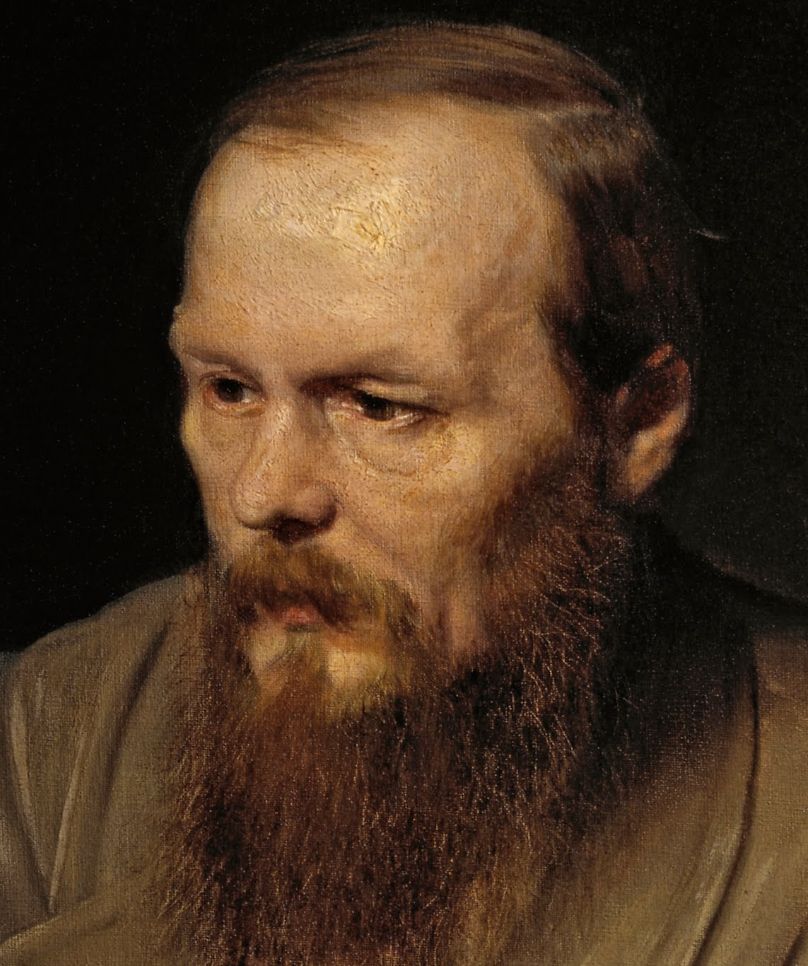
To hell with the world! Let it burn in the flames of its own reckoning. Dostoevsky does not simply narrate a story. He grips you by the collar and shows the whirlpools of reality with an ease that sends shivers down the spine of an ordinary man. Interestingly, Dostoevsky wrote Mr Porhartchin around the age of 24 or 25, making the themes within the story all the more relatable to the modern era and its turmoil.
At first glance, Mr Porhartchin looks like an ordinary man, living a dull and mundane life. He lived in a humble shared apartment, owned by his landlady. The old man remained quite frugal and detached from society, mostly keeping to himself. However, as the story unravels, the reader sees what really lies beyond the frugality which Mr Porhartchin holds dearly. Mr Porhartchin spent around 25 kopecks on dinner, consisting of white bread and onions or perhaps soup. He ate in moderation and spent money only if necessary.
As we move away from Mr Porhartchin, we are introduced to the kind-hearted landlady and other lodgers, who were young and full of life. To the reader, Mr Porhartchin looks plain, but in contrast, the lodgers saw him as an ill-humoured and ill-tempered man; therefore, some lodgers, using their wit, often toyed with Mr Porhartchin’s short temper and laughed about his limited understanding of the affairs of the world.
Little did they know that the tables would soon be turned on them, sending them into a frenzy. Without warning, the climax jolts the reader. As the story constantly shifts between Mr Porhartchin’s mind and his surroundings. One evening, Mr Porhartchin quietly disappears and returns to the apartment in a dishevelled state. Hence, the landlady and the fellow lodgers assist him and try to enquire about his whereabouts and his dishevelled state. The more they enquire, the more they drown with him in his hysteria and delusions, which become increasingly harrowing and insufferable every passing minute.
Upon his death, the lodgers and the landlady discover a large sum of money hidden in the mattress of his bed. The reactions of lodgers and the landlady almost look comical to the reader. Throughout the story, both the sane and insane aspects of Mr Porhartchin make complete sense. He lived his entire life miserly, fearing what would happen if he lost his job. Who would take care of him and pay his bills if he falls ill? And so, he hoarded money and hid it away from the world, which was all too cruel to spare him a glance. Gradually, the fear ate him from within so very deeply until he saw nothing but misery, chaos and ruin everywhere.
Mr Porhartchin’s tale wanders through the annals of greed, psychosis, social exclusion and alienation. It makes a person wonder, is money the cause of all evil or the obsession to predict all aspects of the future? Can we change the tides of our present and future, or would we continue to burn in the flames of our own reckoning? Even though Mr Porhartchin dies peacefully, he leaves readers and the lodgers with more questions than before. Of course, after all, Mr Porhartchin was a simple man with a simple life.