





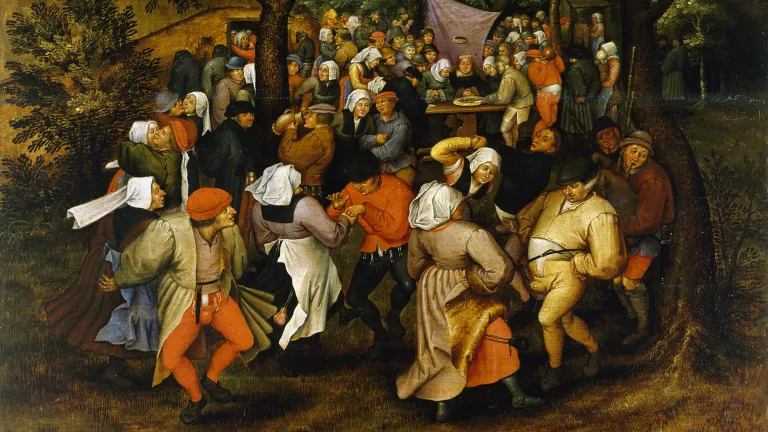
Bizarre, unusual, peculiar, haunting. These words have been used to describe the strange event of the Dancing Plague of Strasbourg. An event that stretched on for almost two months in which people just could not stop dancing. To date, this strange phenomenon has been raising questions in our minds. What was this event? Who started it? And most of all, what caused it?
What Was the Dancing Plague of 1518?
In July of 1518, the residents of the city of Strasbourg, modern-day France, were consumed by a sudden and apparently uncontrollable urge to dance. This event was ignited when a woman known as Frau Troffea stepped onto the streets of Strasbourg and began dancing silently without pause. Soon, other people joined in, moving, twirling and shaking without any warning, sound, or pause.
What Caused the Hysteria?
During the epidemic, no one had any clear explanation as to why this episode had taken place. The city physicians initially diagnosed the victims with “hot blood” and advised more dancing to cure them. As a result, the city made arrangements for the dancers to continue with their actions. Musicians were brought in, and dancing spaces were created in order to keep the dancers moving. This effort proved to be in vain, as after some time music was deemed prohibited by the religious authorities. Soon, people began coming up with new theories, like they always do, to explain the instance.
Contrary to popular belief, this occurrence in Strasbourg was not the first instance of dance mania. Similar events had taken place in the past and medieval people believed a curse to be the reason behind the hysteria. The dancing was named the St. Vitus’s disease, as he became the patron saint of plague victims, epilepsy and dancers. Another popular, but widely discredited, theory is that of ergot poisoning. Among the many symptoms of ergotism are body spasms. However, this theory has been discredited by many, as the afflicted choreomaniacs were described to be moving with rhythm, not just body spasms.
The Psychology Behind the Herd Hysteria
Research on emotional contagion shows that people subconsciously mimic the expression and mood of others. This leads to synchronised emotional and physical states among groups. We as humans see what people do, notice what is being accepted, and adapt to it. Particularly in high-stress contexts such as Strasbourg, this might explain why people seeing others dance, might have compelled them to join in.
By September of 1518, the hysteria began to diminish, and the number of choreomaniacs began to fall. From one woman dancing uncontrollably in the street, this strange phenomenon quickly garnered hundreds of victims, accounting for deaths, injuries and vision loss. An odd event, something which science has still not been able to fully explain, took lives and loved ones, once again reminding us of the futile nature of the human brain.