





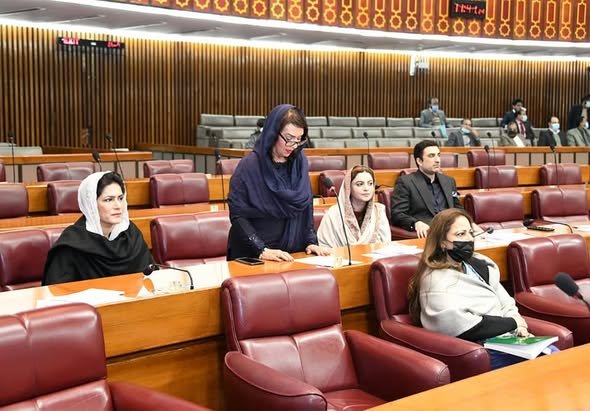
Surprisingly, the Pakistani parliamentary system appears gender-balanced, with a fifth of the National Assembly being women. However, a closer look reveals a different picture. One group comprises women who fought against men to secure direct constituencies, while the other group arrived through party representation without direct votes. Both groups are legislators, but the distinction illustrates the reality of women’s representation in Pakistani politics. Although women have been present in parliament through reserved seats, the crucial question is whether they possess the actual power that comes with that position.
Routes to Political Power
One of the easiest and most reliable routes to real political power in Pakistan is through family ties and dynastic politics. Benazir Bhutto, the first female Prime Minister of Pakistan, is a prime example of this. She assumed leadership of a party and inherited a legacy of political martyrdom. Maryam Nawaz became her father’s chief organiser before winning a seat in the 2024 general election and becoming the first female Chief Minister of Punjab. Privileged women with established political connections often receive an uncontested ticket for general seats, while women from unconnected backgrounds must fight their way through.
Another, more difficult path is party participation and organisational climbing. A woman may be able to convert her work running the women’s wing of a party at a local level into a nomination for a reserved seat, but rarely a ticket for a general seat. Participation in local government, union councils, and district councils provides a training ground for women, but does not offer a direct link to higher office. Women have long been promised representation in local bodies, but local government itself often lacks funding and fiscal authority, creating a training ground that leads nowhere.
The Dynamics of Reserved Seats
Holding general seats through direct elections results in an unambiguous display of power, yet it remains a restricted path. In the 2024 elections, women candidates held 5% of the general seat nominations nationwide – the legal minimum – and only 11 out of 300 contested seats in the National Assembly were won by women.
The reserved seats have fundamentally altered the numbers game. Sixty seats in the National Assembly, along with proportional shares in every provincial assembly, are allocated to women through party lists based on the general-seat tally of each party. Before offering a critique, it is important to acknowledge the effectiveness of this mechanism. Over several terms, experienced women have been elected to parliament, thereby strengthening committee work through their institutional knowledge and legislative drafting skills. This has promoted the inclusion of women from provinces and communities who would otherwise rarely appear on a ballot. It has also increased the number of women in the chamber, which has arguably reduced public doubt about women’s ability to serve.
However, a legislator with a reserved seat is not elected by popular vote but is selected by party leadership. The party that places her on the list effectively controls her seat, which affects her legislative independence and authority.
Institutional Support and the Path Ahead
The real question is whether a party shares a general seat with a woman simply because she can win it. Do women get tickets for seats other than those reserved for them? Do they receive equal campaign funding? Does a party provide them with real structural support? This is an area in which most parties fail. Data from the 2024 election shows that parties often nominated women merely to fulfil legal requirements, frequently running them in constituencies where they had little chance of winning.
Nevertheless, there are some hopeful signs. Over the past few years, more women have registered to vote across the country. This does not mean that reserved seats should be discarded; if the quota were removed today, Pakistan’s parliament would be filled with men to an even greater extent than it is now. Reserved seats are a vital starting point for addressing this imbalance, but true progress will be determined not by how many reserved seats women hold, but by how many direct seats they win and control.