





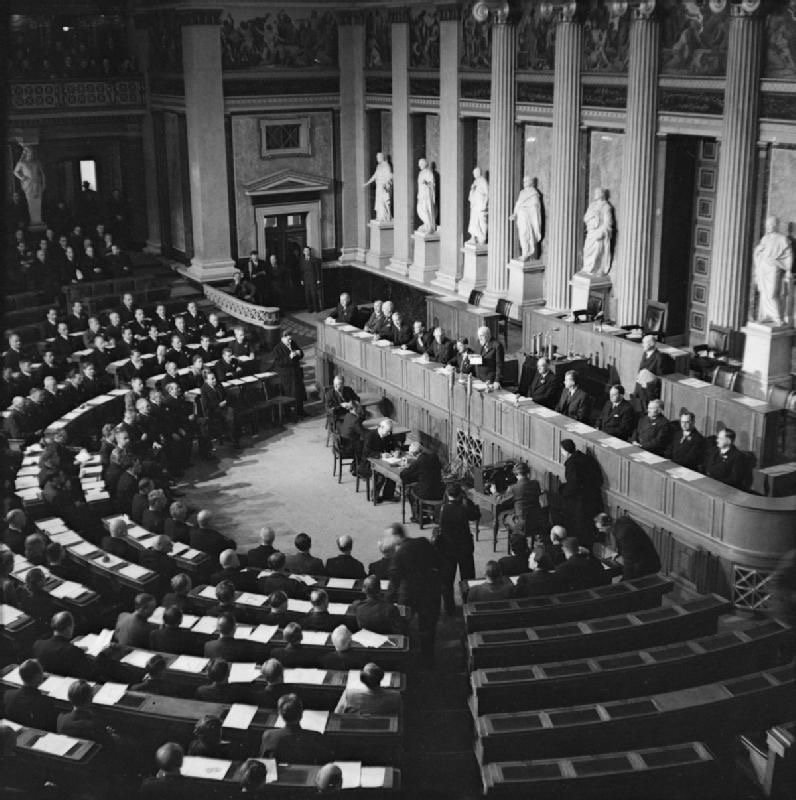
All political parties happen to have their own ghostly mobs.
If some show up in the form of portraits hung in quiet tombs or government buildings, the rest appear as empty promises, repeated slogans, and speeches embedded in the minds of later generations — long after their authors have gone.
In the contemporary world, this phenomenon has shaped a new definition of political ghosts that never seem to leave.
Lingering Phantoms in Modern Politics
These figures are no longer present in a mundane form, yet they linger in every political field. Though leaders may have left the scene, their phantoms continue to haunt current politics — taking shape in national dialogues, speeches, ideas, and philosophies that are continuously resurrected in present discourse. This is especially evident where current parties stick to the same old scripts, bringing nothing new to the table.
We — not just as a single nation, but on a global level — are experiencing the phenomenon of how the past refuses to stay dead as it seeps through the cracks of the present.
The reason these political ghosts flourish in modern times is a collective consciousness trapped in a cycle of nostalgia. In periods of instability, individuals look back to bygone eras to find clues on how to navigate current crises. Consequently, these political ghosts hover over the present as society clings to the belief that these legendary figures might hold the answers we seek.
It is easy to see the appeal in this: the future is hard to predict, but the past is easier to reframe.
The Cult of Political Heroes
Every generation creates its own heroes. These figures are usually products of fear, credited with saving the day through actions judged as noble or flawed depending entirely on who is telling the story.
However, relying on them is a risky endeavor.
Political ghosts cannot be held responsible for anything that happens after their time, as they are no longer around. They serve merely as vessels carrying years of resentment, disappointment, and hope projected onto them by present society. This constant debate pulls political discourse closer to a séance than to actual governance. Clinging to a false memory is not a viable strategy; constantly debating what these legends would have done in a similar situation — and wondering if their golden era can be brought back — creates a disconnect between reality and what we prefer to believe.
The main conflict with such idealisation is not that history is irrelevant to reminisce upon, but that it replaces political imagination and sets a restrictive precedent.
Those who remain lost in it will fail to look past it.
Weak Institutions and Immortalised Archives
In an unstable democratic state, these ghosts find ample space to exert significant influence. The weaker the institution, the stronger these personalities become. Citizens, rather than trusting the system, begin relying on these figures for extraordinary outcomes, turning elections into a contest of memories.
This phenomenon is reinforced by technology, which immortalises history through easily accessible internet archives. Speeches, archival footage, photographs, and political narratives are constantly revived, never allowing the dead to rest. Even their ideologies reappear, dressed as modern nationalism.
Thus, political ghosts evolve as societies forget their previous encounters with them.
Ironically, despite collective memory being meticulously archived across mediums, it is frequently revisited but rarely understood.
Ultimately, history does not exist for us to remain trapped within it. Countries should not be treated as museums for political ghosts; they must constantly evolve. Those caught in repetitive dialogues will always seek permission from these ghosts to move forward — and that is not how a society survives changing times.