





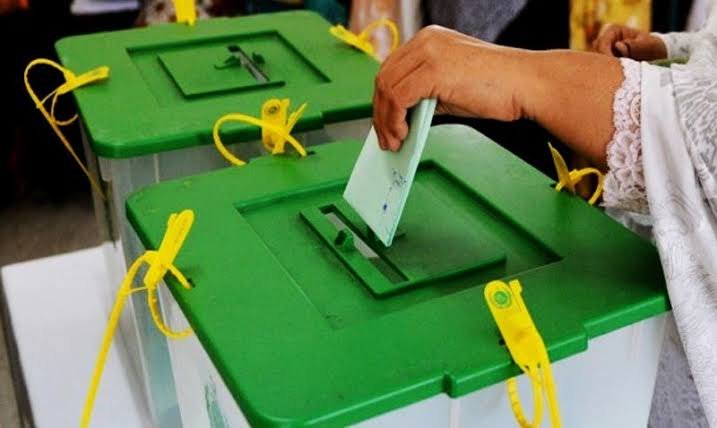
The turnout for national elections typically sits between 60% and 66%, whereas the turnout for local elections rarely exceeds 30%. The reason behind such a stark difference lies in the public mindset: people believe national elections are far more important than local ones. As a result, turnout for local elections decreases further, especially when they are held at the same time as national elections.
The Everyday Impact of Local Governance
The primary reason behind the public’s negligence is that common individuals are unaware of the impact local elections have on their daily lives. The masses do not realise that day-to-day problems will not be solved by the Prime Minister, but rather by their local representatives. Issues regarding sanitation, water scarcity, transport, and primary healthcare are all meant to be handled by local government bodies. Furthermore, citizens can easily access their local representatives to address and resolve these issues directly.
According to research published in Social Indicators Research examining 76 Spanish cities, citizens living in municipalities with good financial health enjoy a significantly higher quality of life compared to others. This demonstrates that local municipalities bear more direct responsibility for the day-to-day well-being of the population than the national government.
Financial Disparities and the Budget Flow Crisis
Another major reason for the ineffectiveness of local government is budget allocation. Although many local bodies genuinely want to work, financial disparities hold them back. The core issue is that under the National Finance Commission (NFC) Award, funds are allocated directly to the provinces, but this budget unfortunately fails to trickle down to the grassroots level.
For instance, based on earlier distribution models, Karachi was expected to receive between Rs 170 billion and Rs 230 billion annually. However, the current Karachi Metropolitan Corporation (KMC) allocation is just Rs 27 billion, and even when combined with provincial grants and internal revenue generation, it barely reaches Rs 60 billion. The paradox here is striking: Karachi generates thousands of billions in federal and provincial revenue, yet receives only 27 to 60 billion in total funding.
Due to these weak financial conditions, Karachi faces severe sanitation crises, water scarcity, chronic traffic congestion, crumbling infrastructure, and inadequate healthcare facilities — all of which contribute to its ranking among the least livable cities in the world.
Coalition Deadlock and the Public Participation Cycle
According to a study in the International Journal of Public Sector Management (Emerald Publishing, 2024), adequate resource allocation is crucial for building public participation. The behaviour of citizens toward local government follows a continuous, negative cycle: provincial governments fail to provide proper finances to local bodies, which cripples local functionality; citizens then come to believe that local government is incapable of solving their issues; ultimately, local election turnout fails to rise above 30%.
Furthermore, fractured coalition governments create additional hindrances for local administrative mechanisms. In Karachi, for example, the Pakistan Peoples Party (PPP) held 93 seats, alongside 86 seats for Jamaat-e-Islami (JI) and 40 for Pakistan Tehreek-e-Insaf (PTI). In such coalition-led local bodies, consensus and unanimous decision-making become exceptionally difficult to achieve, resulting in operational paralysis.
Unlocking Grassroots Potential
Although these structural challenges represent a significant fault line in Pakistan’s governance, they can be tackled through deliberate and sustained action. Internationally, local initiatives demonstrate immense potential: in Cambodia, the implementation of the Kanchan Arsenic Filter by local authorities successfully served over 15,000 urban households, proving how effectively local governance can solve pressing public health challenges.
In a nutshell, while national elections are essential for the broader prosperity and development of the country, the basic, daily issues of citizens cannot be solved by the Prime Minister. To resolve local problems, voters must recognise the true importance of local elections, as local bodies are ultimately responsible for the immediate betterment of the community. The Prime Minister will not come to solve a neighbourhood’s water, sanitation, transport, or local health problems.