





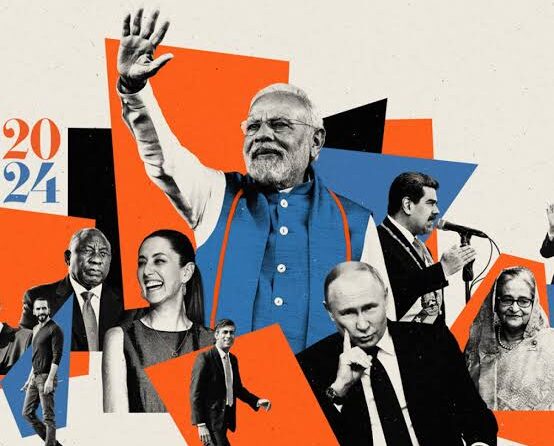
Zohran Mamdani was elected as mayor in the 2025 New York City mayoral election, and comment sections around the globe were filled with the remark “He’s my mayor.” Although only New Yorkers had the right to cast a ballot, thousands internationally felt emotionally invested in the result. The digital age has introduced a phenomenon in which the way we consume and interact with international politics is massively shifting. Our screens have shattered geographical barriers and invited local elections onto the global stage.
Politicians have become online personalities. Their use of charisma, communication style, or often polarising political stances gives them unique recognition globally — either as an ideal to pursue or a bad case study to avoid. Zohran Mamdani earned the hearts of many through his campaigns in different languages, including Urdu, and for his past rapping career. It was his refreshing political sincerity that made his name well known. Representation also plays a major factor. Everyone cheered and reposted, praying that he would make history as the first Mayor who is Muslim, of South Asian descent, and born in Africa. People love to witness familiar faces getting a chance to stand on a political pedestal.
On the other side of the spectrum, many across the world prayed that Donald Trump would not be elected as the American president. His controversial foreign policy stances and past racist remarks made him an internet sensation. Trump’s false claims about Haitian immigrants stating “they are eating the dogs… they are eating the cats” caught the global eye, quickly becoming an internet meme. This massively ignited interest in the 2024 U.S. presidential election.
Yet, social media is merely a platform that exposes millions to local elections. The reason audiences remain invested is because the issues politicians raise are not confined by national borders. Whether it be climate change, immigration, or international crises, politicians now speak on issues that resonate with people who may never have the opportunity to vote for them. Mamdani’s outspoken support for Palestine gained the attention of those protesting against international conflict globally.
However, that interest is sustained not only by humanitarian concern but also by political interest. Because of globalisation, the political stance of one leader can shift the entire world order, creating a ripple effect on other countries. During the 2024 U.S. presidential election, people tuned in to prepare for possible consequences regarding the Russia-Ukraine conflict, determined by which candidate would be elected. Whilst Harris promised to further support Ukraine and condemned Russia’s invasion, Trump praised Putin’s actions, describing the invasion as “genius” and “savvy.” For Ukrainians and Russians, these vastly contrasting political approaches could have led to massively different outcomes.
Migration and dual identities have also blurred the boundaries between domestic and international politics. Many diaspora communities make a conscious effort to stay informed and engaged with the politics of their ethnic origin despite living miles away. After the arrest of former Pakistani Prime Minister Imran Khan in 2023, protesters gathered in front of the Pakistani embassy in London. Similar unrest could be seen with the protests happening in London against the Iranian regime in early 2026.
Therefore, domestic politics is increasingly becoming borderless as technology, migration, and globalisation continue to connect societies. Indeed, the ballot may be cast locally, yet the conversations surrounding it echo to every corner of the world.