





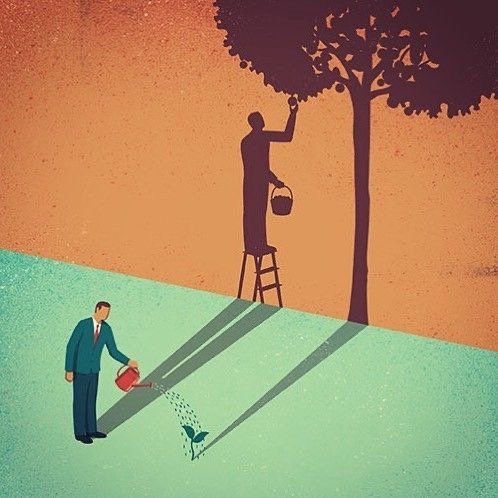
Patience, as we have always been told, is a sublime virtue. We often see it embroidered on cushions, printed on office posters, used as kitchen fridge magnets, and offered as advice by every aunt who has been a crisis veteran all her life. Here, I will offer a word of optimism: be patient, as good things come to those who wait. And to be fair to all the aunts, they aren’t entirely to blame either.
Patience has carried people through illness, grief, exile, and forty-minute aggravating customer service on-hold music — which is enough to have the likes of Mozart, Beethoven, or Chopin roll in their graves. In the end, patience, with all its layers, is simply a quiet form of courage.
But here is the question that we often elide: what is this patience for, exactly? And rather, patience for whose benefit?
At the outset, we need to explain what type of patience we mean. One is the patience of the farmer who plants a seed and trusts the season to generate the harvest. The other is the patience of a passenger who sees the ship taking on water, but thinks it rude to point it out. The first outcome is wisdom-laced, whereas the other is merely surrender, disguised as good manners.
Have we ever noticed who typically recommends patience? It is rarely the person drowning. The employee waiting three years for a promised raise — never the intended outcome to begin with — is told to be patient by the manager who approved a budget that did not include it; a classic case of kicking the can down the road.
On one hand, Flint, Michigan residents were told for years that their water was fine, then told to be patient while it got fixed; some of them are still waiting, more than a decade later. On the other hand, renters priced out of their cities are told the market will fix itself soon. Entire countries are told that climate targets are coming — just hang on until 2050 — by leaders who will be comfortably retired or comfortably dead by then.
Patience, as it turns out, is a gift we love to give as long as someone else does the actual waiting.
Martin Luther King Jr. saw the situation perfectly from a jail cell in Birmingham, Alabama. The moderates who pushed him to slow down were not villains, at least not in their minds. They agreed with his goals, but found his timing inopportune. According to him, for those in power, “Wait” almost always means “never.” They didn’t ask him to suffer injustice with dignity; instead, they were merely asking him to suffer it quietly, out of earshot.
When the very people who benefit from your waiting demand your tolerance, they are not encouraging a virtue. It is nothing but a delaying tactic, and you are the ultimate purchaser of it.
You constantly see the same evolving pattern throughout the process. The company says, “We hear you, and we are dedicated to doing better,” which roughly means, “Please stop talking about this by Thursday.” The HR investigation is held in perpetual abeyance. The politician claims that every disaster is not the time to politicise the issue, as if moving the goalposts to reach nowhere.
In each case, somebody’s patience is doing the heavy lifting — and it is never the patience of the person who caused the mess in the first place.
None of this is new. Religious traditions recognised the difference long before we watered it down. Patience was never supposed to mean passivity. Imam Husayn at Karbala is viewed as the ultimate example, the epitome of patience, and he was not sitting at home practising acceptance. He was facing a formidable army. Patience in that situation meant standing up and doing the right thing, not sitting around and being domesticated into letting the wrong get through.
Most of us will never face an army. But we all face our own smaller versions of the same choice.
So ask yourself the following: what if the raise never comes? Would you still be in that chair five years from now, telling yourself the same story? What if the apology never arrives, and the person hurting you knows it? Your hope costs them nothing and keeps you where they want you, leaving you with no control over your situation.
If any of those questions made you feel uneasy, that is worth paying attention to.
So, question three things:
First, is my patience a choice or a leash? Am I waiting because I have looked at my options and decided that waiting serves a purpose? Or am I waiting because someone has convinced me that leaving or speaking up is not for people like me?
Second, who profits from my endurance? If the honest answer is “the person causing the problem,” then you’re not practising a virtue. You are actually underwriting the very problem.
Third, would I tell someone I love to put up with this behavior? We are remarkably clear-eyed about others’ sinking ships, but only when it comes to our misfortunes do we tend to shove them away.
Just to be clear: not every discomfort deserves a revolution. Some things do take time: healing, grief, and children learning anything at all. Impatience leads to rushed decisions and burned bridges, which can be unbearable over time.
However, let’s be clear that the answer to fake patience is not permanent outrage either. Persistent fury and anger are just complicity in disguise. It makes noise, but changes nothing and eventually withers away.
If waiting is wrong and raging is also wrong, what’s left?
Here I would ask a few simple questions: is the current situation waiting in service of something or in place of something? Is the wait built on timing, strategy, and preparation, or is it avoidance of some kind?
And when does patience cross the line?
The answer is simple: when your waiting costs you everything and them nothing.
So my honest advice? Hold on to the sublime virtue. Focus on the long view. Just read the fine print before you join anyone’s waiting list.
Some wise people will tell you that change is coming, and others will just hope you’ll wait long enough to forget you were owed anything in the first place.
Ask which one is talking. And when you realise your waiting causes them trouble and costs you nothing, decide how patient you want to be.