





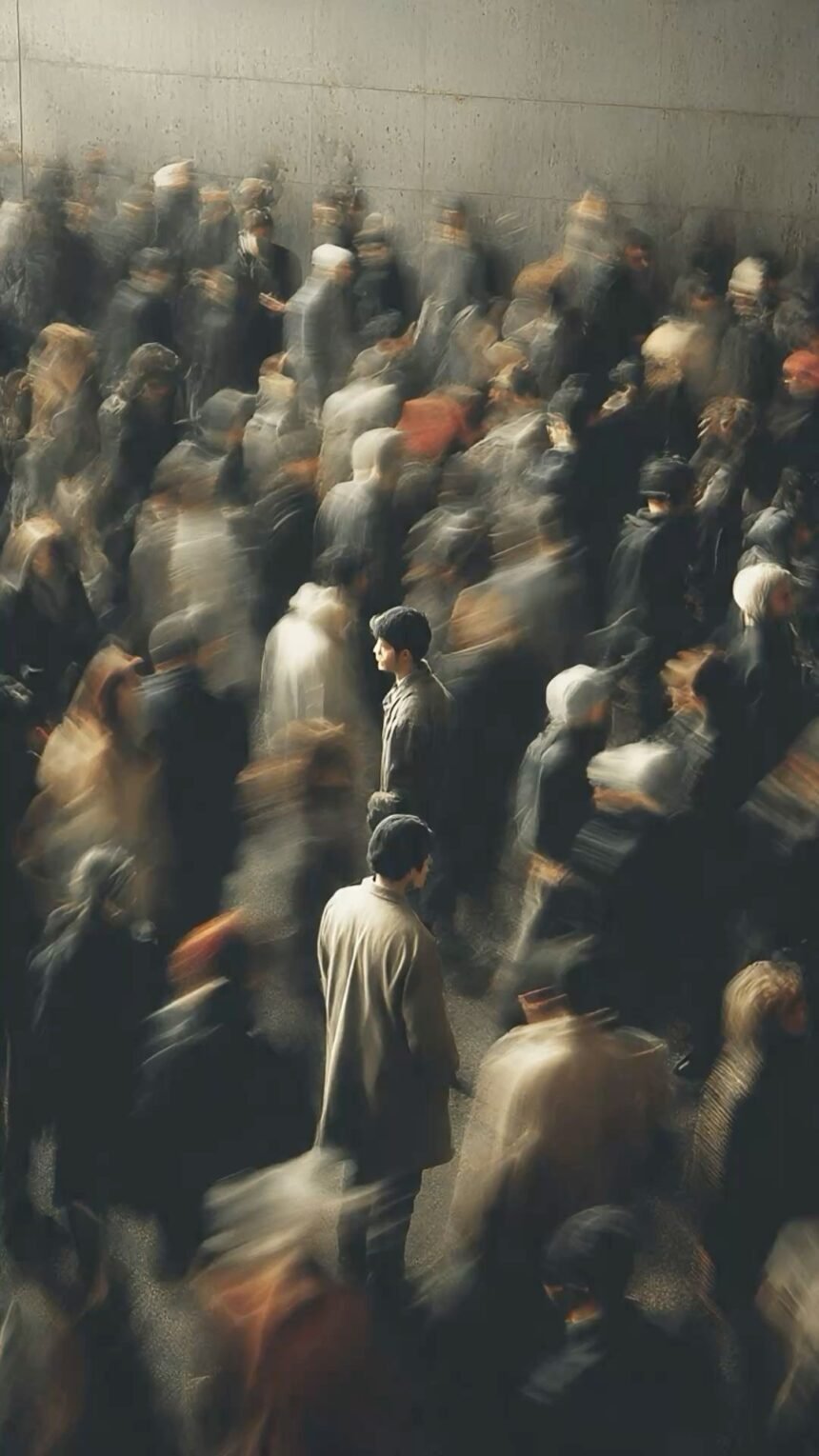
An action is considered harmful only if the agent leaves the exposed party in worse condition than before. But what if an action affects the condition of life for someone who doesn’t exist yet?
Future people do not have the right to vote, protest, sue, or even raise their voices against injustices committed against them. Yet, today’s decisions and actions involving climate change, technology, artificial intelligence, biodiversity, public debts, wars, and natural resources have the power to change the lives of future generations for better or for worse. Is it possible to violate the rights of someone who does not yet exist? Or maybe a better question would be whether we have a duty towards them, considering our actions will determine the quality of life they will inherit from us.
Do duty and responsibility disappear if there’s no one to hold us accountable or ask for their rights? If a person cannot claim their rights, is it justified to violate them? Our duty is tied to our awareness that our actions will have an effect on the permanence of life. If I cannot see the repercussions of my actions, does it mean that I’m not accountable for them? Future generations might never have a chance to ask for justice. Still, that does not absolve us of our duty towards them, as responsibility does not come from one’s ability to ask for their rights, but rather from our own agency.
Let’s move towards spatial distance rather than temporal distance, as responsibility cannot be defined by the proximity of miles or years. Despite contributing less than 1% of global carbon emissions, Pakistan suffers from extreme weather and climate conditions. Now, does this absolve high-carbon emitting countries like the US, China, and India of their responsibility to take climate issues into consideration? Or consider AI data centres causing the evaporation of natural water resources and air pollution, changing the physical condition of Earth. By exploiting natural resources, we are ensuring that future people will inherit a planet with much less habitable conditions than the one we were born into.
Our duty is not to dictate, nor to design a society and determine a set of values for them. It is quite possible that what we see as suitable, good, or progressive might not hold true for them. Our definition of a good and content life is different from that of our ancestors, and theirs will surely be different from ours. So, instead of shaping their future, our duty lies in preserving ecological stability, maintaining stable institutions, protecting knowledge, and safeguarding their right to exploration and the freedom to choose their own way forward. Every generation has the right to choose what is best for them, and we must not force our vision of a better future — which will be their present — upon them.
Now, does this mean we should sacrifice today’s needs for a secure future?
No; it is not about choosing one generation over the other, or protecting one’s chances of survival at the expense of the other. Our responsibility extends across time and demands attention towards today’s needs without knowingly creating suffering for future lives. The United Nations Brundtland Commission defined sustainability as “meeting the needs of the present without compromising the ability of future generations to meet their own needs.” Today, there are almost 140 developing countries in the world seeking ways of meeting their development needs, but with the increasing threat of climate change, concrete efforts must be made to ensure development today does not negatively affect future generations.
The absence of a voice from the future cannot be mistaken for permission to disregard their potential existence. The question of whether future people have rights is a philosophical debate yet to be settled. But what we know for sure is that our decisions and actions have consequences that will outlive us. Our acceptance of responsibility does not come with the settlement of a debate, but from our agency and awareness of the consequences of our choices and the world that will be left behind as a result.