





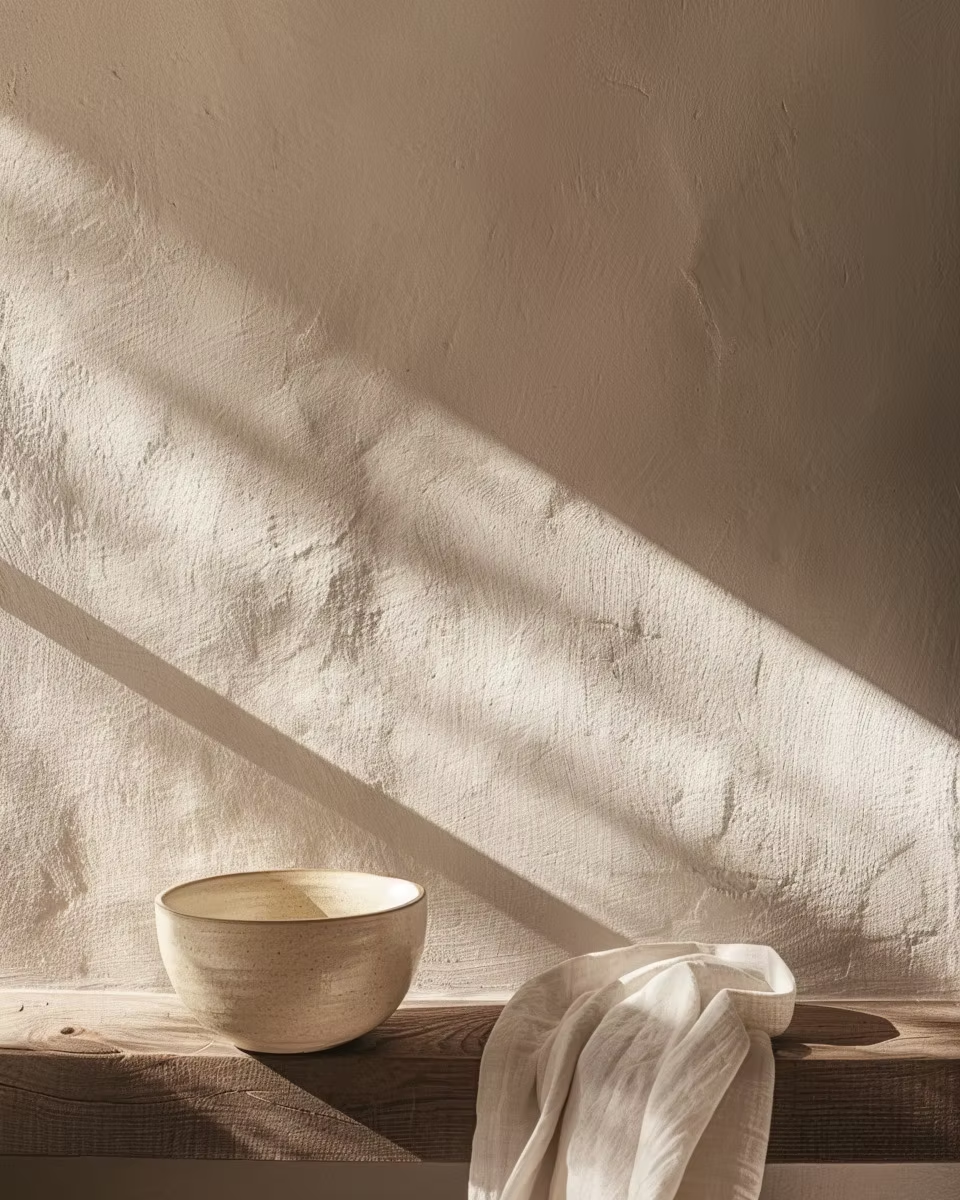
It is somewhat strange in a world dominated by speed, efficiency and mass production that people are returning to the handmade. Where pottery and woven fabric used to be made by hand and bread and handwritten notes were regarded as ordinary items, today, they are appreciated due to their flaws. It is not only the change of aesthetics; it is also the change of some underlying cultural and psychological necessity. We are starting to desire what is real in a digital perfection era.
Life has been made easy by mass production in numerous ways. There are cheaper products which are more consistent and more available. However, the same consistency may be vacant. Things become indistinguishable, and objects lose their character. A handmade product, in turn, has some minor imperfections: an irregular line, a brushwork that is visible, and a detail which could not be recreated by machines. These flaws are not imperfections; they are the sign of human existence. They bring to mind the fact that somebody, somewhere, created this with care.
The emotional bond that we develop with handmade objects is one reason as to why this renewed appreciation has occurred. When we touch something which has been made by human hands, it feels different. It has a story enshrined in it — the time, work, and will of the maker. This brings the effect of authenticity, which is missing in mass-produced goods. Such physical relations are more precious in a world in which much of our communication is mediated by screens.
The second reason is the emergence of digital life. Daily lives have become extremely edited and filtered. An example of this phenomenon is social media, which tends to give the audience an idealised image of the world, removing any flaws. Although this may be aesthetically pleasing, it may be remote and unnatural. The counterbalance is that of the handmade. It is sincere, and its flaws are the ones that mirror real life. In such a manner, handcrafts can give us a grounding impression, and we are brought back to the physical world outside of the digital.
Sustainability and ethically conscious consumption are also becoming increasingly known. Mass production is usually costly in terms of environmental degradation, unscrupulous labour, and overconsumption. One of the alternatives is handmade goods, particularly local or small-batch production, which is commonly viewed as a more sustainable option. They urge us to be consumptive and appreciate more what we have. People are purchasing fewer but more significant disposable goods as opposed to purchasing numerous ones. These flaws are incorporated in the valuation of these objects, but not to be thrown away.
The revival of the handmade can also be culturally interpreted as a reaction against the rhythm of life in the modern world. The unending stress to work hard and be productive has resulted in burnout amongst many individuals. Handicrafts, both as an amusement and a business, provide a more conscious, slower form of living. Games such as knitting, pottery or woodworking involve time and patience. They enable people to experience the moment and even offer some relief from their hectic life of day-to-day activities.
Curiously enough, this admiration of imperfection is not that new. The imperfect has long been treasured by many traditional philosophies. The concept of beauty being in the form of irregularity and transience has existed in other cultures. The context is the difference today. These notions are languishing in a world that is highly industrialised and computer-driven to the extent that they are being rediscovered and reinterpreted. Handmade is not only an aesthetic option but also an expression of protest against homogeneity at a low level.
Nevertheless, it should be noted that the resurgence of the handmade does not come without its contradictions. Crafted products tend to be more costly and hence not affordable to a large population. The danger exists that the concept of imperfection also be commercialised in that one develops products that appear to be homemade when they are not. When this happens, the genuineness that individuals desire may be lost. This brings out critical awareness of the consumer because we must make sure that the value that we attach to handmade goods is authentic.
Nevertheless, the popularity of the handmade only increases. It appeals to something that is very human, the need to connect, to have meaning and authenticity. The imperfect portrays an alternative form of beauty in a world that mostly emphasises speed and perfection. It teaches us that we should not be ashamed of flaws, but we should value them.
Finally, the revival of the handmade is symptomatic of a more general change in the definition of value. It is not merely a thing of possessing things but of what the things tell and experience. Imperfection, which was previously perceived as a defect, is now understood as a mark of life and personality. In a highly digitalised and standardised world, the handmade is a means of reconnecting with the real and the physical and the human.