





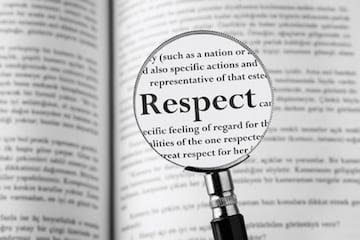
In the vast majority of homes, schools, and workplaces across Pakistan, respect has effectively been reduced to one thing: silence. A child who never questions their parents is praised as respectful. A student who refrains from correcting a teacher’s error is considered respectful. A young worker who accepts any order, no matter how absurd, is labeled respectful. A woman who defers to her husband, father, or older brother without argument is deemed respectful. In all these instances, the word “respect” has become a substitute for another term entirely: obedience — an obedience demanded by fear rather than offered by choice, which has nothing to do with genuine respect.
This substitution is hardly accidental; it serves a specific purpose. Within hierarchical structures, unquestioning deference exists to safeguard those at the top rather than protect those beneath them. A culture that elevates silence to a virtue benefits the father who cannot be corrected by his son, the teacher who cannot be challenged by a student, and the manager who cannot be questioned by a subordinate. Those who remain silent rarely stand to gain from it.
Consider a familiar scenario in Pakistani corporate culture. A junior employee identifies a critical flaw in a decision — perhaps a risky contract clause or an unaddressed operational gap. The employee stays silent because challenging a supervisor’s judgment carries immense professional risk. When the error inevitably manifests later, leadership demands to know why no one flagged it. The uncomfortable truth is that it was simply unsafe to do so. The lesson everyone absorbs is clear: compliance is safer than honesty.
There is a fundamental distinction between being courteous and being submissive. While Pakistani culture excels in hospitality and reverence for elders, it frequently blurs this critical boundary. Courtesy is a refined way to disagree — using appropriate tone, timing, and consideration to express an opposing view without demeaning the other party. Submission, by contrast, suppresses the truth entirely. A junior colleague who says, “I think this approach carries a risk we should discuss before finalizing,” is acting courteously. A colleague who remains completely silent as an uncalculated risk is taken is acting submissively. Both may look like model behavior from the outside, but only one reflects true professional integrity.
Authentic respect can exist alongside disagreement. This point requires explicit emphasis because it directly challenges a widespread social assumption. Two individuals can disagree passionately, correct one another, and hold differing views without treating dissent as a personal insult. What fails during a disagreement is not respect, but personal security — the fragile fear that being challenged undermines one’s dignity or status. A leader confident in their abilities does not require a subordinate’s silence to feel respected; a parent secure in their role does not need absolute compliance to maintain authority. The absence of this inner security is precisely what turns “respect” into a demand for submission.
The institutional cost of this confusion is far from abstract. Systems that punish questioning do not build character; they cultivate compliance. A child taught never to question authority fails to develop critical reflection, learning instead to navigate self-preservation until independent thought is abandoned altogether. A woman taught that raising an objection against her husband is a sign of disrespect does not become devoted; she simply becomes adept at self-censorship. An employee trained to defer without exception does not become loyal; they become a passive bystander as an organization walks toward disasaster. None of this reflects moral strength — it is the absence of character disguised as virtue.
This cultural pattern explains why so many administrative and organizational efforts in Pakistan suffer from systemic failure. Mismanaged projects, preventable accidents, and long-unreported workplace abuses almost always share this common denominator: the problem was foreseen by multiple individuals, yet no one spoke up because doing so would mark them as disrespectful. These systemic breakdowns are rarely failures of information; they are failures of a culture that renders silence the only rational choice.
This argument is neither an excuse for rudeness nor an invitation to challenge every routine directive. Rather, it calls for separating two concepts that Pakistani families and institutions have conflated for generations. Respect does not preclude conflict — it is an act of honesty delivered with consideration for the recipient. A culture unable to distinguish between the two will continue to raise individuals who excel at showing deference, but struggle to speak the truth — confusing being polite with being honest.