





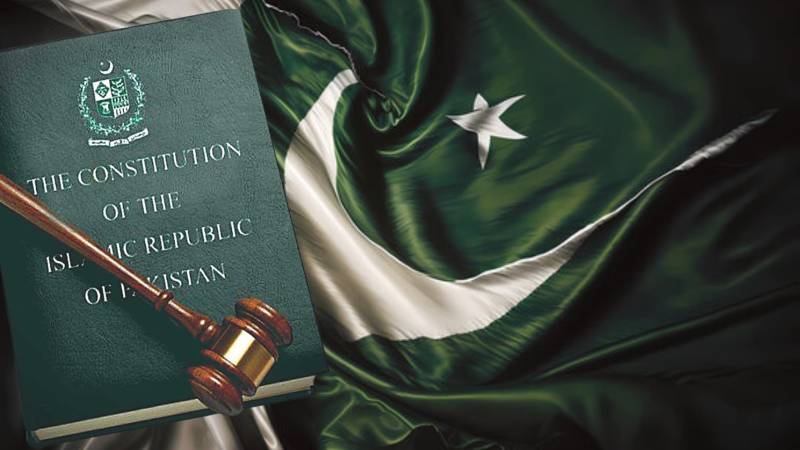
After the 26th and 27th amendments to the Constitution of Pakistan, the judiciary is now fully under the control of the government as the government is now authorised to appoint the Chief Justice from the top three judges.
Any judge who gives orders against the government will not be allowed to become the Chief Justice no matter how capable or talented he is. When the 26th amendment was passed, Justice Mansoor Ali Shah was the senior puisne judge but Justice Yahya Afridi was made the Chief Justice who was third in line; even Justice Munib Akhtar was senior to him, but the government feared that they would not follow their will, so their path to Chief Justice was hindered. Justice Mansoor Ali Shah, Athar Minallah and Shams Mahmood Mirza resigned from their positions after these amendments.
These two amendments are a blow to the constitution and the Supreme Court is now an appellate court with the Federal Court having all the powers to decide the important constitutional cases. In Pakistan, the judiciary is more a puppet in the hands of the government than to provide justice to the citizens. Justice is now a far cry in Pakistan. Throughout the history of Pakistan since its creation in 1947, the role of the judiciary has always been condemnable.
Justice Munir in the famous Maulvi Tameezuddin case formulated the doctrine of necessity that even if a certain action is illegal it can be allowed if necessary. The judiciary has long been used for political vandalism. Zulfiqar Bhutto was sentenced to death and after 44 years, the Supreme Court, in a presidential reference, declared that judgment wrong. In every era the judges decide the cases according to the will of the government, violating the constitution. Who is responsible for all the wrong decisions? Of course the judges who go against their oath whether they happily favour the government or give in to the pressure or threats, they are responsible. Judges should be courageous enough to take stand for justice in the country.
The World Justice Report Rule of Law Index ranks Pakistan 130 among 143 countries. The major factors for this are constraints on government powers and corruption. There is no justice for a common man in Pakistan. In 2024, a singer, associated with the opposition party PTI, was arrested by the police. When he was produced before the High Court he alleged the police of custodial torture. Custodial torture is not allowed in the constitution, but the court didn’t take any notice or punish those involved as it is a legal practice and sadly it is now normal in Pakistan. Crime is not considered crime as long as it is done by the government institutions or the elites. There is no rule of law, even the fundamental rights of citizens are being denied.
The government uses the judiciary as a weapon for political victimisation and it is seriously affecting the law and order in the country. Before the elections of 2024, the judgement of the Supreme Court regarding denying PTI of the bat symbol forced the PTI candidates to contest the elections as independent candidates, making the electoral process difficult, just to bar the party from achieving a large number of seats. After the elections, their reserved seats were also distributed among other parties, although PTI gained the highest number of seats; such a decision shows that public opinion has no value. Our judiciary couldn’t even provide justice to the leader who gave us the constitution (Bhutto); what can a common man expect from this system? The judiciary is meant to provide justice and maintain law and order in the country. Unfortunately, in Pakistan, the sole function of the judiciary is to do whatever the government wants, no matter if it is legal or not. Political involvement must be stopped now; otherwise, it will undermine the very foundations of democracy.