





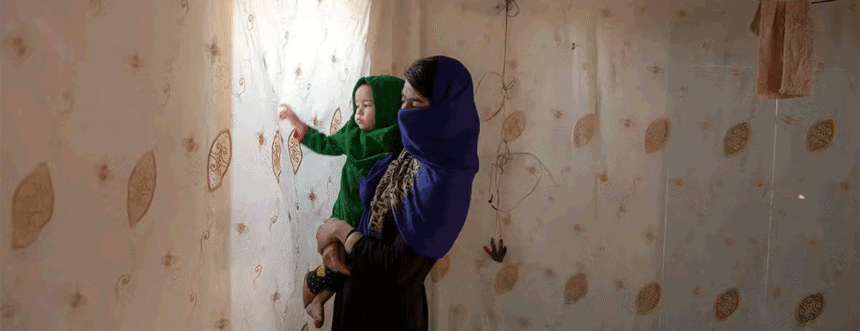
An entire generation of women has disappeared, not from their lives, but from classrooms. As of 2026, Afghanistan stands alone as the only country in the world where women and girls are denied secondary or higher-level education. More than 1.1 million girls have been denied access to secondary schooling, leaving 80% of school-aged Afghan girls and young women out of school. These statistics alone cannot capture the true magnitude of this crisis. Behind every door that is closed for these women lives a doctor who will never get to treat her patients, a businesswoman who will never get to go on that one business trip that can possibly change her life, a teacher who may never inspire a child and a leader whose voice may never be heard.
A society where education becomes a privilege rather than a right is a society that has already failed. When people talk about Afghan women, they often tend to mention the visible restrictions, like showing skin in public, being forced to wear a blue burqa, not being allowed to go in public without a male chaperone or not being able to speak up in politics. While all these are scrutinising policies that need to be talked about and addressed, there is one key issue that lies at the heart of all of them: denying education. Education is more than just a fundamental human right; it teaches confidence, independence and the belief that your voice deserves to be heard.
There are severe economic consequences of educational exclusion. Research has shown that education increases the woman’s earning potential and the long-term economic stability of the country as a whole. According to the World Bank, the return on one year of secondary education for a girl correlates with as high as a 25% increase in wages later in life. In societies where girls complete secondary education, poverty rates decline and workforce participation increases. However, this is not possible in Afghanistan, as these pathways are being closed for women. UNICEF has stated a warning that if such oppression continues, it can result in significant loss of female professionals, the number being around 25,000 female teachers and health workers by 2030, and that would further weaken Afghanistan’s already fragile system. Without educated women, the entire economic sector risks collapse and long-term shortages that will affect not only today’s generation but also the future ones.
Beyond economics, education plays a pivotal role in shaping civic and social life. Schools teach confidence; they teach young people that their voices matter. It introduces them to new ideas and allows them to imagine lives different from the one that they were born into. When you deny a girl education, you also deny her access to all the countless opportunities that come with it.
This reality becomes much more concerning when viewed alongside broader restrictions placed upon Afghan women. Since the Taliban regime in 2021, women have been denied the right to education, work and simply going out and being in public or having a public life. The issue is not just limited simply to whether girls can attend school; now it is whether women are permitted to participate fully in their own lives in their own country.Education and freedom are deeply connected. When people understand their rights, they are more likely to fight for them and defend themselves. It helps humans develop critical thinking skills, teaching them that they are more capable of challenging injustice.
Women in Afghanistan right now don’t just face exclusion from public life, but regulations governing women’s dressing are also very strict. The blue burqa has become one of the most recognisable symbols of Afghanistan’s treatment of women. To some people, it may represent culture and religion, while to others it represents control. Regardless of how you interpret it, the issue at hand is that women are no longer given freedom of choice. They are not allowed to make decisions for themselves even when it comes to their own clothing and comfort. The issue is not simply about clothing, but it is about autonomy.
Recent policies in the region have also weakened protections against domestic violence or
intimate partner abuse. A draconian decree issued by Taliban authorities means a man can
beat his wife as long as he doesn’t break any bones or cause visible injuries. These measures
make it increasingly more difficult for victims of such abuse to seek justice. In a society
where women are denied educational opportunities, access to legal knowledge becomes even
more limited. How can someone defend their rights if they have never been given the
opportunity to learn what those rights are? And how can the victims file complaints when
they are not even allowed to leave their houses without their perpetrators?
The most alarming aspect of this crisis is not all these restrictions being placed but them
being normalised. Half the population of the country are women, yet they are still denied
basic human rights. When half of the country’s population is prevented from reaching its full
potential, the consequences are not just limited to individual lives, but the entire nation suffers too.
I loved it!!
Amazing article
Impressive Article
Very nice and impressive thinking.
Dear Mashal, Your words hit the heart. You didn’t just describe a crisis — you honoured the dreams of the girls who are being silenced. The compassion and strength in your writing remind us that even when doors close, voices like yours keep the light alive. Keep speaking, keep writing, keep fighting — your courage gives others courage.
Really amazing
Dear Mishal Zafar
I would like to extend my heartfelt best wishes to you for your inspiring work and dedication to promoting women’s rights, mental health awareness, and social justice. Your commitment to empowering marginalized voices and creating positive change in society is truly admirable.
May you continue to achieve success in your advocacy, research, and writing endeavors. Wishing you strength, happiness, and many more accomplishments in the years ahead.
Amazing
This is true picture that you highlighted amazing effort with good sound. Well done.
Excellent article! Your writing is clear, engaging, and impactful. I truly enjoyed reading it and appreciate the effort and thought you put into every detail. Keep inspiring readers with your wonderful work.