





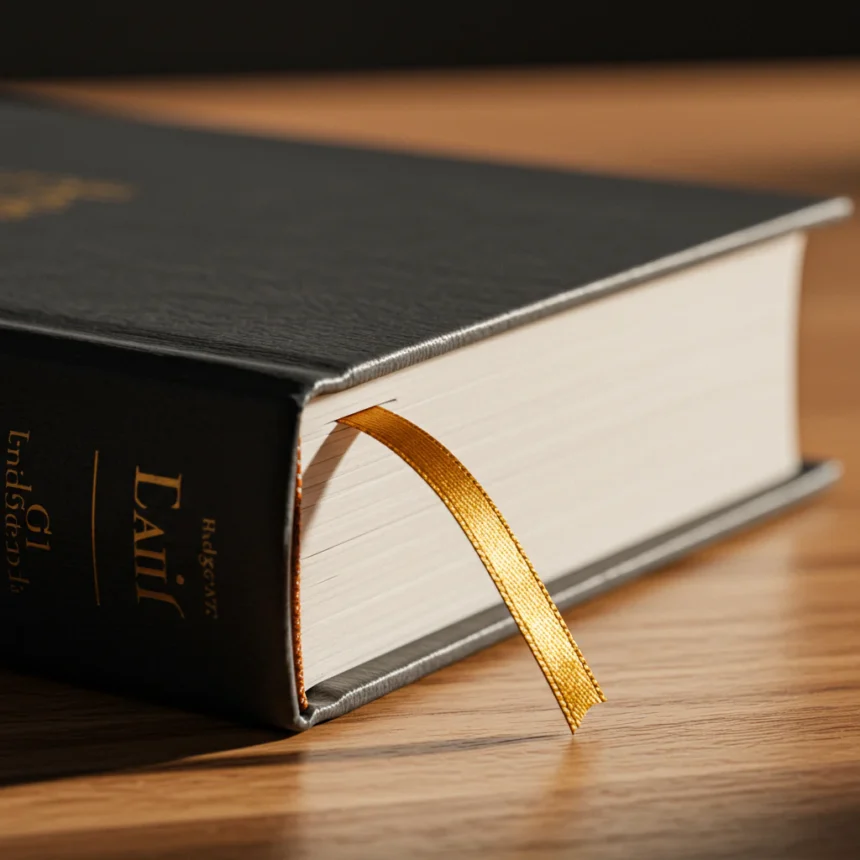
Unfinished books are somewhat of an embarrassment. Completed novels are proudly displayed as trophies, tougher authors praised as evidence of perseverance, and paperbacks set aside that are unfinished are hushed away. At some point in the process, reading became a moral act and morphed from an intimate act into a performance. When you have finished a book, it means you are disciplined, intelligent, and serious. Failure is to give up on one.
But maybe it’s not about laziness; it’s about honesty when only half a novel is read.
The Book Nobody Finishes is owned by each reader. It can be a Russian classic purchased when in an existential mood, or one of the overrated contemporary novels with gorgeous graphic covers and empty books. Sometimes it’s not even bad. It’s just wrong for the time being. Yet individuals plough through hundreds of pages as if it’s some medicine they need to swallow because the author has said so, as if reading literature is like taking medicine. Still, people do it because they feel they have to, like they are taking some medicine or something, and that literature is like that, and that’s what they do.
This sense of guilt over abandonment indicates a deeper attitude towards reading in the present day. No longer is it just a book-reading enterprise; it is a book-curation one. The ability to read has emerged. Online, individuals set annual objectives, aesthetically tag their books, organise shelves by colour schemes, and prioritise books before they have had time to sink in. Now reading and completing books has social currency. It’s a risky move to admit that you left behind a beloved classic. It is more scandalous to say you couldn’t do a well-known literary masterpiece than to say that you didn’t understand it.
Literature is not work; it’s not homework.
A novel is NOT a prison sentence. One does not give a book his full devotion.
The reality that many readers do not like to acknowledge is that some books don’t work for us. All good books are not worth following. Some are inflated by fame, sheltered by academia, or indefensible, because their predecessors believed that they were important. But others just get to the wrong emotional place. A person grieving may not be able to withstand the emotional overload of a tragedy. A tired and weary political reader might turn away yet again from another dystopian allegory. Things that seemed great at 20 seem like too much showbiz at 30.
Not giving up on a book is not necessarily rejection. At times, it’s to keep oneself safe. Sometimes, it’s an eye for an eye.
There’s also this kind of self-confidence that we have to do everything until it’s all done. Time is limited; time to read is even more. Why waste weeks struggling with a novel you don’t care about when you could be reading one that changes your heart? It is more important to have sensitivity to atmosphere than rigid judgement, which is the wise remark of the Japanese writer Jun’ichirō Tanizaki. Reading works similarly. Either a book opens a door in you, or it doesn’t. A book opens a door in you, or it doesn’t. Sticking with something for duty’s sake seldom turns it into a discovery.
But readers still afflict themselves. Many people can’t read through the wordy, unreadable prose because they don’t want to seem serious. Literature is sometimes responsible for respectability, particularly within South Asian intellectual culture. Reading “important” books is correlated with sophistication, class mobility and even moral goodness. The decision to abandon a text can feel like betraying the educational aspiration. Rushing through books is not because they are jaded, but because they want to be the kind of person who is jaded by them.
This is perhaps the saddest way to read.
Where good literature is concerned, there are no faithful students. They’re visceral, accidental and disruptive. It’s possible a slender novel found in a second-hand bookshop could be more important than a famous 1,000-page epic. Someone may be haunted for a longer time by the so-called “easy” book than by dense philosophical fiction. Reading is a psychological process, and chemistry is important. Taste matters. Timing matters.
Even avid readers give up on books. In Virginia Woolf’s case, she revealed that she omitted parts of the book. Jorge Luis Borges openly admitted that he preferred to reread completely. It is more of a myth that a disciplined reader will read everything. People have literary graveyards in their heads: pages marked in their books after chapter 67, creased corners that they never read back to, and chapters read but never returned to during the hard winter of the self.
Maybe unfinished books are not failures after all. Maybe these are reflections of ourselves at certain times — angry, sad, distracted, joyful, alone. At times, the abandonment is part of the relationship. Years later, we return and find that the book is waiting for a different version of ourselves.
But what if we never return here again? That’s OK either way.
The more productive the culture, the less they comprehend incomplete experiences. We’re supposed to make something out of everything: finish the course, the series, the chapter. Literature is one of the few things that should not be efficient in human experiences. Just because the end has been achieved, the book is not meaningful.
The best thing a reader can say about a book is, “This book is not for me; this book is not for me now, maybe not ever.”
And it shouldn’t be a matter of guilt when closing it.