





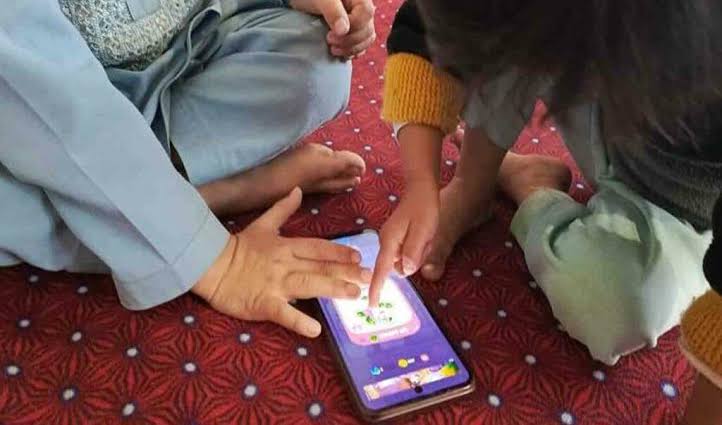
In recent times, social media usage by all age groups has begun to surge as our world finds itself in a new digital age. Smartphones are no longer tools of just communication; they are slowly becoming vital parts of our everyday lives. From transactions to dinner, everything is now done online. The biggest change, however, came from the rise of social media. Youths of the 20th century have grown up with social media that connects them to a world of endless possibilities, and though to some this may seem like a positive thing, it actually harbours more negative emotions. This claim is supported by research and testimony, and this is why it is harmful to have social media as a watching eye when you’re growing up.
Why is social media inherently harmful to adolescent relationships? One reason is that social media connects you to the world, to places and people you couldn’t imagine ever meeting. It brings together people based on things as little as shared interests. This allows for people with shared interests to connect but also allows for people with wrong intentions to target freely. Younger kids on social media fake their ages so they can see what social media has, while older people fake their ages to “fit in” with kids. You can be talking to an absolute creep without knowing, because you’re talking to someone through a screen. Research shows that 79.9 million Pakistani social media users were aged 18 and above in 2025 – that’s 54.6% of the population. This suggests that half of the country is active on social media, meaning every other person has access to the world and is vulnerable to tonnes of various threats – cyberbullying, catfishing, etc.
Due to the prominence of social media in our society, it is also very easy for people to lose touch with reality. When all of youth’s social needs are met through a screen, they don’t have the desire to make themselves uncomfortable trying to be social. What many people miss, however, is that the human mind needs socialisation. People need to see other people, and people need to interact with other people. Especially for the youth whose brains are constantly developing, human connection is a must, and seeking it out virtually is not enough. Studies suggest socialisation (physically, not through a screen) allows adolescents to learn basic human processes, like reading body language and understanding facial expressions.
The lack of socialisation has also led to an increase in social anxiety. To the older person, ‘social anxiety’ is just another word for ‘being shy’, but this is exactly why this keeps happening – adults refuse to acknowledge real problems and challenges in their kids’ development, leading to more and more cases of said challenges. Social anxiety in teens makes a task as mundane as making and maintaining a friendship incredibly difficult due to factors like not being able to express their emotions properly and not being able to keep up with people’s emotions.
The friendship patterns in youths have altered significantly from the 1990s, with research showing that social media usage in teens has gone from 1.3% in 2001 to 18.8% in the present day. In earlier years, teens would have friends from school and friends from their neighbourhoods, and they would be forced to socialise, as they did not have a resource to aid their friend-making process.
As social media popularity rose, teens found it easier to find friends through social media, not having to be put in awkward or uncomfortable positions simply for connection. But why is this virtual connection so wrong? Virtual connections are, simply stated, shallow. One person only knows about the other what the other tells them. Only having friends online does not allow so many canonical experiences that friends typically have, like hanging around together, showing platonic affection, or playing together.
The lack of socialisation slowly starts to bleed into the healthy relationships already present in adolescents’ lives. These relationships include familial ties and childhood friendships. Slowly, less socialisation makes it harder for one to connect to real humans around them, leading to emotional distance and psychological constipation; this follows an inability to translate their thoughts and connect with people on a deeper level. Such inabilities paired with hormonal changes in teens cause frustration and grief, and, when not taken seriously, may develop further into serious, long-lasting mental health issues. Before that happens, it is good advice to parents to constantly check in with their kids, physically and emotionally.
Many younger kids with less knowledge also happen to easily become prey on social media, being groomed and getting into online relationships with people they have never met. They are not the ones at fault as much as the parents who allowed their kids on to social media are.
An increase in social media usage also slowly eats away at people – this is a problem not only in youths but also in adults. When you get addicted to easy dopamine that comes from short-form video consumption, the brain gradually loses its ability to focus, to feel genuine pleasure, and to feel motivation. Overconsumption of content easily allows one’s critical thinking to slow down, and less attention to this matter constantly allows one’s general IQ to drop. With the new arrival of AI, this concern only increases – people cannot think for themselves anymore.
Lastly, it is important we mention the effect of knowing you are being watched as an adolescent. As a teenager, you are already going through a tough time. Adults don’t take you seriously, and nobody really pays attention to what you’re going through. You’re constantly compared to countless people, and as if that were not enough, your body is going through major changes like it’s normal. Adding the mental discharge of social media onto that bundle makes it even worse. On social media, it’s easy to hate yourself. You’re surrounded by people richer than you, smarter than you, and prettier than you, and it’s so easy to fall into a self-hate cycle that is so difficult to escape.
People start faking appearances, accents, and achievements just to seem “cool”, but when everyone is doing that, who’s really the “cool” one? It’s so easy to be performative, but what’s really important is to be true to yourself, regardless of who’s judging. It’s hard being a teen, wherever you are in the world, but don’t make it harder for yourself. Being a teen is a big thing, and it’s important for teens to know that even when on the journey to find oneself, you shouldn’t stray too far to the point that you lose sight of the goal. Being a teenager is hard, especially in this day and age with so much tearing them down, but, like everything else, it will pass.