





If you’ve grown up in Pakistan, you were probably introduced to the words “discipline” and “etiquette” very early in your life. These are the most important traits to have in life, you were told. The translation of these words has always been violence for most of us, be it physical or emotional. Your father would tell you stories of his childhood, when his father and teachers beat him for his mistakes. He’d tell you how that made him into the amazing man he is today, how he’s grateful for the moral policing. This would be followed by him applying the same genius parenting technique on you.
Sometimes a belt, sometimes a shoe, sometimes his own hands. You were expected to take it as an honour and a lesson. But in those moments, at least the first several times that it happened, you didn’t feel honoured. You felt terrified, confused, and angry. You were also conflicted, because the same father would then kiss your forehead and buy you ice cream and carry you to your bed from the car each time you fell asleep mid-commute.
“How do you forgive the people who are supposed to protect you?” — Courtney Summers, in Sadie
A few years down the lane, you realise that being “perfect” in every way is what could earn your father’s love. The ice creams and forehead kisses now only arrive when you’re getting the perfect grades and following the perfect routines. Besides, you’re too big and heavy to be carried to your bed from the car anyway now, and you’re also supposed to be eating less and healthier if you want your parents to be able to present their child to others confidently.
Moreover, the teachers in your school are allowed to hurt you to whatever extent they deem fit as long as you’re alive and you’re getting the top grades every single time without failure. You’re already used to being disciplined enough because your parents raised you well, so it’s only a matter of a few slaps with each minor mistake in learning that the teachers get your grades to be perfect too.
For the sake of the continuity of this essay, I tried finding the statistics for child abuse in Pakistan. “As many as 3,364 child abuse cases were reported from all the four provinces, Islamabad Capital Territory (ICT), Azad Jammu and Kashmir (AJK), and Gilgit-Baltistan (GB) in the year 2024, according to a civil society report,” and the entire report misses the data regarding child abuse in schools and homes. Mainly because this type of abuse is not reported. There are no numbers, but the entirety of the Pakistani population is a victim.
“But are we really victims? Our parents and elders did what they thought was best for us” is the common rebuttal you hear every time violence within homes and schools is discussed. As if them knowing it as the best could not have been improved with literacy about better options. As if their knowledge were the only metric that matters and definitively decides that it is right because they know it to be.
It is really time for us to analyse how even the law of our country has been designed to support these generational failures with the help of loopholes. While the Prohibition of Corporal Punishment Act was passed in Islamabad in 2021, and provinces like Sindh have passed similar bans, Section 89 of the Pakistan Penal Code (PPC) still hangs over the country like a shadow.
Section 89 explicitly allows parents and guardians to use physical force in “good faith” for the child’s benefit. This legal loophole perfectly mirrors the cultural rebuttal: “Our parents did what they thought was best.” The law itself codifies the idea that a parent’s good intentions magically erase a child’s physical pain, using the mens rea (intention) element of crime to legalise the crime itself.
And here’s the thing that should embarrass us more than it does. Pakistan signed the UN Convention on the Rights of the Child in 1990. That’s over thirty years of the state publicly promising to protect children from physical and mental violence while Section 89 sits right there in the Penal Code, untouched and actively used. We didn’t even manage to be embarrassed into consistency. When a teacher in Lahore broke a student’s finger with a ruler in 2022 and nothing happened to him, that wasn’t a system failing. That was the system working.
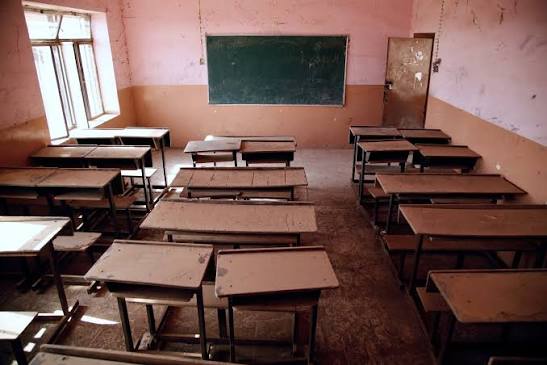
When we look at the classrooms that we go to as Pakistani children from the ages of 3-4 till 18-19 for high school, we realise how deep-rooted the country’s obsession with policing and disciplining the weaker person is. Pakistan’s public and low-cost private school systems are staffed by teachers who are products of the very same violent childhoods that we all had. As a cherry on top, the teacher training programmes in Pakistan focus solely on rote memorisation and rigid curriculum completion, almost completely ignoring the learning and knowledge-acquiring essence of education. If you bring up the lack of students’ character building through education in our country, you’re told, “Character is built when authority is allowed to use the methods they know to be producing the best results.”
So even when authority is not allowed according to these people, a teacher who is faced with a classroom of fifty children and lacks the pedagogical tools to engage them falls back on the only tool he/she knows will guarantee instant compliance: fear. The ustad (teacher) is given absolute authority by parents who hand their children over with the agreement that the teacher can do whatever is required as long as the perfect results are produced.
So the school ends up being a continuation of the home. Same logic, different address. You failed the test; here’s a slap. You talked in class; here’s a slap. You asked a question at the wrong moment; here’s a slap. The child who already knows at home that the wrong answer gets punished by a belt learns at school that the wrong answer gets punished by a ruler. The actual lesson being taught in both places is the same one: your body is not your own. It belongs to whoever is in charge of you right now.
The people defending this will tell you it works. That’s the whole argument, really. It works, and we turned out fine. Let’s look at what ‘works’ actually means here and what ‘fine’ actually looks like.
Physically punished children do not learn that a behaviour is wrong. They learn that getting caught results in pain. That is how reinforced social conditioning works. So the behaviour doesn’t stop; it goes underground. Studies tracking children over ten to twenty years consistently find that physical punishment produces short-term compliance and long-term resentment. The kids who got hit the most didn’t become the most disciplined. They became the most anxious, the most aggressive, and the worst at trusting people. This alone could explain why we, as a nation, are at the terrible moral standpoint we are at today.
There’s a specific cruelty in the fact that the parents hitting their kids to get better grades are actually producing worse academic outcomes over time, because chronic fear and anxiety are terrible for learning and memory. We watch movies like Taare Zameen Par (2007) and call ourselves Ishaan Awasthi as a joke, to cope with our “failures” as teenagers, but what we also fail to recognise, or sometimes deliberately avoid to make it easier to sit with, is the fact that the brain doesn’t retain information well when it’s busy being scared. Pakistani children are never not scared.
The aggression finding is the one that should really make people stop and think. Children who are physically punished show higher rates of aggression, not lower. Because when the adult you love and depend on solves problems with their hands, you learn that that’s how problems get solved. You don’t learn self-control. You learn that whoever is bigger wins. Then you grow up. Then you become the parent. Or the teacher. Or the boss. Or the politician. And you already know exactly how to get people to do what you want. And that’s how you’re a Pakistani.
This is exactly what I mean when I say that this isn’t a side conversation. Every time we talk about why Pakistani graduates can’t think independently, why our workplaces are so hierarchical and abusive, why therapy is so stigmatised, and why people in this country will defend authority figures no matter what they do, we are talking about this. This is the foundation, and we’re addressing generations after generations of children who were taught that love is conditional on performance, that authority doesn’t need to justify itself, and that your feelings about being hurt are less important than the intentions of the person who hurt you.
You cannot build people who trust institutions out of children who learnt that the institution will hit you if you step out of line. You cannot get critical thinkers out of classrooms where asking the wrong question gets you slapped. You cannot be surprised that people in this country struggle to set boundaries, leave abusive situations, or believe that they deserve better when the first thing most of us were ever taught about ourselves was that we needed to be corrected. So you’re really not entitled to talk about how the West has gotten ahead of us at the same dinner table where you hit your child for using a fork and knife incorrectly.
“When you’re born in a burning house, you think the whole world is on fire. But it’s not.” ― Richard Kadrey, Aloha from Hell
The question isn’t whether our parents loved us. A lot of them did. The question is what they taught us love looks like because “that is just what they were taught”. And whether we’re going to keep teaching the same thing to the generations that are to come.
“Parents can only give good advice or put them on the right paths, but the final forming of a person’s character lies in their own hands.” ― Anne Frank