





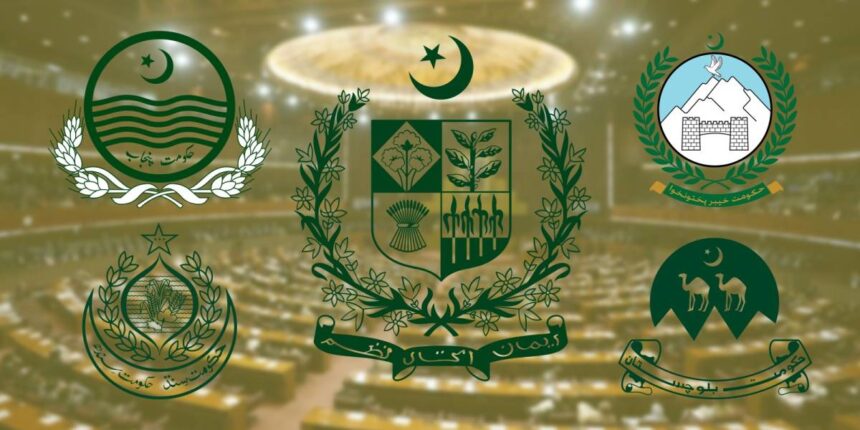
For a country that had experienced strict military and centralised bureaucratic control, the 18th Amendment promised a change of atmosphere by offering something different. In 2010, the amendment formally recognised Pakistan as a federation. Provinces were granted their own legislative space, resources and authority to govern their people separately. However, even after 16 years, the question remains as to whether this change has materialised or if it was merely a transfer of autonomy on paper while control remained unchanged.
The amendment proved to be a significant change, completely removing the concurrent legislative list. This means that subjects previously handled by the central government and the provinces were now under the provinces’ sole jurisdiction. Several ministries at the federal level, including those responsible for education, health, social welfare and the environment, were shut down and taken over by the provinces. Pakistan, along with other countries, in particular Canada, abolished its federal ministry of education and transferred its responsibilities to the provinces. Additionally, the National Finance Commission Award was created to give provinces a significant and reasonable share of natural resources, combining autonomy on paper with financial autonomy in practice.
However, the idea of provinces with autonomy and federal oversight was not well received. The Provincial Assembly of Khyber Pakhtunkhwa asserted its power by passing a broad range of laws covering trade, education, and good governance; concepts that had previously been out of reach. This unusual development shows that devolution can be achieved when a province is committed to it. Nonetheless, the situation is more complex than health devolution. The real gap between authority and compliance revealed something no one had hoped for. Without a federal ministry to control and coordinate the surveillance of diseases, the regulation of drugs and standard operating procedures (SOPs).
The situation in the education sector is no different. The demand for coordination has taken centre stage, depriving provinces of control over the curriculum and school policy. This does not align with the constitutional basis: an imposed curriculum approved at the central level is forced upon the provinces, despite their consent. This goes against the spirit of this historical amendment. Referring to this as ‘coordination’ is akin to referring to tug of war as a game of tag.
Then there’s the local government, which arguably fails at devolution. Article 140A of the Pakistani Constitution establishes that power should not be restricted to the provincial level, but rather continue to flow to the local level. In reality, however, this has not been evident, as provincial governments are reluctant to relinquish power, even for the greater good. Consequently, local elections are delayed, local governments face financial constraints and decision-making power remains with provincial capitals. Ironically, provinces that have complained about the overpowering centre for years behave in the same way towards the local tier below them.
This creates an even bigger mess that becomes difficult to resolve. Some argue that the amendment went further than anticipated, leaving the federal government with grave concerns such as counterterrorism policy, while others claim that devolution has not achieved its intended transformation and has become stuck between the provincial and federal levels.
It seems that the federation has become caught between two different, incomplete systems. Although power has formally shifted to the provinces, political practices, fiscal autonomy and administrative control have not. Pakistan is a large and diverse country with a federal system. The need for a federal system is not merely a constitutional responsibility but also a practical necessity for governance at provincial, central and local levels. The 18th Amendment provided a good blueprint, but follow-through is absent.