





A few years back, photographs of Cafe De Hunza, located in Karimabad, Pakistan, appeared in travel vlogs on social media. The cafe’s wooden balcony, overlooking the mountains, became the favourite background for pictures in no time. Soon, the travellers visiting the cafe were not looking for its famous tea or walnut cake but to capture the same background in pictures that they had seen online. The cafe, which was once a quiet cafe, became the must-visit spot for travellers hoping to capture the same view in their cameras.
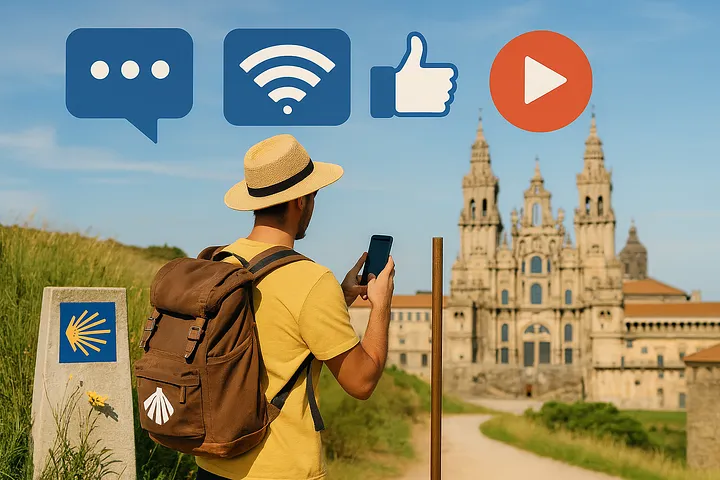
Incidents like these are becoming very common. A photograph goes viral, a location trends online, and soon thousands of people start visiting there. These journeys are not influenced by history or culture but by photos shared across screens. These travel journeys are digital pilgrimages that are shaped by hashtags, travel vlogs and shared photographs.
Over the centuries, pilgrimages were associated with religious journeys. People used to travel to sacred places for religious reasons, following the traditions carried by generations. Today, a mountain viewpoint, a small cafe or even an ordinary street can become the corner that attracts visitors only because it has become popular online. Hence, motivations for journeys seem different these days. A location is not chosen based on its historical or traditional meaning, but on how viral it is.
Social media is playing an important role in shaping these trends. Social media platforms encourage people to share their travel journeys. When one picture becomes popular, it enhances curiosity in viewers, and they start imagining themselves in the same place with the same background, capturing pictures and sharing them on their own social media. In this way, travel becomes closely connected to the act of documentation.
This can also result in one place getting sudden attention and the other remaining unnoticed. A small, quiet town can become famous just because one shop becomes popular on social media. Calm streets turn into crowded places, with hundreds of tourists holding cameras trying to capture the same angle as they have seen online.
These transformations have both positive and challenging effects. On one hand, this can be beneficial to small businesses, shops and local cafes, bringing economic opportunities. It also gives them exposure. Tourists can support communities by showing them on social media platforms, taking them to bigger markets. On the other hand, popularity can bring pressure to small places which are designed to handle bigger audiences. Local viewpoints and cafes may suddenly struggle to accommodate larger crowds. Moreover, more pressure can also lead to a decrease in quality in terms of the environment and servings.
Another interesting change lies in the way people experience these places. In some cases, the visit itself becomes secondary to the photograph. People only stay at the places as long as it takes to capture one picture before moving forward to the second popular destination. This reduces the actual value and deeper meaning of the place.
This dynamic also raises a cultural question. When travel is guided by viral images,
Who really owns a place once it becomes content? The people who live nearby may see their surroundings filled with tourists every day. The local street corner is owned not only by locals but also by a global audience watching through their screens.
Digital pilgrimages reveal how strongly online culture shapes the physical world. Content shared online has the power to influence people in deciding where to travel and how to experience. A single photograph can transform a street corner into a globally recognised destination.
In the end, travel has been more about than just reaching a destination. Whether the travel is guided by a photograph or a tradition, the true value lies beyond the image that first brought us here.