





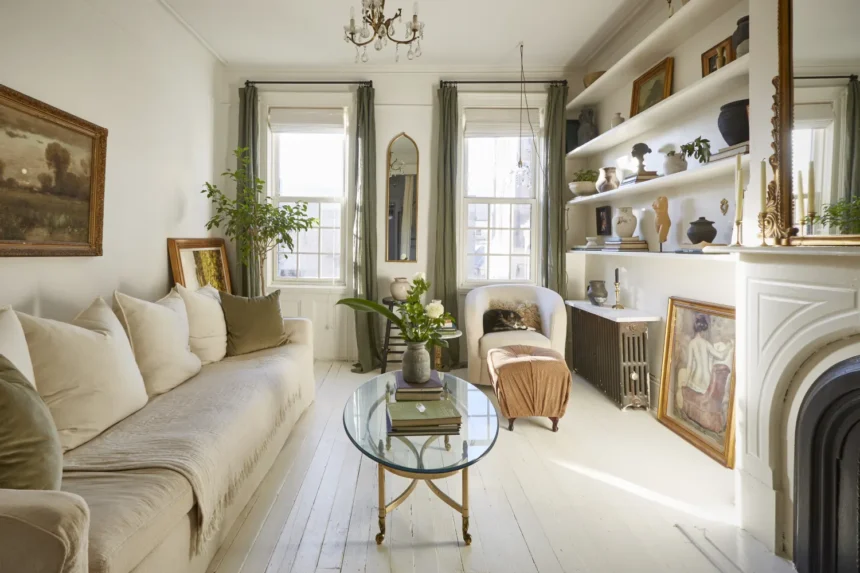
Over the past few years, home tours have become an online trend. As you scroll down, your screens reveal aesthetic bedrooms, decorated houses and cosy kitchens. What once was private now is shared with strangers online. Houses are no longer just places where people live; they have become people’s identity.
For youngsters, arranging their room is just similar to making a new portfolio. Shelves are arranged neatly, books are arranged in order, a plant is placed beside the window, and the desk is cleared before taking a photograph. These small details seem ordinary but carry meaning beyond physical arrangements. A room becomes a way of expressing lifestyle.
Objects in the house speak about the nature of the person who lives there. A bookshelf, for instance, the way it is arranged, the genres of books and even the order of arrangements, tells about the personality of the owner. Arts magazines show creativity, romantic novels show a lovely side, or academic books highlight the intellectuality of the person. Hence, the books are not only for decoration or storage but also communicate the interest of an individual and become a symbol of personal identity.
Social media has a crucial role in shaping these trends. Platforms filled with “Home Tours” and “Room Transformations” encourage people to share their personal spaces as visual stories. A minimalist kitchen and a well-organised bedroom are not only decoration; they become a statement about how someone lives.
However, with all positive impacts, these trends also come with flaws. For instance, creating expectations, making standards and setting boundaries. Let’s say a repeatedly shown interior can become a standard, like this is how a house should look. People might start feeling pressure to maintain and decorate their homes in a way that looks pleasing on screen or at least looks like the ones on screen rather than just being comfortable in their available resources and lifestyle.
As a result, the boundary between presentation and comfort becomes thinner. A desk might be cleaned not because it feels good to work there but because it looks good in a photograph. Similarly, a room is decorated not because I like it this way but because it is trendy. In this way, home becomes more like a stage where everyday life is performed for viewers.
This raises a cultural question.
What could be the meaning of home? When the personal space of a person becomes a part of their digital identity. Homes have traditionally been valued for the comfort and privacy they offer. They used to be the places where people relax without worrying about appearances or expectations. Yet when people show their houses every day on screens, this becomes a part of their lifestyle.
The popularity of home tours highlights the role of social media and its strong influence on daily lives. Individuals are able to share their personal spaces across the world through screens. It can also transform an ordinary room into a well-maintained, organised space, resulting in a disciplined lifestyle. Perhaps the real challenge is to remember that a real home does not need to be aesthetic to be meaningful. A well-presented room in a picture is also a space where people live, eat and sleep behind the camera. With rapidly growing online appearances, it is important to hold on to the fact that homes are symbols of comfort; that matters the most.