





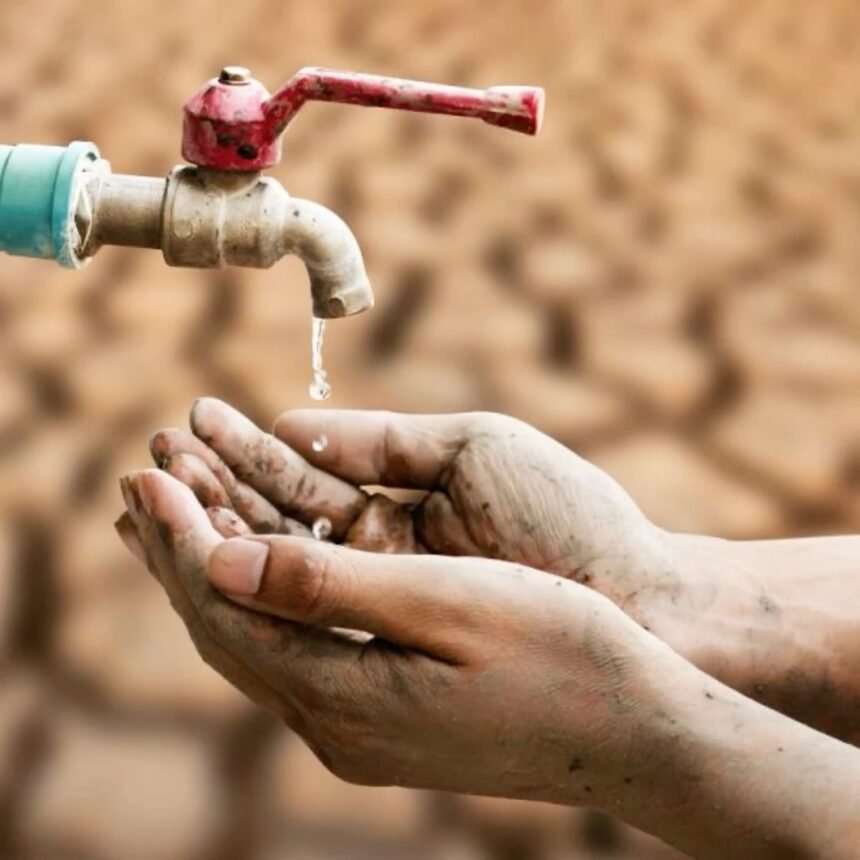
The water crisis of Pakistan does not affect agriculture alone, where water is utilised for the planting of crops and the rearing of animals. In the cultivation of crops, water is used for watering plants to aid in improving their growth, while in the rearing of animals, water is used to feed them, aiding in food digestion. From these agricultural sources, humans gain access to the food necessary for survival through the availability of water.
Normally, politics entails a process where certain individuals are selected to represent a place, and these people coordinate the affairs of that place, including natural disasters like the water crisis, also known specifically as a drought. The place referenced here specifically is Pakistan, so I am making reference to the affairs of Pakistan in relation to its water crisis.
A water crisis is also known as a disaster, and a disaster can cause migration. Migration is the movement or evacuation of victims from an affected scene to a safe area, mainly for the purpose of protection from harm. In certain places, migration from dangerous areas to a safe place can cause overcrowding, leading the population to compete for resources that are limited. This is where the survival of the fittest takes place: the stronger migrants live comfortably in the new location, while the weaker ones are inconvenienced or perish in the process. A disaster often causes deaths, though many people survive at the same time.
A water crisis is also an environmental conflict. Conflict is characterised by the absence of peace, as people lose their peace of mind during a disaster. These disasters cause deaths, injuries, and disease outbreaks, attracting diplomats who carry out mediation and offer support in whichever way they can.
Political challenges resulting from drought include food insecurity, the outbreak of diseases, and conflicts over water due to its scarcity, alongside other issues arising during water shortages. All of these problems must be handled by the leaders representing the areas in question.
External Politics: The Indus Waters Treaty (1960)
The Indus is the largest river system in Pakistan and South Asia. The Indus Waters Treaty is the water-sharing agreement between India and Pakistan, under which specific rivers were allocated to the two countries, categorized as the Western and Eastern rivers. Disagreements persist between India and Pakistan over the construction of dams on the Chenab and Jhelum, which are rivers belonging to the Indus basin.
Internal Dynamics: Provincial Disputes
An example reflecting these challenges within Pakistan involves provincial disputes over resources: Sindh accuses Punjab of drawing more water than its allocated share, while downstream areas continue to bear the brunt. Sindh is downstream from Punjab, meaning Punjab has greater access to upstream water while Sindh faces shortages. Instead of migrating during water scarcity, Punjab draws water, which assists its own agricultural needs while inconveniencing Sindh. Both Sindh and Punjab are major provinces of Pakistan.
To tackle the political and environmental challenges caused by the water crisis, several measures have been introduced, such as establishing large water reservoirs and implementing rainwater harvesting. A new water security task force has also been established to assist in water defence. Current policy frameworks place strong emphasis on reducing water scarcity. Furthermore, influential actors across different sectors — such as big landlords, contractors, and downstream small farmers — attempt to manage water scarcity when it arises through the use of dams, canal networks, and irrigation project agreements.