





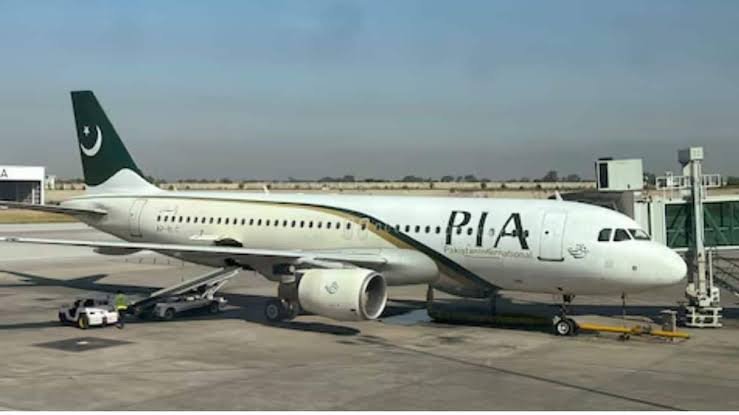
Back in Grade 5, a small chapter in our Pakistan Studies book introduced Pakistan International Airlines. It wasn’t written to move anyone. Just timelines, achievements, and photographs of aircraft that seemed almost too graceful for a black-and-white page. Yet that chapter lingered with me. Even then, it was clear that PIA was never meant to be ordinary. It was built as much an idea as an institution.
There was something quietly powerful about its history. PIA was the first Asian airline to operate a jet aircraft, placing Pakistan at the forefront of global aviation. Even more remarkable, it helped Emirates acquire its first plane and train its early staff, long before Emirates became synonymous with efficiency and luxury. These weren’t small footnotes. There were moments when Pakistan led, when confidence outweighed constraint. For a student reading that chapter, PIA felt like evidence that this country once knew how to aim high.
That pride didn’t disappear overnight. It faded gradually, the way most things do.
My first experience flying PIA was underwhelming in a way that felt almost symbolic. The flight was delayed. The cabin was hot. There were no announcements, no explanations, just waiting. What stayed with me wasn’t the inconvenience but the acceptance. No one seemed surprised. This was expected. That normalcy said more than any headline ever could. Since then, my family has avoided flying PIA altogether. Not out of anger or protest, but habit. And that quiet avoidance reflects a broader national sentiment: disappointment that has settled into routine.
Today, that routine has reached a turning point. With the Arif Habib Corporation acquiring a 75% stake in PIA for Rs 135 billion, Pakistan is witnessing more than a financial transaction. It is watching the partial letting go of a national icon. The deal raises a difficult but necessary question: is this privatisation a genuine economic fix, or a fire sale driven by years of neglect?
From a fiscal standpoint, the argument for privatisation is hard to ignore. PIA has been a consistent drain on public finances, surviving on government bailouts while delivering shrinking returns. Decades of political interference turned it into an overstaffed, inefficient institution where decisions were shaped by influence rather than expertise. Losses became normalised. Accountability became optional. In a country already struggling with economic stability, carrying this burden indefinitely was no longer feasible.
Private ownership offers what the state repeatedly failed to provide: professional management and consequences. In the private sector, inefficiency has a cost. Delays affect reputation. Poor service drives customers away. Without government protection, performance matters. In theory, this shift could finally give PIA the operational discipline it needs to survive in a fiercely competitive global industry.
But PIA cannot be evaluated through spreadsheets alone.
This is not just a loss-making enterprise. It is the national flag carrier, an institution tied to Pakistan’s post-independence identity. For decades, PIA represented ambition, connectivity, and global presence. The sale of the majority stake seems more like a statement, like saying we’re throwing in the towel. Is Rs 135 billion a relief for our financial woes, or is it the cost we’re all tired of paying for our national asset, PIA?
The fire-sale argument resonates because PIA did not lose its worth overnight. It’s been gradually eroded by poor management, politicisation, and the absence of a forward-thinking ideology. The thought of a privatisation process is now inevitable, not because of a well-thought-out agenda, but because other reform possibilities have been squandered. The process of this sale looks less like a calculated move and more like the state’s admission that its protect-and-preserve agenda has failed.
If you ask me, the real tragedy is the timing of all this, more than the privatisation itself. Why did meaningful reform only arrive once the airline was already hollowed out? Why were decades of mismanagement tolerated without consequence? Why did accountability only emerge when national pride had already eroded into caution and avoidance?
Still, there is hope in this moment, and it deserves space. A privately managed PIA could mean modernisation, improved service, transparency, and reliability. It could mean an airline that passengers trust again. It could mean shedding the culture of excuses and replacing it with professionalism. For a country in economic distress, reducing the fiscal burden of a failing state-owned enterprise is not insignificant.
Yet hope does not erase loss.
There is a quiet grief in watching a state-owned icon slip from public hands. Knowing that the airline which once trained others could not save itself. In realising that what began as a symbol of national confidence became a lesson in how institutions decay when politics overtakes purpose. The pride once captured in textbooks now survives mostly in memory.
The central question remains: can private management save an airline that decades of political interference could not? The likely answer is yes. But that answer should come with humility, not relief. Because privatisation is not a cure for mismanagement, it is a response to it.
PIA’s story is as much a warning as it is a transition. National icons do not collapse suddenly. They fade when neglect becomes routine, and accountability is delayed. They fall not because they lack potential, but because no one protects it in time.
So perhaps this Rs 135 billion deal is a lifeline. But it is also a farewell. To an era when Pakistan believed it could lead the skies. To an airline that once carried confidence along with passengers.
See, I can’t really judge right now if this marks a new beginning or simply closes a painful chapter. That will depend on what we learn from it. Because saving PIA was never just about saving an airline. It was about remembering how to value what once made us proud.