





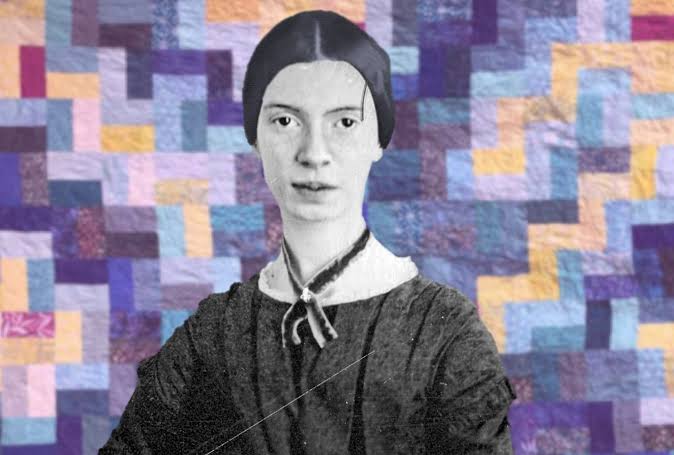
Other authors go around the globe to get inspiration. The others visit salons, give lectures and interact with society to form their ideas. However, one of the most powerful poets of all time lived most of her life in one house. Emily Dickinson demonstrated that a vast imagination could live behind the silent walls of a room.
Dickinson was born in 1830 (Amherst, Massachusetts) in a well-educated and respected family. Her father, Edward Dickinson, was a lawyer and a U.S. Congressman. The Dickinson family was educated, disciplined, and intellectual. Emily attended Amherst Academy, where she studied science, languages, and literature. Subsequently, she had a short time at Mount Holyoke Female Seminary, but dropped out after a year.
Despite having a good education, Dickinson grew increasingly withdrawn in her old age. In her thirties, she hardly ever stepped outside, instead writing letters to her friends rather than meeting them face-to-face. This was a solitary way of life, and it confounded many intimate people who knew her. Her neighbours have at times called her mysterious because of her infrequent appearances.
However, Dickinson was not a lonely person. She produced an incredible work within her room which would transform the world of poetry. During her lifetime, she produced close to 1,800 poems, meticulously written in small booklets that she kept in her hands. Awkwardly enough, very few of these poems were published during her lifetime.
Her poetry was not the conventional one as it was in the nineteenth century. Dickinson employed short lines, strange punctuation, and odd dashes. Her poems used to look easy to understand; however, they touched upon profound issues of nature, love, death, faith and the meaning of existence. She uses a few words to compare hope to a bird that lives silently within a human soul. Such a skill, transforming abstract feelings into bright pictures, it emerged as one of Dickinson’s main skills.
In her writings, nature was significant. Though she seldom ventured far from her residence, she paid close attention to the natural world. The gardens, seasons, and landscapes of Amherst proved to be potent inspirations. Dickinson has found that after keen observation, even minor aspects such as a flower, a bird, or a light change could reveal a universal truth about life.
There were also intricate issues of death and immortality that her poetry addressed. She wrote about death in her poems, like Because I Could Not Stop for Death in which she talked about it as a peaceful process rather than something to be afraid of. In the poem, death is visualised as a polite person who shows the speaker the way to eternity. Such a peaceful and contemplative voice reveals the profound interest Dickinson had in the mysteries of life.
Dickinson became a famous writer even in her lifetime, yet her talent remained largely unknown. She was later to die in 1886, and when her younger sister, Lavinia Dickinson, found hundreds of her meticulously preserved poems in her room. Upon realising their importance, Lavinia made attempts to get them published. Over time, literary scholars began to appreciate that Dickinson had done something unprecedented.
Emily Dickinson is regarded as one of the greatest poets in American literature nowadays. Her writing shaped generations of writers and readers. What is particularly striking about her story is that she attained this power without fame, appearances, or travel. Dickinson drew endless significance in the silent confines of her own existence when most writers go out into the world to seek inspiration.
The story she tells dismantles the notion that creativity requires dramatic experiences or far-flung adventures. Dickinson, instead, showed that imagination, thought, and careful observation could turn even the mundane environment into poetry.
Dickinson, to a great extent, made her room her universe. Out there, she delved into the issues of love, faith, nature, and death—the issues that all humanity cares about. Her poems remain relevant to readers across different cultures and eras, a testament to the fact that great art does not need a big platform.
It only requires a clear mind, a keen eye and a boldness to see into the depths of the world—even though that world is behind the walls of one room.