





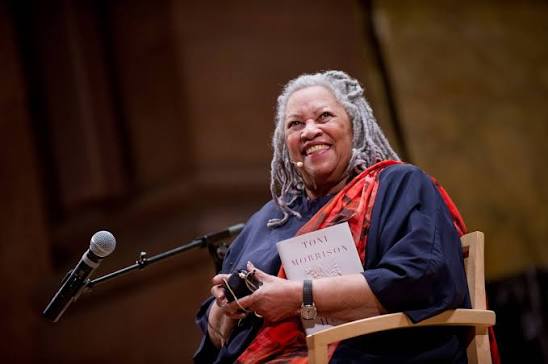
Toni Morrison remains a source of inspiration and hope for many, not just as a writer but also as a powerful advocate for Black lives, whose stories she told unapologetically. She is famous not only for her burning words but also for the way she expressed and crafted them onto a piece of paper. Morrison takes the reader into her imagined world with exposed and bare truths, where nothing is veiled and reality is uncomfortable to witness and experience.
It’s her fragmented style of writing that allows readers to interpret and construct a meaning of their own. She is someone who refused to explain things as they were and gave people the right to understand the context and reflect on historical events to shape their identities. Morrison’s writings are loud and perplexing, yet clear in their meaning; bold; and highly political, not in any biased manner but representing a whole class of Black people, explaining their struggles, hardships, and what injustice they had to face.
One of her major literary strategies includes the way she leaves her perspectives, meanings, and ideas untranslated. She leaves open gaps for the readers to understand on their own using their intellectual abilities. She refuses to explain Black culture, their language, traditions, and even history because they are not an object of translation.
This approach shows the superiority of Black voices, that they are not to be translated but understood as they are. Why should Blackness be overexplained to make it accessible to White audiences? Why does the culture of White people have no need for a translation to stand out, but Blacks are expected to translate, explain, and further justify their position?
This is something Morrison stood against and gave a concrete voice and perspective to on the lives of Black people: that they do not need to overexplain themselves. They have a history and a landmark, and they are people of integrity; they should not be standing in a queue of underprivileged people just because of their colour — racial segregation.
Many of her works, including Beloved, Sula, and Song of Solomon, discuss and display the culture, tradition, their way of living, and linguistic style without explaining them in detail, simply showing them as they are. Morrison gave Black people the courage to talk about themselves without fear or a complex of inferiority and made them realise that they have equal rights to land as possessed by people of other races.
Reading Toni Morrison lays responsibility on the shoulders of the reader to interpret Black perspectives by deeper understanding of her unexplained narrative. According to her, readers must interact with her texts actively rather than passively because it demands core attention to know about the historical trauma, racial violence and social exclusion faced by Black people.
She intentionally offers uncomfortable narratives and stories to absorb, making readers feel that ache in their chest. For instance, in Beloved, the protagonist is haunted by her slavery throughout. The experience of her suffering shaped the way for further decisions she took – even the murder of her daughter.
This shows the fear that got incorporated in her blood, her roots and the sense of helplessness to escape her miseries. In addition, Bluest Eye talks about the beauty standards set by the White community, making Black people feel less beautiful and inferior. It impelled the protagonist to have blue eyes and a white skin tone in order to be loved and valued in society. This clearly disrupts the personal and collective identity of a person and a class, shaping their mindsets into someone they are not. Hence, Toni Morrison, through her works, wanted people to make their own way to craft their identities rather than adopting others’ perspectives.
Toni Morrison’s work reflects political narratives while highlighting social issues. She reveals how White perspectives are prioritised to be centred everywhere and took the plunge to write otherwise. In her stories, she rejected the idea of pleasing and satisfying White audiences with her unbiased opinions. Similarly, Ngũgĩ wa Thiong’o, a Kenyan author, in her essay “Abolition of English Department” talks about how English literature has taken over their institutions, replacing their identity and their stories.
Therefore, the introduction of African literature is suggested to retain their cultural and social values, teaching their young ones about their history and identity before giving them exposure to the influence of English literature. This reminds me of Orientalism by Edward Said, who discloses how the West wants to be centralised all around. Morrison saw literature as a platform to recall identity, memory, and culture. She wrote and showed to the world that literature did not belong to a specific class, but everyone has their own stories that must be told in their own manner.
Lastly, Morrison was a woman of her word and courage; she showed the world how to lead a fearless life, confidently displaying her opinions and perspectives. Her works are not mere pieces of fiction; they encourage you to learn about historical reckoning, cultural dilemmas, and identity crises. Along with centring Black voices, she revealed to the world the propaganda of Whites controlling the entire world. Her works offer discomfort for the readers so they can understand everything clearly and learn from it and shape their lives accordingly.
Very good effort carry on
May Allah pak fullfil your goals in life
Ameen
cooked with this one…. It gives a good understanding of why Toni Morrison’s work still matters….