





With the vast use of social media come its pros and cons. We’ve all learnt this in our primary schooling years, but have we acknowledged the recent issues our current generation faces? In the U.S. alone, the rate of ADHD in children back in 2003-07 was 9.5%, and in 2020-2022, the percentage has increased to 11.3%. There’s no doubt our overdependence on the digital world has massive consequences, especially for formative minds. Luckily for us, the current generation is highly self-aware. But what happens when awareness is met with a lack of implementation, absence of definitive research or a professional guiding you?
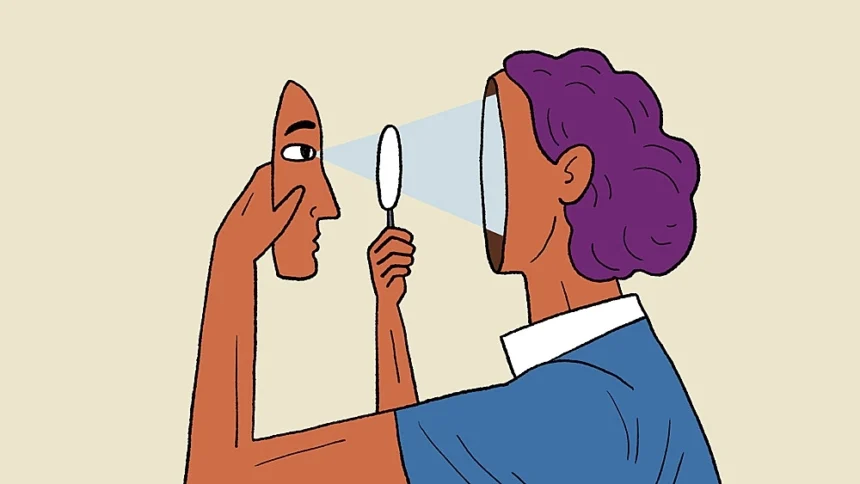
‘Therapy speak’ is a term coined by TikTok users. It loosely relates to the evolution of clinical psychology becoming a democratic product. Everyone is highly self-aware and understands that their human responses to certain scenarios are a product of past experiences. This sounds good in theory, but now look around yourself. Nothing is a personality trait; rather, everyone’s a patient. You’re not shy; you have ADHD. Your friend, whom you liked because they acted first and thought about it later, isn’t free-spirited; they’re autistic. Your brother prefers not to show how much you mean to them and is now labelled as emotionally stunned. These aren’t personality traits that make every individual unique; they’re a product of trauma responses.
Self-diagnosis is the first step to understanding that you need assistance. But self-diagnosis through the word of mouth of others can be disruptive. It’s almost treated as a trend to have a certain mental disorder, just to fit in with the crowd. These inaccurate self-diagnoses are then weaponised by people as justifications for their wrongdoings. The University of Denver identified that 83% of the content on social media platforms regarding therapy speak was misleading. And according to LifeStance, almost one-third of Americans have self-diagnosed based on what they perceive online. Now being rude to someone is okay because you’re neurodivergent, downplaying the consequences of your actions and the impact it leaves on others.
We know that social media was meant to connect us all but has deprived us of real human connections, and as a result, many people face issues of social isolation. This made people want to find a community to interact with, to be part of a society where they feel heard. As a result, everyone’s hopping onto the next big trend, and in this case, therapy speak. Now no one has unique experiences left to share because they can all be clinically dissected and tracked back to some childhood trauma. That has led to a hindrance in forming newer connections with people.
Look at the generations above you and how they met. Your parents didn’t find faults in each other the moment they met. Neither did you when you first met your childhood friend. So why are we so keen on recognising patterns and labelling them all as needing medical assistance? We as a society have become so accustomed to always finding reasons and theories to consistently categorise people and the environment around us that we fail to live in the moment. Connections in the real world cannot be made using a pro-con list, nor can they be calculated in your maths class; sometimes you just need to go with the current. Maybe the elders were right; ignorance is bliss.