





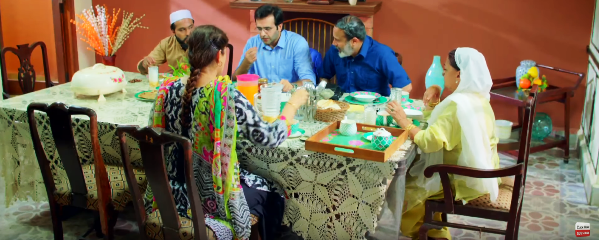
Take it as your first day as a newlywed in a very desi household. Settling into an already well-established system where everyone has their roles assigned. The mother-in-law ideally deals with everyday affairs, her life revolving around arranging parties, managing the chores and sometimes her children’s lives. The father-in-law, on the other hand, is distant yet authoritative, and you are a newcomer in this cobweb of traditional mindsets and the same old instructions playing in your head like a broken record. For one to survive in an institution that benefits men more than it will ever benefit women is a tricky game and can only be played well with diplomacy, or as we say, the “daughter-in-law diplomacy.”
This kind of diplomacy is silent, touching and very personal, unlike the formal diplomacy between countries. It is the skill of being able to stay in harmony yet not lose identity. It is an understanding of when to speak, when to listen and when to leave the silence to do the talking.
The daughter-in-law can also take an unusually sensitive place in the extended family, which lives with the extended family, typically in some regions of South Asia, the Middle East, or Southern Europe. She is an outsider and an insider. She is part of the family but is still getting used to it. She has a burden of fitting into traditions, and at the same time, has her own upbringing, habits and values.
Observation is a starting point of diplomacy. An intelligent daughter-in-law learns the beat of the house. Who wakes first? Who makes decisions? What topics are sensitive? This information is not insignificant; it is the emotional plan of the family.
And submission to all these rules is not diplomacy. It is a self-respecting strategy.
Another myth is the fact that diplomacy is all about agreeing. As a matter of fact, good diplomacy is a balance between sternness and elegance. As an example, boundaries do not need confrontation. Even plain, non-emotional expressions like ‘This works better with me’ may be more effective than emotional defence. The matter of content is sometimes less important than tone.
Another important skill is listening. In many instances, it is the lack of security and not hostility that results in tension between mothers-in-law and daughters-in-law. The older generation can be afraid of being out of relevance, the younger of being out of independence. The daughter-in-law has provided space when she listens without direct response. And trust diffuses struggles of power.
However, diplomacy must not be emotional work without appreciation. It is not only the daughter-in-law who is supposed to ensure peace in the family. It takes two-way traffic in healthy diplomacy. Respect must flow both ways. As one party only is being accommodating, resentment is accumulated silently.
Appreciation is one of the strongest diplomatic tools. Saying thank you for little things, like a mutually helpful recipe, guidance, childcare, and so on, reinforces the relationship. The appreciation indicates respect for the history of the family. Meanwhile, the gradual introduction of new ideas can make evolution without being threatening to traditions. Diplomacy works on slow assimilation but not immediate transformation.
Partnership diplomacy also exists. An understanding husband is very important. As a husband recognises the efforts of his wife and accompanies her when making personal decisions, the daughter-in-law does not feel like a stranger who is bargaining alone. The partnership, which exists in one country and is united, minimises misunderstandings before they get out of hand.
But internal diplomacy is the most significant. It is the capacity to control emotions. One does not necessarily react to every comment. Not all conflicts are fights. Being weak is not the ability to make decisions based on emotions instead of ego. Meanwhile, it is not healthy to hold down emotions all the time. Diplomacy is effective because it saves face, not because it removes it.
This role is being redefined by modern daughters-in-law. There has been a change in expectations with regard to education, careers, and financial independence. Modern-day diplomacy is not about silent endurance but more about joint respect. The best households are those in which the traditions and individuality do not oppose but rather co-exist.
Finally, daughter-in-law diplomacy is concerned with balance – between adapting and authenticity, being patient and having boundaries, and respecting and feeling self-worth. It is not a play of perfection but a play of cognisance.
Finally, it is not the authority that keeps the house. It is sustained by empathy. And where there is respect in the diplomacy, the daughter-in-law is not merely a person setting up her home in a family, but a fundamental structure of harmony within a family.