





Being in the crowd for the final between England and Australia proved what the right to be seen truly embodies. The 2026 ICC Women’s T20 World Cup marked history with 245,815 fans attending across 25 match days, breaking the previous tournament record by more than 100,000. A packed Lord’s stadium challenged every stereotype and false notion that women’s sport cannot attract audiences. The electricity and adrenaline felt healing for my ten-year-old self — standing in the nets bowling against a group of boys and wondering if I belonged.
A Fractured Relationship with the Pitch
I have had a complicated relationship with cricket. I never got the chance to discover where it could have taken me, having to put it on the back burner for other priorities. First it was GCSEs, then A-Levels, then something else; every time I return, I have to relearn the basics all over again: my line and length, the forward drive, my stance. Cricket is the story in my life that always ends on an ellipsis.
I was never barred from pursuing it, but what hindered my chance was a poisonous feeling that I constantly had to prove I was good enough. Secretly, I always compared myself to my brothers, who enjoyed far more practice and years of consistent training than I ever had. Cricket stopped feeling like a genuine passion; it became a test to justify that women can play too — that we belong on the pitch as well. Yet after slaving away at perfecting my spin and flight, I was met with the familiar phrase: “You’re good for a girl.”
The problem was not funding or accessibility; it was an innate feeling that I was constantly being measured by a gendered standard. No one ever said it outright, but that difference existed discreetly. On every kid’s tongue is the name Babar Azam, but how many of them are taught the name of Fatima Sana? That recognition itself can move mountains.
Overcoming Misogyny and Cultural Barriers
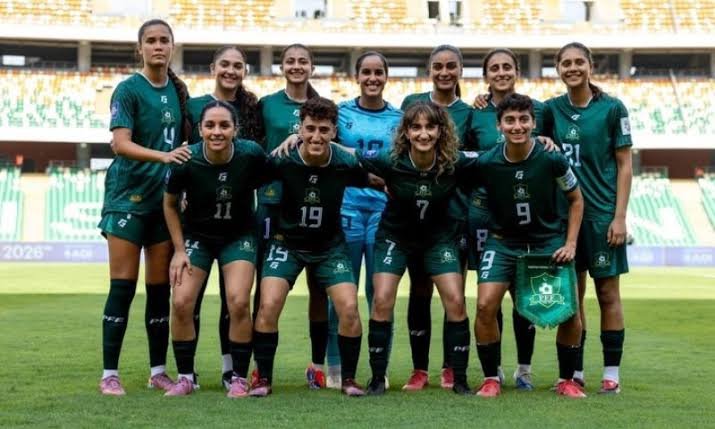
This disparity is not unique to cricket; it spans many other sports. In early April, the Pakistan Women’s Football team recorded an 8–0 victory against Turks and Caicos Islands — the largest win in Pakistan’s international football history. Yet how many are aware of this milestone? How many celebrated it nationally?
While many offered sincere appreciation, the players’ attire once again caught the eye of misogynistic critics. Never will you hear a complaint about men’s athletic wear in sports, but the moment a woman does not adhere to what critics believe is “correct” attire, they twist national pride into national shame.
The film Mera Lyari brilliantly portrays this tension. Starring Dananeer Mobeen in the lead role, it follows the story of a young girl from one of the most marginalised communities in Karachi who aspires to play football. It explores how young women must negotiate gender expectations, family pressures, and social prejudice simply for the chance to play. It reminds us that for many women, the greatest barrier has never been talent or ability, but securing society’s approval.
Defining What It Means to Be Seen
It is refreshing to see attitudes changing and these conversations gaining momentum, yet we remain miles behind in the game as a nation. Women in sport are still fighting to be seen — a phrase that carries multiple layers.
To be seen is to have their victories remembered, their names cheered for, and their ambitions met with encouragement rather than scrutiny. It means dismantling constant, unjust, gender-based comparisons. Only then will the internal struggle of wondering whether they belong truly end.
References
- England and Wales Cricket Board (ECB). (2026). ICC Women’s T20 World Cup Attendance & Tournament Records. ECB Official Press Release.
- Pakistan Football Federation (PFF). (2026). Pakistan Women’s National Team Secures Record 8–0 International Victory.