





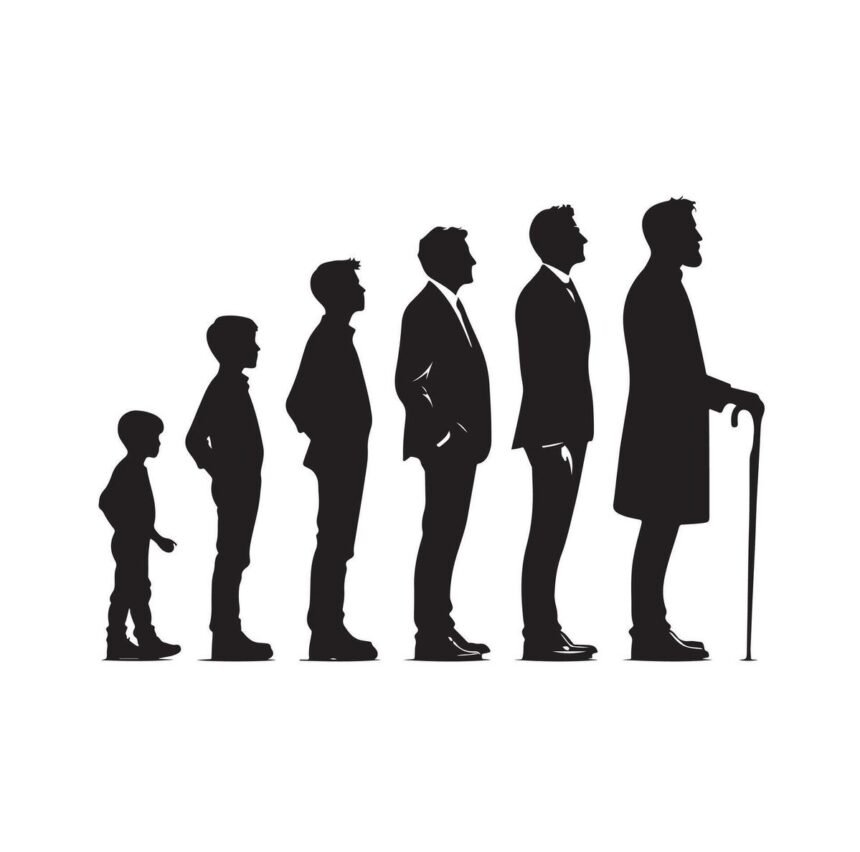
Two people are celebrating their 50th birthdays simultaneously. The man is termed as experienced. The woman is advised that she “looks good for her age. There is no physical difference between them that would account for this difference. Its explanation is a set of assumptions about what it is meant to mean when it is done by whom. For men, time adds. For women, time takes away. This is not a body fact. It’s a rule of value and rules can be analyzed.
Starting with appearance, since it’s the easiest way to see the difference. If a man starts showing signs of wrinkles or greying hair, the surrounding society will refer to these things as “distinguished” or “rugged.” Both terms have a positive connotation about them. This means that aging has brought something good to him, rather than taking anything away. If a woman exhibits these signs, however, there is a completely different way of addressing it. She gets called “tired” or “worn out,” with all sorts of creams, dyes, and operations suggested to undo what time has done to her face.
A double standard exists when it comes to marriageability. Even in their forties or fifties, a man is considered eligible for marriage, and may even be engaged to a woman considerably younger. He doesn’t usually get disqualified because he is his age. It can be rephrased as maturity, stability or financial security, if anything. One of the most common misconceptions about women of a certain age is that they’ve missed the boat. Her worth in the marriage market, as they commonly say, is considered to diminish from a much earlier age. This is not an observation of biology alone. The fertility timetable may be in existence, but there is too much social anxiety about a woman’s age than would be required by biology alone. This stems from an attitude that a woman’s value is based on her youth while a man’s is not.
The matter of authority works in the same manner. At the workplace, at the political level, and in religion, there is often respect for older men. The grey hair and the lines of age can sometimes serve as a uniform for gravitas. The people think that this man has been endowed with knowledge and judgment by time. On the other hand, older women have to do more to be considered serious. In certain places, the senior woman is perceived as having little to offer, and her views as being from another less significant period in history. Those years that make up a man’s reputation can subtly chip away at a woman’s visibility.
Another aspect of this asymmetry is sexuality. The sexual value of a man is seldom regarded as ending. Older men continue to be active and desired, as detailed in cultural stories—whether in film or in conversation. The time given to women is much smaller. At some point after a certain age, a woman becomes a nonsexual being. She can be honoured as a mother and/or an elder, but not often as a woman with her own desires. This isn’t fair. It denies older women a full and complex identity and denies them a social role other than the one they have.
Professionals add to all this. The career is generally a concept that blooms with age. His experience accumulates. His judgment sharpens. His level is displayed as a badge of honour. A woman’s career path, particularly when she has been away for childbirth or caregiving, is often viewed through the lens of gaps and setbacks rather than growth. Even if she hasn’t taken a sabbatical from work, in certain professions that value a youthful image, such as media, entertainment, or client-facing roles, her age may be a disadvantage. The decade that turns a man into a senior can turn a woman into a replaceable woman.
What is the reason for this difference? A lot of it revolves around the function that each sex’s body is believed to serve. In the past, and in many societies still today, a woman’s greatest social worth and importance are defined by her reproductive organs and her appearance. If these functions are considered lost, a woman’s perceived value will decrease accordingly, if not in the eyes of a culture that has never fully valued her mind or will. In contrast, a man’s worth has traditionally been determined by what he does, what he brings, or what he chooses. These are attributes that can be developed by time, not destroyed. So a woman’s body is observed for signs of decay while a man’s actions are observed for signs of growth.
This is not a natural law. It’s a social contract, and social contracts can be challenged. For women, it’s not the end of the world when it comes to ageing; and certainly not the rule for men. The first step in overcoming the double standard is to identify it. Women are given the opportunity to grow in wisdom, desirability, and authority, as men. Not because it’s a victory to be old, but because no one’s worth should diminish with the passage of time.