





A nascent concept, whether a technology, product or service, inherently receives two reactions from the audience: either peak hysteria or blind bias. Both responses stem from under- or over-research, resulting from ignoring the ground realities and widespread pervasive content. In general, when introduced, a technology goes through a meticulous set of protocols. From analysing its core, user-friendliness, product-driven aspects, market sustainability, and its impact on socioeconomic factors. Unfortunately, the latter-described attributes are exhibited by only 10% of the actual audience. The vast majority of the public tends to bandwagon and form opinions, a phenomenon that is scantily studied. A major factor which determines any technological advancement is how it would impact or benefit the business and job market. For better or worse, the rise of Artificial Intelligence (AI) has significantly shaped public opinion about its impact on jobs.
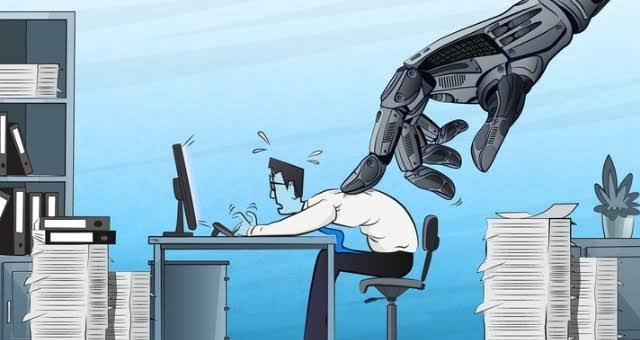
This apprehension suggests that Artificial Intelligence, mocking human capacity and skills, would ultimately replace human labour, drastically taking over jobs across vast technological sectors. This cogitation, arising from opinion polarisation and cosmic realities, creates anxiety and restlessness.
Fields anticipated to be automated by AI, such as data analysis, coding, and translation/interpretation, shift market focus from hiring human management to acquiring AI expertise. The recruiter’s perspective aims to limit the labour required for hiring and to find a ‘convenient’ way to operate. For beginners and mostly degree holders in the field, this creates a sense of job abduction and wasted potential.
On the other hand, bigotry in support of AI exists on the same wavelength, ignoring the social, economic, psychological and environmental impacts. Social manipulation, machine bias, broader economic impacts, and the loss of human influence are a few examples of the far-reaching impacts of the rise of AI and its tools. This side of the story often depicts an idealistic situation, pressing to present AI as the ‘wave of modernisation’ and contradicting opinions as ‘primitive’ or naive. The absolute bias towards AI among users ignores a broader range of potential harm it may cause.
Keeping Pakistan’s landscape in mind, AI and its standpoint present an interesting picture. According to research data, AI has declined entry level jobs in Pakistan by a ratio of 25%, giving a disruptive challenge to the traditional employment model. On the contrary, AI and its related fields have created numerous opportunities and distinct workforces. This pattern is also found in other states and parts of the world. According to Pakistan’s Bureau of Statistics, in 2024, growth was observed in the IT and healthcare sectors, at rates of 100 and 66.7 per cent, respectively.
On the other hand, the same dataset shows job losses due to automation in fields such as manufacturing and banking at rates of 25% and 30%, respectively. This report provides both the positive and negative impacts of Artificial intelligence, and that’s the story everywhere. This analysis presents a paradoxical situation. If one field is thriving due to technological advancement, the other is diminishing. This highlights that the primitive nature of any introduced nuance is not to cause harm. Such a multilayered problem requires a multilayered set of policies and a plan for how to address it. From the domestic level to the government level and, inevitably, to the global scale, AI literacy and machine literacy are required to address the dogmatism and complete dystopia it creates.
Sources:
The impact of AI on employment and jobs in Pakistan