





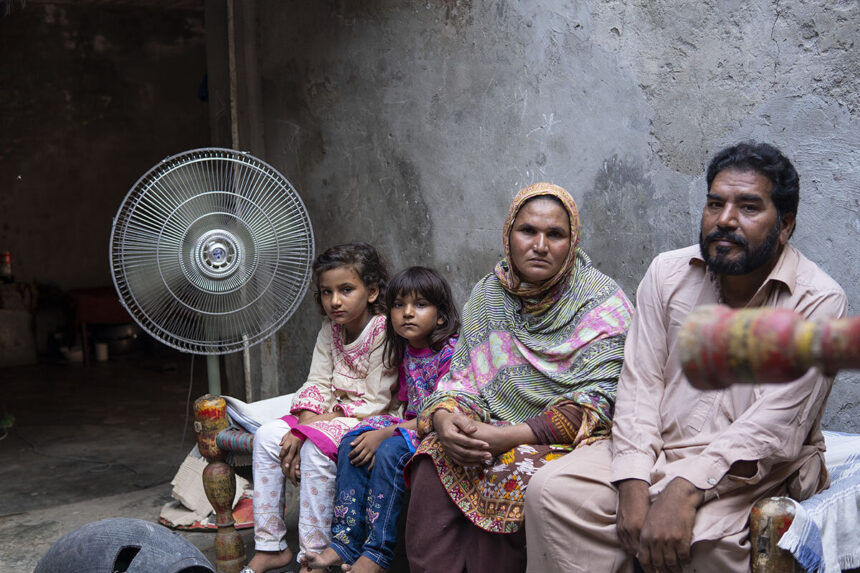
Even decades after colonialism, South Asia still carries many dynamics from the pre-colonial period into its system today, such as the hierarchy system. The hierarchy system is almost considered to be a prerequisite for our region; division through class and ethnicity is still believed to create a livable enough environment — whereas in reality, it is a system that constantly diminishes the power of people who belong to lower classes in the hierarchy, such as domestic workers.
The people from the lower class mainly happen to be the ones with the most contribution to the domestic labour of the country, including their services in agriculture, housekeeping, and other under-appreciated tasks. These workers face huge discrimination in the way they are treated. There is a separate code designed for them, reflected in the way we talk to them, the way we perceive them, and the way we treat them as a whole; it speaks volumes.
Almost every household in Pakistan has at least one domestic worker who is there to cook and clean or act as a security guard (chowkidaar) or a driver. There is one thing that is common in their roles even if they relatively have different responsibilities to adhere to, and that is serving the family. Selflessly. The idea is that they are only expected to obey and are supposedly exempted from every sort of difficult time in their life, as even taking a single leave is considered to be a grave mistake for them.
If the inequality disappeared, power would too.
As a society, we have repeatedly reinforced the idea of inequality into our ways of living. And it’s quite hard to talk about an equal community where no one is exploited, because it takes away our authoritarian attitude that we have for our workers. It feels almost non-negotiable to come to terms with lower-class people and treat them with the same amount of respect and consideration that we have for each other. This is the scenario we would often see in upper-class people, but, as the country’s history is filled with power-hungry leaders, that has seeped into our ways of thinking as well, so basically every class that is higher in the social hierarchy than others exploits the ones below them.
In our society, we see this recurring pattern of having a specific code for communicating with the lower-class people who work for us, and it’s a very unsaid mutual understanding amongst the perpetrators. Our way of communication narrows down to insulting jokes, inconsiderate comments, and of course the “we are better than you” or “you are not worthy enough to even get basic respect” idea, except that the titles are differently moulded and always pushed around to justify the disrespectful environments we create for these workers.
Domestic workers are deprived of even basic courtesy in their day-to-day life. From the time they start their working shifts, early in the morning, till the evenings that end with their overworked and underpaid selves, throughout the day they have to deal with the passing of absurd comments about them. From the owner of the house who gets agitated if the maid gets even a few minutes late, to the constant complaining comments about their work all day long, to being forced to still show up with readiness-to-work each day.
Lacking basic courtesy is okay when it comes to domestic workers, no?
In Pakistani households, we experience the great power that language holds to convey things. In this country, language has also appeared to have a hierarchy to it; there is different language used for different people, or more specifically, for lower-class people. There are casual ways of asserting dominance over them without using basic courtesy, for example, the differences between “aap”, “tum”, and “tu” — it’s instantly recognisable with how we use our Urdu pronouns based on whom we’re talking to. It is also with the names we choose to call them, such as “naukar” instead of calling their actual name; we choose to constantly remind them of the vicious power holders we are while talking to them.
There is almost no space left for them to agree or disagree; they have to agree to the work being assigned to them without any further say. The assertive nature used against them is something that creates injustices and also means to exploit the people by asking them to work overtime, and yet they are paid the same salary.
The concept of work ethics instantly disappears when we are addressing working-class people. All of a sudden, the problems that are whine-worthy enough when they happen to you, i.e., when you’re expected to work for extra hours on your 9-to-5, or how your manager expects you to do certain favours for the company without any added commission, but when the same things turn around and come for the people who are working under us, we are the ones creating the same catastrophe for them without even acknowledging it.
The background commentary that is happening all day long around these workers is something we often feel uncomfortable to admit. Constantly, there are taunts being thrown at them regarding topics that are clearly none of our business — their houses, the way they manage their routines, the constant back-and-forth questioning after they’ve arrived a few minutes late to work, commenting about their relations with their husbands, and absurdly enough, finding humour in their misery.
The humour in question is the absolute casualness with which we throw around absurd comments about their literacy, hygiene, and even their right to be treated with respect. Respect is a basic decency we can provide anyone with, and no one deserves to be called out by insulting names, supposedly funny jokes, and constant belittling — but unfortunately, all these laws fail when it comes to people who are at a lower position in the social hierarchy.
The hypocrisy we follow when dealing with domestic workers:
Often, working-class people have struggling backgrounds where they face issues related to family, pending house rents, struggles to gather money for their children’s education, women who have abusive alcoholic husbands, and the list goes on and on — but rarely are these problems acknowledged by the houses they work in. You know, there is a different way to even accept their pain as pain enough. We have this very silent, but prominent thinking related to dismissing the pain of these people, because we often have a thinking, “they’re used to it”, when in reality, it’s a question mark on our hypocrisy when we link their pain to something they’re used to, while we give condolence messages and soft corners to each other when we’re going through the same pain.
The double standards also show up in our way of dealing with them in routine tasks, for example, it is an unsaid rule in many households that the workers are only supposed to sit on the ground while the whole family eats dinner at the dining table, or the way utensils are divided between the workers and the rest of the house being given the justification of “hygiene purposes”, when in reality, it’s our thinking that they are not clean enough to be sipping water from the same cups as us, and that is an embarrassingly illiterate viewpoint to possess in this day and age.
So as we see, something as basic as dealing with everyone with the same respect and consideration is also lacking in our society. We as people have surely progressed as a society in terms of many technical and domestic advancements, but we still lack the ability to promote the idea of equality. This is a huge social failure on our end, because the people with whom most of the labour is operating in this country are the same ones being dismissed and mistreated the most, and that is a sad reality. How we fail to appreciate our people who play a huge role in keeping many tasks of the country rolling.
On a collective level, it is our responsibility as privileged citizens to look beyond us, and pay attention to the way we communicate with the underprivileged working-class people. It is not a difficult revolution to choose respectful words and a considerate tone towards these people; it really is not that hard of a thing. May we collectively bring a revolutionary change in treating everyone with respect, regardless of their class or ethnicity in society.