





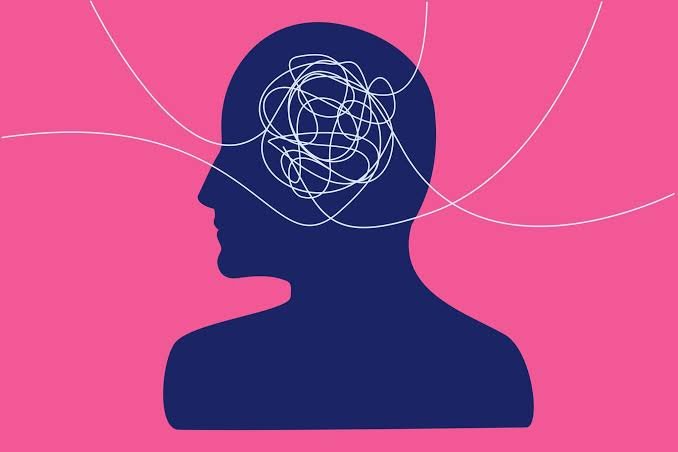
In most universities in Pakistan, a hospital wing exists, a mosque is present, a cricket ground exists, and there is no mental health service. This is not an oversight. It is a ranking of priorities, but it’s never expressed as a priority, and it’s students who suffer the consequences. An entire generation is being prepared for the most challenging year of their lives at a time when they face school, economic, and social pressures, with very few institutional channels to support those who can’t bear the load.
The pressures are not abstract. Academic pressures are high and sometimes out of balance, with the entire semester ending with a harrowing final week of exams and paperwork. Economic anxiety permeates nearly every choice a student makes, from major selection to whether a family can afford enough tuition payments to make a semester possible without compromising the student’s major. Social conservatism is another dimension: if a student, and especially a woman, has to contend with social rules that dictate what one may wear, what one may do and who one may meet, it’s about rules that treat adult autonomy as a problem to be regulated rather than respected.
Instead, campus administration, in general, reinforces this burden and can exacerbate it by setting rigid disciplinary policies and attendance requirements, and by adopting a stance that views students as objects to be disciplined and controlled rather than young adults to be supported. All these pressures are not unique to Pakistan. The problem is that there is little space to accommodate them.
It affects mental health in an unspoken manner that creates a crisis. Anxiety and depression are not uncommon amongst students of Pakistan’s universities, and the studies conducted on the issue have maintained that the prevalence is significantly more than what most Universities are ready to accept and more than what they are ready to treat. However, prevalence is not the only factor. The real problem is structural; universities have not created the infrastructure to meet the needs of their own students.
Think about the mental health care that you see on a typical campus. Underfunded public sector universities often lack a functioning counselling office, or one that has a paper psychologist but no actual psychologist to work in it. Even at private universities, which have substantial fees, students can expect only one counsellor for a student population in the thousands, and appointments are often booked weeks in advance. Services are often not well advertised, not well resourced or staffed by individuals who are not trained in adolescent mental health. In an emergency, a student can be left with no one in the office to assist and no idea how to respond.
The lack of this is exacerbated by stigma, which performs many of the same functions as a locked door. In many Pakistani homes and societies, it is still looked down upon to seek psychological help, which is seen as a sign of weakness and a disgrace to the family. Students who disclose information to a counsellor risk having their confidentiality breached to family members or hostel wardens. But why shouldn’t this fear be warranted? It is a sign of how institutions have behaved in the past. Students conclude that it is safer to remain silent than to reveal what is happening, and the crisis continues without a proper record of its magnitude.
Student-led peer support has filled this gap and, more often than not, is the mental health fabric on many campuses, by default. These tend to be informal networks, such as WhatsApp groups for listening, short workshops for older students to learn about indicators to watch for, and informal drop-in sessions organised without the institution’s support or approval. This is evidence of student engagement and care. Nor is it the fault of the institutions that it is not done by undergraduates with no clinical experience, nor is it that they are not required to intervene when the situation has gone beyond the scope of peer support.
Peer networks can actually do some good. They can normalise conversations, pick up on warning signs, and provide companionship to students who feel isolated. What they cannot do is replace professional psychiatric or psychological help for a student who has a genuine mental health problem; there is a serious risk in universities substituting these networks for professional psychiatric or psychological help rather than complementing it. It is not innovative for an institution to provide student volunteers as the mental health resource without training.
The implications of this abdication are measured in terms of outcomes that Pakistani Universities never talk about in public: students who drop out of school for no reason, students who get into a breakdown during examination periods without any identifiable place to go, and, in the worst of the worst cases, suicidal incidents that the administration considers as isolated incidents and not systemic failures. This occurs, and the response is usually a one-line institutional statement with limited structural changes. The pattern continues because factors that lead to it do not change.
This will be greater than just a symbolic gesture. It’s essential that universities have strong counselling centres staffed by psychologists trained to work with young adults, maintain strict confidentiality, and embed mental health services within the university’s infrastructure rather than treating them as an add-on service. Peer support networks need not only to be tolerated or tacitly accepted, but also to be supported and developed, including through appropriate training, clear pathways to professional care, and formal recognition. Ad administrators need to be honest about their own discipline and academic policies and practices that are creating distress.
In Pakistani higher education, all of this can be done. The problem isn’t that they don’t have resources; it’s that they don’t prioritise. But if universities are willing to take students’ well-being into account as part of their duties, rather than just as a support service after the fact, they’ll also be able to put in place effective counselling structures as they grow and construct new administrative buildings. So long as this choice is not made, students will be left to deal with this crisis silently and alone.
simple, clear, and interesting.
very well articulated 👏