





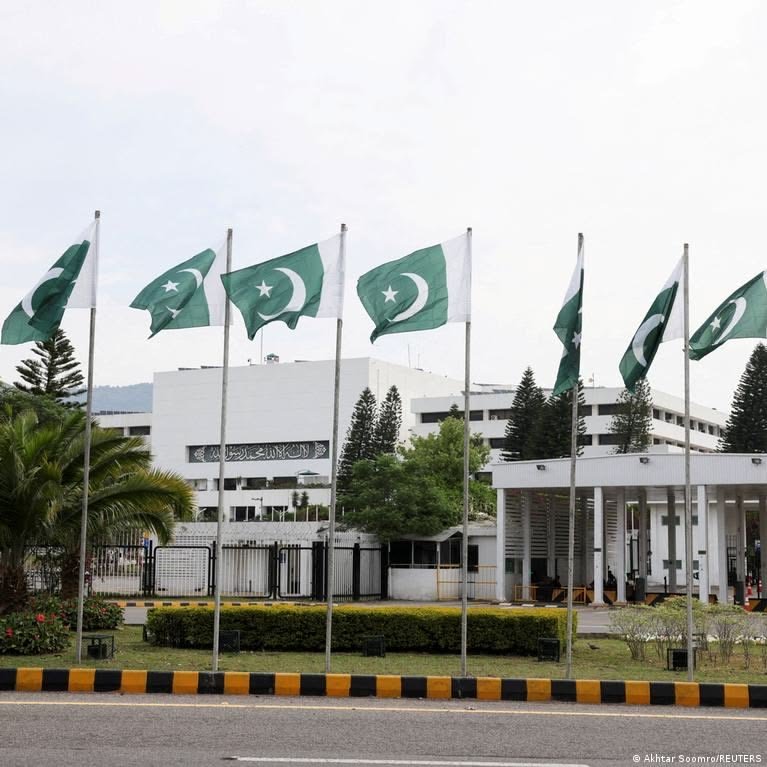
The soul of a federation lies in the individuality of its federating units — a bond built upon mutual trust, inter-provincial cooperation, and constitutional accountability. Pakistan was envisioned as a federation, and despite a repeatedly battered political and democratic system, it has remained one, albeit a gasping one.
Recently, public debate has resurfaced regarding the creation of new and smaller administrative units. However, considering the fragile state of democracy in Pakistan and the reality of deep-state capture, this proposal appears to be another attempt to facilitate easier despotic control.
The Historic Identity of Federating Units
All four provinces of Pakistan, alongside its special territories, possess distinct historical identities that are as old as history itself. These federating units originally came together to translate the idea of Pakistan into reality.
Historically, authoritarian elements have sought to diminish the distinct identity of the provinces, primarily because provincial autonomy serves as a vital safeguard for democracy, constitutional supremacy, and social justice. The individuality and constitutional autonomy of the provinces remain the primary obstacle to centralized authoritarian control, as it is exceedingly rare for all provinces to submit simultaneously to autocratic rule.
From the “One Unit” experiment of 1955 to the systematic marginalization of provincial languages and regional cultures, these initiatives form links in the same historical chain. The trauma of 1971 remains a stark historical lesson; yet rather than strengthening democratic federalism, current proposals focus once again on dividing the provinces.
Local Governance versus Provincial Fragmentation
Proponents of smaller administrative units argue that creating new provinces promotes administrative efficiency and economic development in underdeveloped regions. While this argument contains a kernel of administrative truth, it holds validity only within a framework of established constitutional supremacy, robust democratic institutions, and an independent judiciary.
If administrative efficiency and localized governance are the genuine objectives, the immediate solution lies not in dividing provinces, but in empowering functional local governments. Local bodies form an essential component of the governance structure enshrined in the constitution. Article 140A of the Constitution mandates that each province shall devolve political, administrative, and financial authority to elected local governments.
Unfortunately, Pakistan has rarely maintained a stable or continuous local government system. It is contradictory to advocate for new provincial units while failing to maintain basic local governance:
- The last local government elections in Punjab and Islamabad were conducted in 2015.
- Since 2019, Punjab alone has seen four distinct local government legal frameworks introduced through three legislative acts and one executive ordinance.
Constitutional Thresholds and Popular Legitimacy
Creating new provinces requires navigating strict constitutional procedures. According to Article 239(4) of the Constitution, any constitutional amendment altering the boundaries of a province cannot be presented to the President for assent until it has been passed by a two-thirds majority of the provincial assembly of that affected province.
This constitutional requirement raises fundamental questions regarding democratic legitimacy:
- Do current assemblies possess the moral and political legitimacy to alter historic provincial boundaries?
- Do these legislative bodies accurately reflect the democratic will of the electorate?
- Will provincial assemblies consent to structural redivision, or will constitutional procedures be bypassed?
These concerns are particularly relevant amidst ongoing debates surrounding recent constitutional amendments, which continue to face questions regarding public consensus and procedural legitimacy.
Conclusion: Devolution over Division
In the current political climate, the push to divide provinces into smaller administrative units functions primarily as a mechanism for centralized control rather than genuine administrative reform. True administrative efficiency and meaningful devolution of power can be achieved by fulfilling the existing constitutional obligation under Article 140A — devolving political, financial, and administrative authority to elected local representatives.
Even if evaluated under the assumption of good intentions, dividing provinces will not yield positive outcomes while foundational democratic norms, judicial independence, and the rule of law remain compromised.
Ultimately, popular consent grants legitimacy to the constitution, the state, and its institutions. It rests with the citizenry to determine whether to accept centralized administrative restructuring or to advocate for their democratic rights, federal autonomy, and historic identity.