





Local Folktales and Shared Legends
There is a story passed down among the people of Hunza. A long time ago, two royal brothers fought for the throne. Driven by ambition, the older brother ordered his rival to be plastered alive inside a pillar within the very walls of the castle.
It is ironic how the people of Punjab share their own version of this grim legend. In place of two brothers blinded by power, their story tells of a heartbreaking romance where a beloved is entombed alive inside a brick wall. Pakistan — a land of striking landscapes, historic architecture, and rich traditions — is filled with such enduring folklore.
Rising Trends and Changing Itineraries
Thanks to the rise of social media, today’s travellers are far more aware of the diverse destinations available across the country. While earlier generations typically envisioned a classic summer holiday as a traditional stroll down Murree’s Mall Road, the modern generation looks well beyond conventional tourist trails.
Young adventurers are stepping past the familiar Nathia Gali bazaar routine, journeying as far as the Karakoram Highway will carry them. Yet while the highway enables younger travellers to experience these distant landscapes, it has also raised concerns among parents — particularly as traffic along rugged routes like the Fairy Meadows track increases each season.
Nevertheless, this new wave of explorers has cultivated a genuine respect for regional cultures, helping bridge the gap between visiting tourists and local communities.
The Breakdown at Lishi Bridge
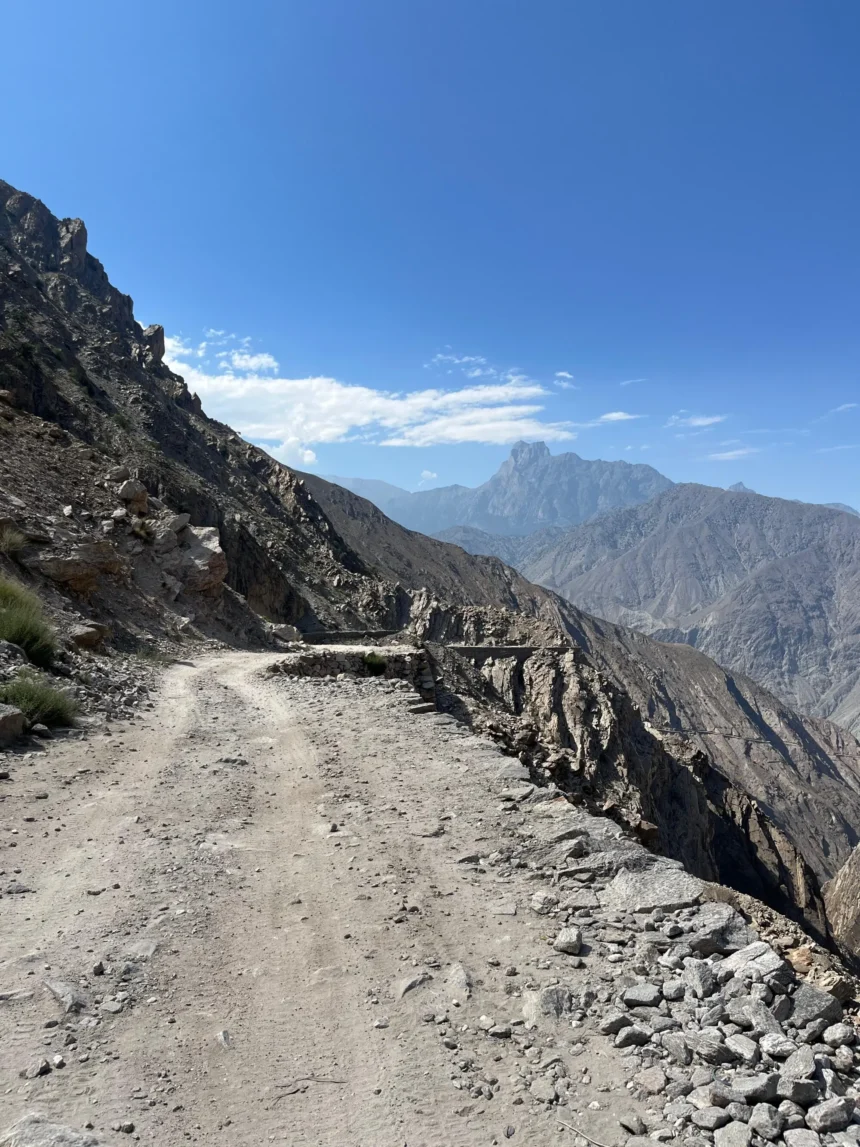
Standing a short distance from the damaged Lishi Bridge on the Babusar Top–Chilas route, disappointment set in as the reality of a disrupted itinerary became clear. Deciding to check into a nearby hotel, I sat in the parking area of a roadside restaurant, waiting for the route to clear.
Unexpectedly, the delay offered a glimpse into human warmth. It was remarkable how a mountain traffic jam could encourage strangers to form spontaneous friendships along a remote highway.
Dads paced back and forth, striking up conversations as they collectively tried to figure out how the bridge had failed. Nearby, aunties sat together swapping travel stories and revising plans, while children played to pass the time. When the gridlock finally cleared, passing cars moved past one another with drivers exchanging enthusiastic thumbs-up signs.
Moments like these reveal how inherently social we are as human beings. There is something about mountain air that lightens one’s mood, encouraging strangers to share a smile or chat with local residents.
Infrastructure Expansion and Economic Growth
What occurred on that mountain road reflects a broader transformation taking place across Pakistan. Government bodies and private organisations are actively restoring historical forts and cultural landmarks to support sustainable tourism.
For instance, international partners — including the Government of Norway — played a key financial role alongside local heritage trusts in saving both Altit Fort and Baltit Fort from structural decay. Today, these restored landmarks welcome thousands of visitors annually.
This renewed focus has allowed the Hunza Valley to flourish, enabling remote mountain villages to participate in the local tourism economy.
In these high-altitude valleys — where harsh winters present constant challenges and agricultural land is limited — communities historically faced severe economic hardship. Today, expanding tourism has boosted local livelihoods. Residents have opened handicraft shops featuring colourful Kashmiri shawls, local eateries serving regional specialities like chapshuro, and roadside tea stalls.
Others have converted spare rooms into guest houses, while local farmers sell fresh catch directly to nearby hotels rather than paying high transport costs to distant urban markets.
Entrepreneurship in Karimabad: Lal Shanvari
Consider Lal Shanvari, a small hotel in Karimabad run by three local women. Today, their dining area fills with visitors from across the country — from college students sharing a laugh in one corner to families capturing mountain views from the window.
Much like Lal Shanvari, the whole of Karimabad is now lined with shops, cafes, and lodges, providing a bustling and sustainable source of income for local residents.