





The Question Everyone Is Asking
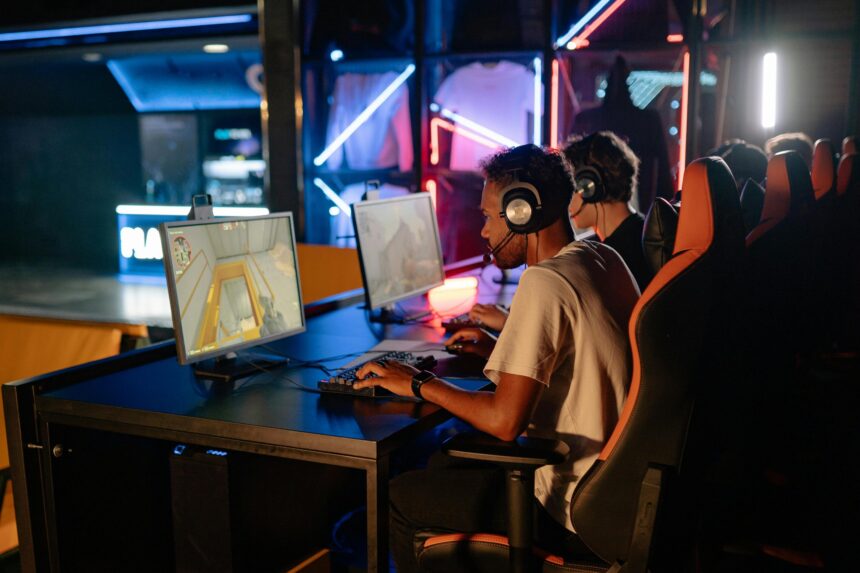
Picture a sold-out stadium. Thousands of screaming fans. Giant screens. A live orchestra playing dramatic music.
But the players are sitting at computers.
The debate is just as loud as ever about e-sports and whether this can be classified as a sport and if the players can be classified as athletes. There is more to learn than you think.
The Science of Reflexes
It is not well known, but the skills necessary to become a professional e-sports player are incredibly physical. The research shows that top E-sport players can perform 400 precise hand movements in 1 minute, with reaction times better than those of most professional athletes. Elite levels of hand-eye coordination are also evident in these players.
By studying one German professional e-sport player competing, the researchers demonstrated that his stress response was similar to that of a professional automobile racing driver (Formula 1) competing. Both players showed elevated heart rates and elevated cortisol levels, and both have had their bodies and minds put under extreme pressure during the competition.
E-sports will not be seen as a passive activity anymore, as this will be recognised as an intense combination of cognitive and physical performance.
Training Like a Real Athlete
The stereotype that says gamers are just playing video games in a dark basement is no more. Professional e-sports teams today are bringing in both nutritionists and physical therapists and hiring a psychologist and fitness trainer for their players. The players have daily schedules that are designed to include practice between the hours of 8 and 12. They will also work on doing some form of exercise or stretching each day, as well as following a specific diet.
Team Liquid is one of the largest esports teams in the world and has now created a full-performance centre, where players are regularly doing yoga, strength workouts, and mental conditioning.
Players are monitored to maintain proper sleep hours, the amount of time that is spent in front of a computer screen is controlled, and the teams are putting programmes in place to help prevent burnout. From the perspective of how a cricket or football team operates, this will sound just the same.
From Basement to Stadium
In just 10 years, the cultural shift from gaming being viewed as a “hobby” (with parents/people generally concerned about it) to being a legitimate collegiate scholarship option (in Pakistan) has occurred. E-sports is now a part of the Asian Games medal events, and Saudi Arabia hosted a $60 million (U.S.) global E-sports World Cup in 2024. The growth of the E-Sports Premier League (ESPL) within Pakistan, the number of young Pakistani gamers playing internationally worldwide, and the large number of enthusiastic young fans (100 million+) all point to this being the next large global sport. The basement generation created something real.
Does “Athlete” Need a New Definition?
This is where the core of the current debate lies. The traditional definition of athletes is defined primarily by physical attributes such as strength, speed, or endurance (which one would be hard-pressed to use as a criterion for E-Sports athletes). However, there are many definitions of what constitutes an athlete. For example, in many countries, chess players are defined as athletes. They are also defined as athletes in snooker and archery because their physical requirements are limited, but all require extraordinary mental acuity under stressful situations. E-sports athletes have the same qualities of mental acuity but also possess reaction times that would make Olympians envious, as well as being able to maintain focus for hours and work effectively as a team under immense pressure from very close competition.
If the importance of endurance, cognitive or otherwise, is part of the athlete definition, e-sports athletes easily fill that definition.
The Injuries Are Also Real
Most arguments stop when this comes up.
Some players get wrist pain, sore backs, and tired eyes, yet also deep exhaustion inside. These show up from doing one thing too long. Much like what happens to a sprinter’s leg or a goalie’s ankle.
Heavy strain shows up in strange ways. Pain arrives quietly, yet it stays.
Redefined Understanding
Games change over time. Sometimes new ones appear out of nowhere. The old rules stretch without warning. What counted before might not now. Games on screens won’t push football aside. A fresh space opens up instead.
Tomorrow’s competitor might skip the sprint. Instead, split-second decisions could define them in the calm amid roaring crowds, shaping moves before anyone blinks.
Respect fits here. Notice follows close behind. Reality has moved ahead, yet the word “athlete” still lags.