



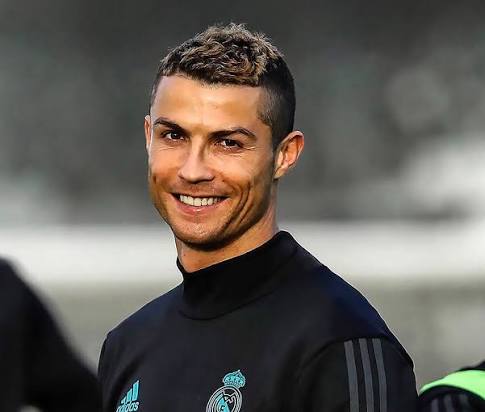
I played football for the first time when I was 7. Upon entering the ground, I was given two options: to decide between two numbers, 7 and 10. That decision would determine which team I would end up playing for. I remember my brother chose 10, and I, consequently, chose 7. On the same football field, the teams were divided by their support for two living legends: Lionel Messi represented by 10, and Cristiano Ronaldo represented by 7. I chose the latter out of pure chance, and that made all the difference. Unknowingly, I started following the masses into enjoying the rivalry between the two players, and I idolised Ronaldo for the inspiration he gave us. Fast forward 12 years, and I saw my idol ageing and struggling; I saw Cristiano leaving his final World Cup match ushered in defeat.
Ronaldo’s story starts back in 1985 in Madeira, when his mother Maria Dolores found out she was pregnant for the fourth time. She was not sure how she would raise a fourth child, knowing the difficult state of her finances. Out of desperation, she asked the doctor for an abortion, but he instead convinced her that the child would bring new hope and happiness to her. And so, on the 5th of February 1985, Cristiano Ronaldo was born.
At the age of 12, he went to Lisbon to join Sporting CP and was separated from his home. Having to feed himself sometimes from leftovers, he grew up in a challenging environment where even his regional accent was made fun of. But by the age of 16, he was playing domestically in Portugal. Through all the hardship, his raw talent was being recognised in his performances for Sporting CP. At the age of 18, in an inauguration match for Sporting CP’s stadium against Manchester United, Ronaldo was truly recognised for his sheer dominance. Directly after the match, he was signed to join Manchester United, where he was set on a trajectory to dominate world football. One can always learn from his journey that humble backgrounds do not define his end. Dreaming big is everyone’s right, and Ronaldo proved it was the best thing to do.
Soon after, Ronaldo became a world sensation and was handed the number 7 jersey. In a single year, he led Portugal to the final of Euro 2004. At the age of 20, Ronaldo lost his father just before a qualifier match for the World Cup. But instead of taking a break and grieving, he played the match in memory of his late father and became the man of the match. Tragically, his father could never live to see his son become the best footballer in the world. Grief and tragedy could have held him back, but Ronaldo decided that no narrative could define him except his own. He was the author of his book, and he would define how it would proceed and end.
By late 2006–07, he was scoring more than 20 goals in a season. In the 2007–08 season, he scored 42 goals and led Manchester United to victory in both the Premier League and the UEFA Champions League. In December, he was awarded the Ballon d’Or, completely dominating the votes. Ronaldo’s dream as a kid was to play for Real Madrid, and in 2009 it became a reality. Madrid president Florentino Pérez signed Ronaldo for 80 million pounds, shattering the world transfer record. For his first whole season, Ronaldo played with the number 9, but by the end of 2010, Ronaldo again adorned the number 7 and went on to establish his legacy.
The year 2014 saw a major change in the play-style of Ronaldo. He suffered an injury in his left knee and was diagnosed with chronic patellar tendinosis. To a normal person, this would seem like the end of their career, but to Ronaldo it was just another obstacle in his way. Quickly after rehabilitation, he shifted his energetic winger play-style to focused goal-scoring in the front. From a playmaker, he went on to become the perfect finisher and still proved his mettle. The injury could not define him; only he could do that.
In Real Madrid, he dominated the field for nine consecutive seasons, winning four UEFA Champions League titles and becoming the all-time leading goal scorer for the club. His dominance on the field made him notorious as a titan who could change the flow of a match any time he got the ball. In this way, his iconic rivalry with Lionel Messi of Barcelona was created. It felt as if hard work was fighting against natural talent and innate ability. Ronaldo resonated with those who had faced hardships and losses. He was the hope that one day, with sheer discipline, we all could achieve our goals. All it took was consistency.
Bidding farewell to Real Madrid at 33, Ronaldo joined the Italian club Juventus and completely adapted his play-style there. His critics were surprised by how he could adjust so fast and become a master of scoring goals in a new league in such a short amount of time. He played three seasons there, scoring 101 goals in 134 games. He had proved to the world that, no matter what, CR7 could dominate any playing field. Once again, we learnt that adapting to new playing styles, trying new things, and being the best at them was possible for all of us. In his shifting playstyle, the bounds of human potential were broken and inspiration bloomed.
Cristiano proved to everyone that he was a legend by conquering not one, but three different countries. Italy, Spain, and England stand as a testament to his skills. The clubs were not entirely responsible for his legacy, though they were integral parts of it; rather, it was Ronaldo himself who shook the world. With his hard work as an athlete, compassion for people, and an inspirational discipline throughout his career, he proved that he was not only the king of the Champions League but also one of the greatest footballers of all time. Copying his celebration went from a school-time activity to international players following suit. Ronaldo was the legend many had watched as a kid, and now those kids were building their own ways forward.
But unlike fairy tales, where the greatest remain the fittest forever, we must usher ourselves into reality. In 2026, at the age of 41, when most players have already retired, Ronaldo’s passion for football led him to his sixth FIFA World Cup. The boy who asked for leftovers at 12 was now the one whom the crowds cheered for at 41. His one touch would spark the whole stadium up.
Seeing Ronaldo score in the second match after the draw with DR Congo was beautiful. The magic felt like it was coming back. But his age was getting the better of him. And even though he knew that fact, he still put on the jersey of his team for his mother, his country, and above all, his passion for football as he entered the round of 16. The small kid from Madeira was seen with streaming tears as he left the field in Texas in his last match against Spain.
To some it felt like grief; to others it was tragic. But to me, it was fulfilment. To see one’s idol grow old is a true pain indeed. To see him struggle with the younger players was difficult. But to see him face the facts head-on, to never give up, and to play once again for his passion, that was what nobody else could ever teach us.
From the day the number 7 chose me as its fan to the day Ronaldo played his last match in the World Cup, I learnt a lot. I learned from him how to rise against all odds. I learned from him how to face grief and still carry on. I learnt from him how to stay humble and conscious when you finally become the best in the world. And finally, Ronaldo taught me that even in falling, one can show grace and resilience.
For in the face of despair, only a few men can show courage, and I can say without a morsel of doubt, Cristiano Ronaldo was one of them.
We weep not because he’s out of world cup..
We weep because he is going to leave us soon ❤️🩹
He is something beyond football and trophies can’t define greatness in short there is always a difference between winning world cup and entire world 💓
The GOAT remains close to our hearts, ALWAYS…
You forgot one thing though
“Dreams are not what you see when you sleep, but what make you stay awake.”
Goated article for the GOAT! loved it