





Every year, Pakistanis spend millions on their weddings. Anything that your parents didn’t allow you to get when you were a kid, you can easily get — along with many other things — during your wedding. Pakistanis often spend far beyond their capacity when it comes to weddings. Because, well, they are weddings. They are such an integral part of our society that if one does not spend millions and host at least 400 people for a four-day event, people judge them so severely that they feel forced to believe the wedding was not for them, but for an aunt’s nephew’s third cousin four times removed.
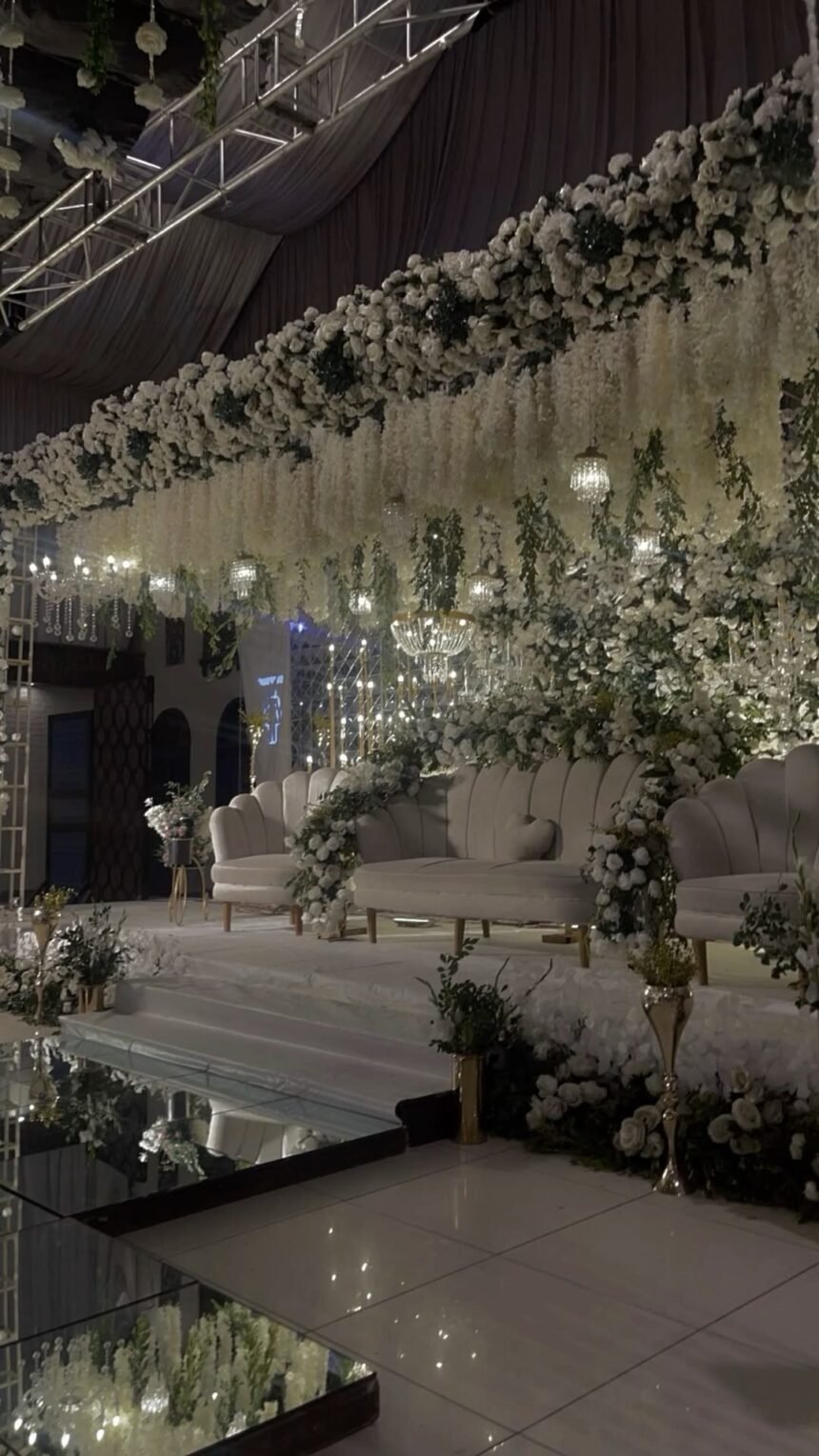
A standard Pakistani wedding consists of a minimum three-day affair, featuring home-based Mehndis, a Baraat, and a Valima. One can also add more events like a Dholki, a Nikkah ceremony, a Haldi, or a Qawwali night, depending on their means. The family home undergoes major renovations, new furniture is bought for the newly-weds, wedding clothes and Bari are prepared, food is arranged for massive crowds, and relatives fly in from all over the world. But that is just the basic standard package. Nowadays, major changes are sweeping through the wedding industry with the advancement of technology and society as a whole. From tented street weddings outside one’s home to lavish wedding halls and destination weddings in Murree, Nathia Gali, or even abroad, we are witnessing a shift within Pakistan’s wedding industry as it becomes more vibrant day by day.
A Race with the Trends
With ever-changing trends on social media, people desperately attempt to keep pace — striving to host the trendiest wedding featuring the latest dance-offs and fashion statements. People want to recreate Instagram reel trends with their wedding guests, or wear a popular designer outfit worn by a celebrity, even if it exceeds their budget. A visible tension now exists among those planning their big day. They feel pressured to align their wedding with what is currently “in” rather than what they actually desire or can afford.
Attend a wedding these days and you will find everyone focused on documenting the event rather than enjoying it: a picture with the bride and groom, one with the food, one with the décor, and one with the family. People are far more invested in capturing moments than living them. At a destination wedding, guests spend half their time recording the scenery on their phones. While appreciating a view is natural, looking at it through a smartphone screen defeats the purpose. Gone are the days when only a few meaningful photographs were taken. Back then, people truly enjoyed their time, interacted, gossiped, relished the food, and left feeling part of a genuine celebration. Today, the focus has shifted heavily toward capturing viral trends and every “aesthetic” detail.
The Two Sides of the Coin
Amid these changing times, a minority is opting for low-budget, minimalist weddings attended only by close relatives and friends who truly matter. Becoming more conscious of their financial circumstances and rising inflation, they advocate for simple ceremonies focused on the couple. However, opting for a modest ceremony often results in being painted as the villain of the story, even when the intention is simply to safeguard a father’s life savings. Couples face immense backlash and judgment from community elders, often feeling coerced into hosting an extravagant multi-day event with dozens of dishes.
If Pakistani weddings had an online forum, one would encounter a wide range of opposing views. On one side are the maximalists, who do not consider an event a real wedding unless it spans five days, follows viral playlists, or features novelty entertainment. Alongside them are the elite hosting mountain-side destination events, and others who, despite financial constraints, insist on wearing high-end designer attire seen on celebrities. On the other side stand the minimalists, who view the event merely as a celebratory milestone rather than the marriage itself. These minimalists face criticism from traditionalists for their unconventional approach, even as a growing segment of society steps up to support them.
Weddings as a Status Symbol
Weddings remain a primary status symbol in Pakistan, and society adheres to this concept religiously. The more extravagant the wedding, the higher the perceived social standing. This explains why couples choosing low-key celebrations face such resistance from their families, who may have endured similar pressure themselves or who believe that deviating from tradition could bring misfortune to the couple. Whether through maximalism or minimalism, one truth remains clear: weddings are among the most significant events in Pakistani social life, and their evolving customs, norms, and trends are here to stay.