



Urdu was never supposed to be pure. That is the thing nobody tells you when they are lamenting its decline.
It was born in camps — in the barracks and bazaars of the Mughal military, where Persian soldiers and local traders invented a language on the spot because they needed to understand each other well enough to survive a transaction. Rekhta, they called it — the scattered, the mixed, the improvised. The language of people with no time for gatekeeping because they had actual things to do.
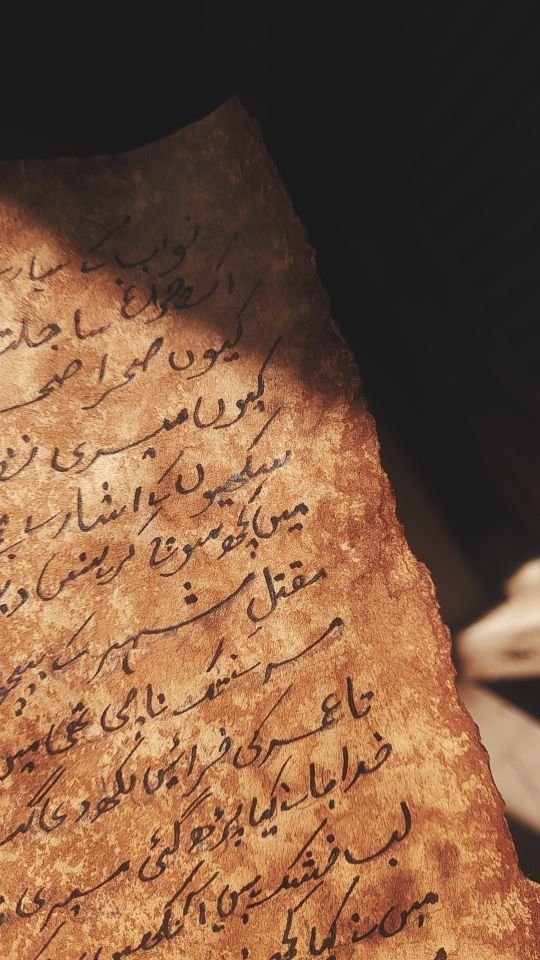
We took that lingua frankensteinia and, over centuries, alchemised it into something extraordinary. Ghalib wrung ghazals out of it that people are still reciting three hundred years later. Faiz made it the language of resistance — not because it was pristine, but because it was alive, and alive languages bend themselves towards what the moment needs.
It became the language that carried us to independence.
It also became the language that cost us half the country.
Urdu has always been, in Pakistan’s particular history, a language of privilege wearing the costume of unity. It was the mother tongue of the muhajirs — the immigrants who crossed in 1947 — and when it was imposed on a country whose majority spoke Bengali, it did not feel like belonging. It felt like erasure. The linguistic fault line ran so deep it became a political one, and we know how that ended.
We do not talk about this enough. Language as a site of power is not a metaphor in this country. It is a documented fact with a body count attached.
The same story, in a lower register, has been running in every province since. Sindhi, Punjabi, Pashto, Balochi — all of them existing in a country whose official language belongs to a minority, whose elite schools teach everything in the language of the colonisers, and whose street conversation has always been something else entirely. We built a national identity on a language and then used that language to quietly tell everyone who didn’t speak it correctly that they hadn’t quite arrived.
What rises out of all of this, in 2026, is not a generation that has carelessly abandoned a literary inheritance. It is a generation handed an impossible inheritance — two of them, actually — doing what people have always done when the available options don’t fit.
The Theology of the English Medium
To understand “Urdu-ish,” you have to understand what Pakistani children are taught to worship before they are taught to think.
The English-medium school is not just an institution. It is a theology. From the age of four or five, a child learns there is a hierarchy of expression, and at the top sits the child who speaks English without an accent, without flinching. This child is rewarded, praised, and held up as the model of how an educated person sounds. The child who reaches for Urdu learns something else: that her natural register is the home one — the one that does not travel.
We did not keep English because it was ours. We kept it because it was the language of the institutions we inherited and didn’t know how to rebuild, the language of the respectability we were performing. English became the password to a room, and the price of entry was a fluency most people cannot fully access in a language that arrived in their country at the end of a gun.
The Wall of National Mythology
And then there is the other wall.
Because if the English-medium school taught the child that her Urdu wasn’t enough, the national curriculum taught her something equally confusing: that Urdu was everything. The sacred vessel of national identity. The linguistic proof that we were a coherent people with a coherent story.
Except the story had gaps.
The Punjabi speaker who code-switches into Urdu for official purposes. The Sindhi student who writes exams in a language she learned at school rather than the one she dreams in. The Pashtun child whose entire inner world exists in a language the curriculum treats as a regional footnote. These children are asked to perform an identity in a language handed to them — while being told, simultaneously, that this language is theirs, that it represents them, that it is the mother of their national self.
You are asked to belong through a language while knowing, somewhere that doesn’t make it into words, that it wasn’t built for you. And the English on the other side isn’t built for you either — it just pretends, more convincingly, to be universal.
So here is the child, in 2026, holding two impossible standards. From one side: the colonial inheritance, still sitting in the headmaster’s chair, telling her English is the language of seriousness and the future she is supposed to want. From the other: the national mythology, telling her Urdu is her identity, her proof of belonging.
She cannot fully claim either.
The Third Space
The education system built the walls. The national mythology poured the cement.
What the internet did — and this is where “Urdu-ish” emerges, not from laziness but from necessity — was give her a third space that neither wall could reach.
On a phone screen at 2 a.m., talking to people navigating the exact same corridor, language does not need a certificate. It needs to carry the meaning. And so she uses whatever carries it — English when that word is sharper, Urdu when the feeling lives there, Punjabi when only that register will do. “Yaar, itna pressure hai, I literally cannot.” This is not a failure of language. This is someone saying something true in the only register that fits.
There are, right now, at least three generations in Pakistan with three entirely different relationships to the language. The generation that reads Faiz as a living act of resistance, for whom subh-e-azadi is a posture, not a reference. The grandchildren of partition still trying to name an ache inherited across a border they cannot cross — their Urdu formal, preserved, quietly a grief project. And then the generation speaking “Urdu-ish,” assembling an identity in real time because the internet does not care whether your feelings arrive in Urdu, English, or somewhere in between.
This is not a generation that has abandoned language. This is a generation failed by two competing versions of what language is supposed to do — perform respectability, perform national belonging — that has quietly and collectively started doing something else with it instead.
Monument or Campfire?
Whether this is a loss depends on what you think language is for.
If it is a monument, then yes — “Urdu-ish” is graffiti on the mausoleum. Something always bleeds out in the crossing.
But Urdu was never a monument. It was a campfire. People gathered because it was warm and because it worked, not because it was untouched. The tradition we revere was built by people who were also improvising — borrowing from Arabic, Persian, Sanskrit, the marketplace languages of everyday life.
Ghalib would have found “Urdu-ish” interesting. He was, after all, the man who wrote about his relationship with language with the rueful affection of someone doing something slightly unacceptable and doing it anyway.
The question worth asking is not whether the language is pure. It is what the generation speaking it is trying to say. And they have a great deal to say — about an economy that doesn’t work, a climate that has declared its intentions, an identity handed to them pre-broken. They are doing all of it in whatever language shows up when they reach.
We are losing our words.
We may also be finding, in the wreckage of everything we were supposed to be, something that is actually ours.
Whether that turns out to be a beginning or an ending depends on what we build with it next.